President
Ramaphosa campaigned for his reelection based on a New Dawn for South Africa.
The anchor pillar of his presidency was managing a trust deficit between South
Africans and convening a dialogue that would culminate into a social compact.
The New Dawn included stemming the tide of corruption and its adjunct state
capture. He integrated the renewal of his political party, the ANC, into his
campaign and focused on rebuilding the state to have the required capabilities in
the competitive global context.
Since
the 2019 inauguration, the contours of his idea of a national dialogue or its
intended outcome, a social compact, have been opaque. Meanwhile,
during his first term, the social compact idea was given currency,
content, and impetus by the new and mainly oppositional civil society movement.
The strategic avenues in the constitutional and democratic order were used to
create social, political, civic, and litigious pressure on the state about national
dialogue issues despite being profoundly sectoral or narrow ethnonationalism.
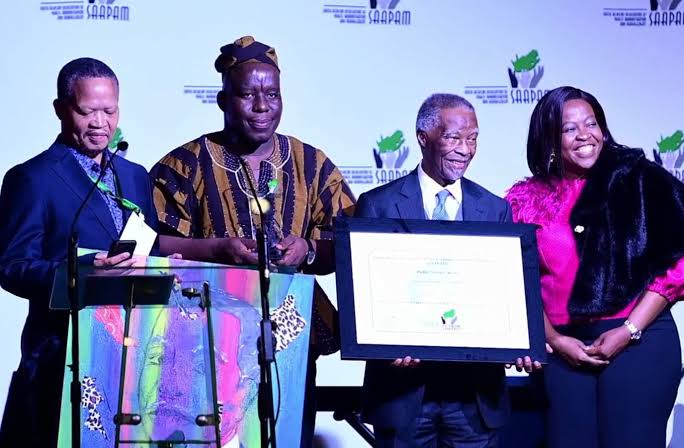
The not-in-government nodes of significant influence, and more acutely, the
Thabo Mbeki, Kgalema Motlanthe, FW de Klerk, and other foundations, got engaged
in conversations about the necessity of a social compact.
The
historical leader of society position, occupied by the ANC-as-liberation
movement, was partially occupied by these foundations. Parallel to them, with
watermarked and tangentially interactive relations, were resource-endowed civil
society organisations and think tanks. The civil society movement, organised
into sectoral enclaves of influence, grew into a potent force and became a new
advocacy and opposition complex whose logic started recalibrating the
liberation promise narrative. This propelled or thickened several discourses that
could not be expressed as matters of national unity and social cohesion.
Minority rights, language rights, redistribution of land, economic
transformation, inclusive economics, inequalities in social services and
education, universal health coverage, and many other issues started to find new
prominence and funded reinterpretations.
The
proportional representation gains of the 2016 and 2021 local government
elections, which created a national possibility where none of the parties have
absolute power to govern, gave impetus to coalition government as an antidote
to deal with majority rule as a proven tyranny in other democracies. While in
South Africa, there were no signs of a tyranny of an absolute majority, the
state capability gaps to deal with service delivery dysfunction, rising levels
of crime, disintegrating public infrastructure, corruption and its adjunct
state capture, a growing number of non-racial oligarchs, a highly politicised
deed state, and many other dysfunctions grew into a tyrannical experience
society attributed to the governing elites. The rationale for a national
dialogue gained additional impetus. The civil society groundswell, including
intensified political opposition in Parliament, started to shift the power of
discourse into the domain of civil society.
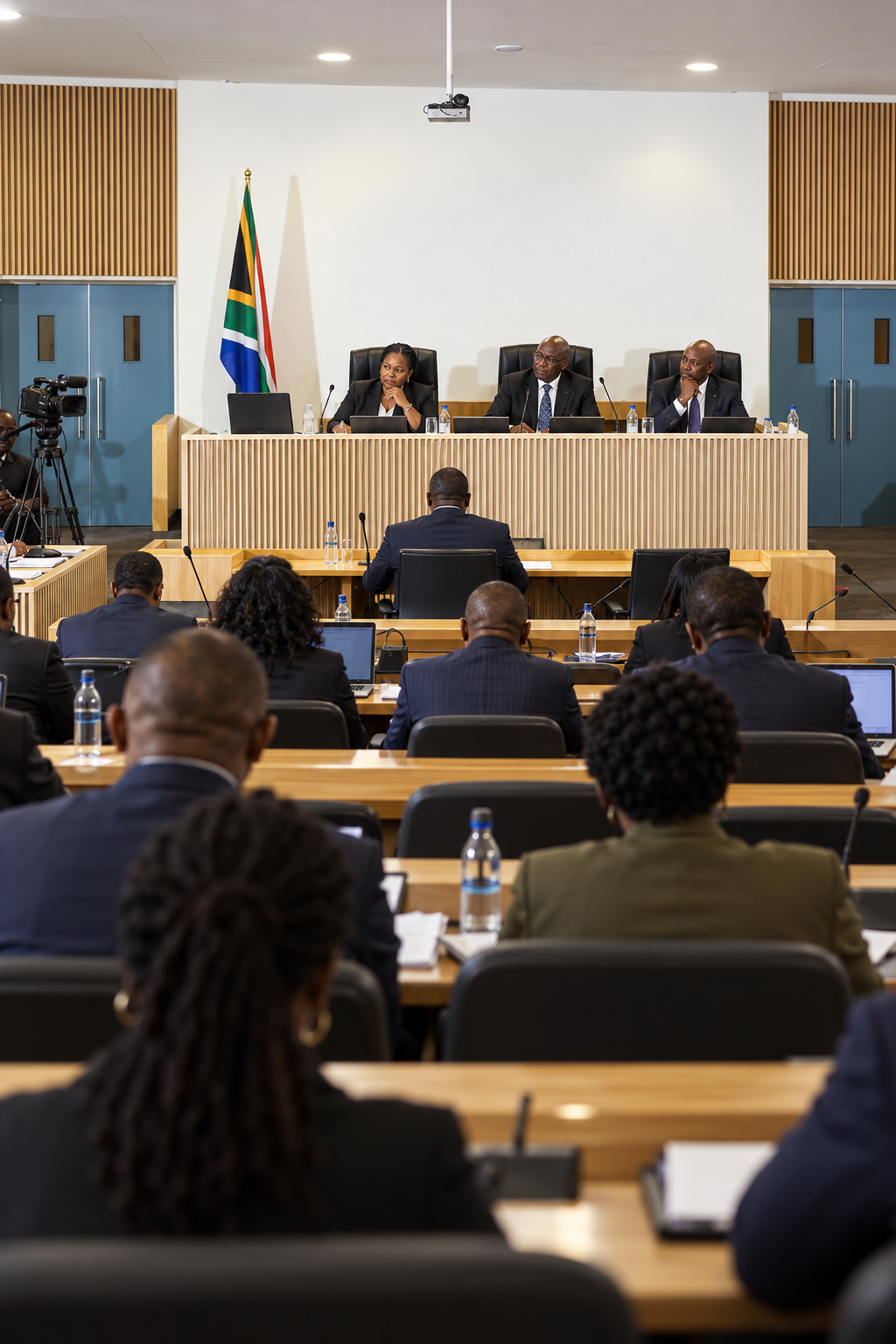
Parliament’s
physical buildings were literally burnt and replaced by the City Hall. This was
as symbolic as it would be a metaphor, for as long as the Parliament building
is the City Hall, a place of all sorts of theatre. Talks of a dome into which
Parliament will be moved make the political satire symbolism closest to where a
circus can be best performed.
The grandeur of
Parliamentary protocol and bureaucracy was institutionally reorganised to give
a semblance of being about “we the people”, save for the limitation
of being represented through political parties that ultimately decided which
individuals play the role. Protocol, the language of power, needed a new syntax
to accommodate the City Hall character of being about civic issues, albeit of
national parlance. The inclusion of “we the people”, though not in
perfect terms, in matters about us became the preoccupation of civil society
organisations that could only be accessed through a National Dialogue
process.
Notwithstanding
the arguably correct thesis that the National Dialogue might have been an
insurance facility if the ANC got an absolute majority to govern in 2024, the
material conditions of RSA and the entire gamut of political balance of forces
would have necessitated it. The 16 December 2023 launch of the MK Party as an
institutionalisation of the 7 July 2021 response to the Jacob Zuma contempt of
court arrest and the MK Party’s showing in the 2024 elections became an
additional rationale why a National Dialogue is overdue. The intensity
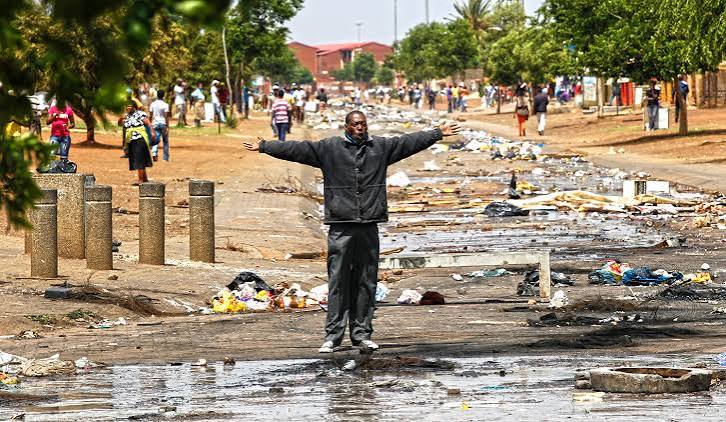
of poverty, unemployment, and economic exclusion in South Africa is a social
‘keg’ waiting for maverick leadership to ignite it.
With
the ANC grappling with its renewal, entering into a succession battle phase,
and a President with very little to lose if he recalibrates how we dialogue as
a nation, the National Dialogue has never been this opportune. Given the
availability of the generation that bequeathed to the nation the monumental
policies of the ANC into one document, the Constitution, it will be ideal for
them to deal with matters arising from the Constituent Assembly negotiations
that founded the post-1994 Republic.
The announcement by
President Ramaphosa that the National Dialogue will be held in 2025 is taking
the City Hall that took the role of Parliament after it was burnt further to
“we the people” through civil society bodies. The President declared
that “the major purpose of
the National Dialogue is (a) to create an inclusive and transparent process to
shape a new socio-political consensus… The National Dialogues (b) offer a
comprehensive platform for all citizens to participate in the political process
and reclaim agency to ensure that the people are their…liberators. The National
Dialogue will (c) create an opportunity to discuss and find solutions to the
difficult issues of (i) economic exclusion, (ii) social inequality, and (iii)
societal marginalisation. Only by doing this can we ensure that the National
Dialogue (d) rekindles and restores public participation as the expression of
people’s power.”
Besides
the pending hegemonic battles about who determines the objectives, character,
form, content, and agenda of the National Dialogue, President Ramaphosa is
occupying the leader-of-society vacuum that came with the aftermath of May
2024. While he spoke on an ANC historical platform, as ANC President, he did so
in his inextricably linked to state power role as head of state. The often-underrated
genius of Ramaphosa’s skilful statecraft required to shape the unfolding
Government of National Unity order was again on display. The post-absolute-majority-to-govern
by one political party order is an endeavour to be threaded; it will not happen
outside the demands imposed on the whole of society’s leadership talent.
One
of the growing risks to the RSA constitutional and democratic order is the
resignation of society from participating in it, a phenomenon we call voter
apathy. This resignation already haunts the legitimacy of public
representation. Across human history, the most dynamic and creative societies
have been almost inevitably expansionary, going outward from partisan
institutions, tribes and regionally rigid identities to put their stamp upon
what is in the national and global interest. The vitality of what Ramaphosa is
starting as a dialoguing culture RSA needs will make the nation a workshop of
solutions. However, any decadence that grafts our timeless constitutional order
back to the 20th century and beyond culture will make the nation a museum.
Thank you, President, for taking this matter seriously, as promised.




Leave A Comment