
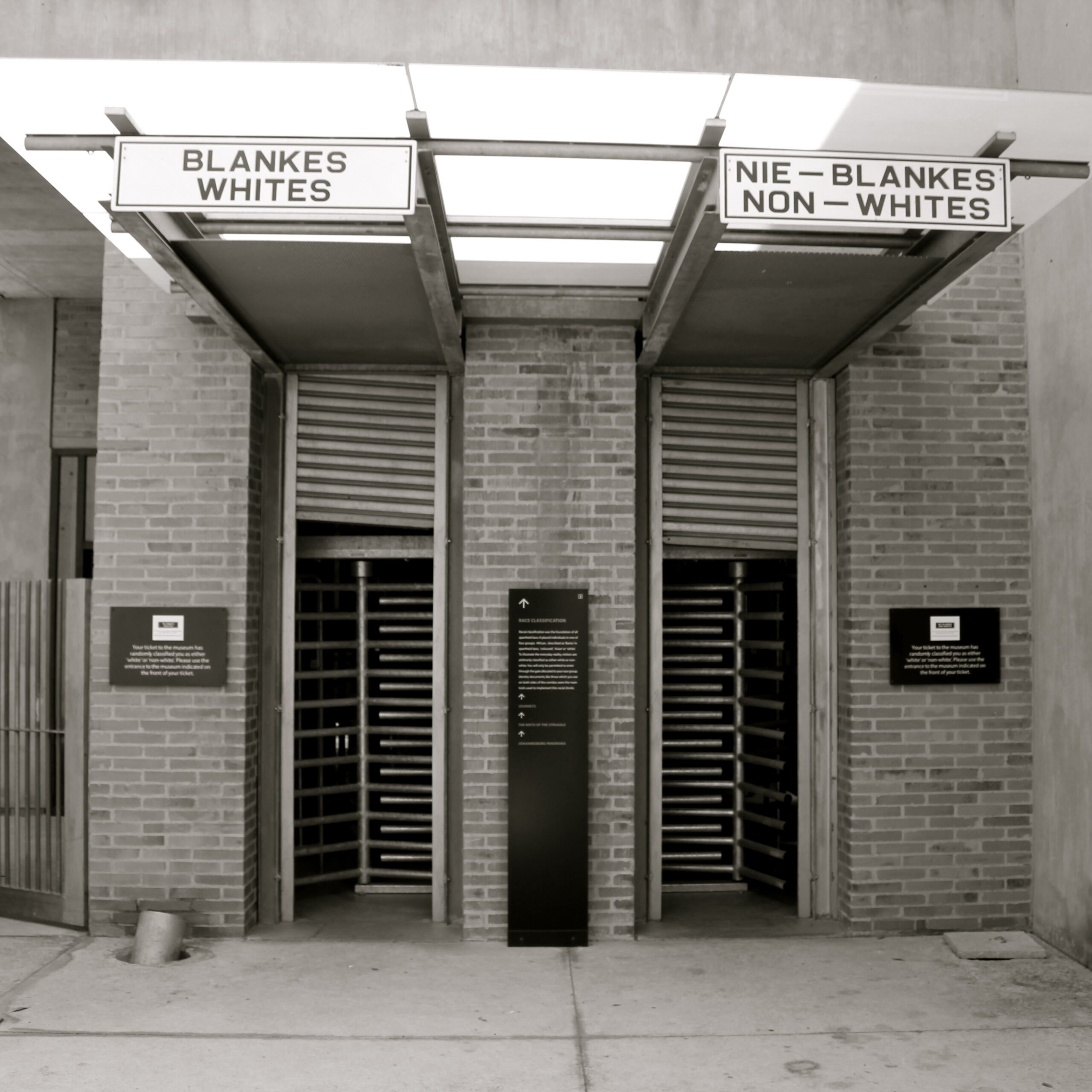
It is increasingly difficult to sustain the belief that the 1994–1996 democratic breakthrough and political settlement ushered in a truly post-race constitutional order as a vehicle for social and economic justice. What it has also enabled is something more complex: the capacity for individuals, institutions, and communities to weaponise the Constitution itself, allowing racism, through its various extensions, to persist under the protection of rights.
While institutional racism, most visibly represented by apartheid ideology, was morally condemned and declared a crime against humanity alongside genocide and xenophobia, its underlying templates, scaffoldings, and psychosocial programming have not disappeared. They have adapted. They persist in reconfigured, less visible forms. Understanding how these remnants continue to shape society is essential to grasping the depth and resilience of systemic racism.
The historical and structural foundations of racial inequality remain deeply embedded. They operate beneath the surface, increasingly taking on algorithmic characteristics, reproducing themselves through systems, patterns, and even technological frameworks that extend beyond immediate perception.
Diversity, which should function as a source of strength in a society seeking a cohesive national identity, has itself been repurposed. It is often mobilised in ways that entrench division rather than foster unity. This occurs despite the constitutional obligation placed on democratically elected representatives to heal the divisions of the past.
A recurring pattern has been the positioning of the poor, who are disproportionately defined along racial lines, as a group unfit to be entrusted with power or resources. The South African economic establishment, even when operating from progressive intentions, often fails to recognise itself as part of a broader systemic reality, including its racial dimensions.
The adoption of South African citizenship without a corresponding commitment to the obligations of non-racialism remains one of the less examined challenges within society. The Constitution was designed to strengthen society’s resistance to racism. As its principles begin to take root as a lived reality, they unsettle those who remain invested in preserving historical hierarchies.
The continued experience of racism within spaces that promise opportunity and advancement erodes trust and diminishes hope. It renders the pursuit of social transformation both urgent and deeply personal.
Given South Africa’s history, consensus on what constitutes racism, what is racial, and what qualifies as a race issue may remain elusive. What is possible, however, is the development of processes that allow policymakers and society to engage constructively, even in disagreement. Such processes would strengthen national discourse on non-racialism.
By centring non-racialism as a foundational principle, political actors and civil society can cultivate a shared sense of responsibility. This has the potential to unify citizens around a common purpose and reinforce social cohesion.
It is not sufficient to simply claim the absence of racism. There is a need for active opposition to racism, demonstrated through language, resource allocation, behaviour, and institutional action. This requires a shift in narrative. Current approaches tend to isolate racism as an individual or episodic issue, rather than confronting the enduring systems, structures, and technologies that sustain it.
For those who have experienced racism, the reality is not abstract. It is lived. It reflects a historical continuum in which individuals were dehumanised, excluded, violated, and denied recognition under the law. In many cases, legal systems did not serve as instruments of protection, but as mechanisms that enabled and legitimised this dehumanisation. Entire groups were rendered undefined, positioned only in relation to what they were not.





Leave A Comment