
Race Law or Constitutional Redress?
A familiar narrative has returned to South Africa’s public debate: that post-apartheid South Africa is one of only a handful of countries in the world whose legal system treats legal subjects differently according to their perceived race or skin colour. The claim is attractive because it sounds universal, liberal and morally clean. It suggests that South Africa, having escaped apartheid, has perversely preserved the very racial logic it was meant to abolish. The claim has an index to sustain the narrative
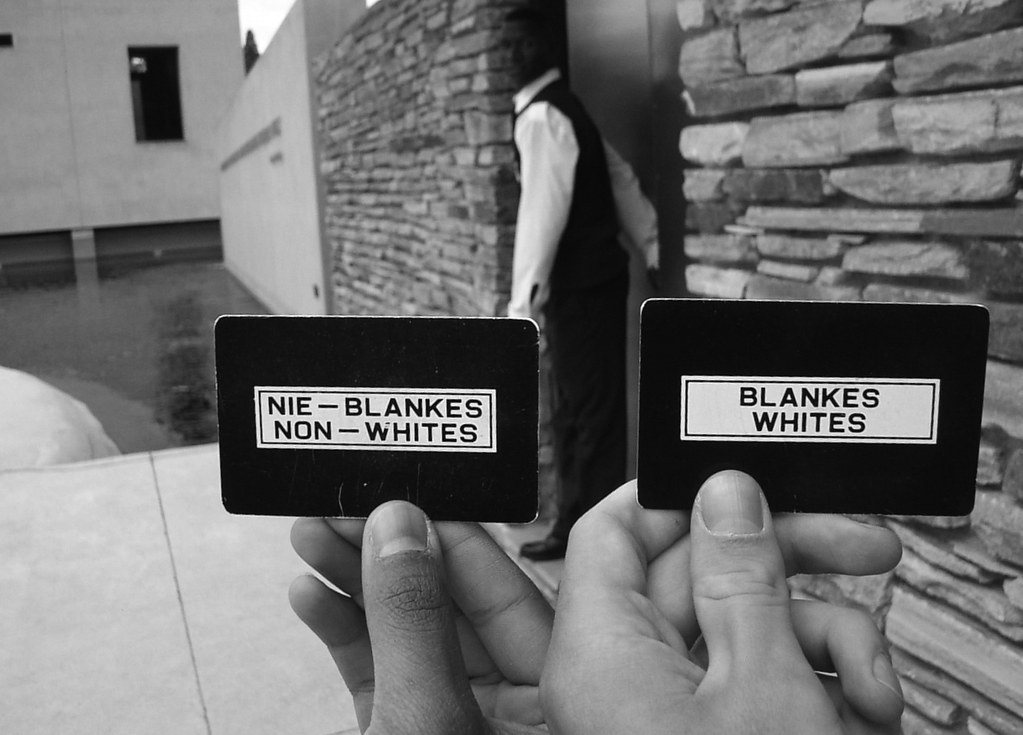
But the claim is too neat. It confuses two radically different legal projects: racial domination and constitutional redress. Apartheid used race to allocate dignity, land, citizenship, education, residence, work and political power. Democratic South Africa’s Constitution permits carefully designed remedial measures to undo the continuing effects of that system. To place these two projects under the same moral heading is not constitutional analysis. It is historical compression masquerading as principle.
South Africa’s Constitution was not written on a blank slate. It was written after colonialism, land dispossession, apartheid classification, forced removals, migrant labour, Bantu education and systematic exclusion from ownership and opportunity. Its founding promise is not merely that the state should stop seeing race. It is that the Republic must heal the divisions of the past and establish a society based on democratic values, social justice and fundamental human rights.
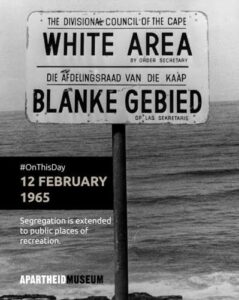
A response to the claim that post-apartheid South Africa is one of only a handful of countries whose legal system treats people differently on the basis of perceived race or skin colour.
Equality Is Not Formal Sameness
That is why section 9 of the Constitution does not reduce equality to formal sameness. It says everyone is equal before the law and entitled to equal protection and benefit of the law. But it also says that equality includes the full and equal enjoyment of all rights and freedoms, and that legislative and other measures may be taken to protect or advance persons, or categories of persons, disadvantaged by unfair discrimination. This is not a loophole. It is one of the Constitution’s central moral insights.
The Constitutional Court has made the point clearly. In Minister of Finance v Van Heerden, the Court held that properly designed restitutionary measures are not an embarrassment to equality; they are part of equality’s achievement. Measures that target persons or categories disadvantaged by unfair discrimination, are designed to protect or advance them, and promote the achievement of equality do not amount to unfair discrimination merely because they are remedial.
South Africa Is Not Alone
The argument that South Africa is globally unusual also needs qualification. Modern constitutional and human-rights systems are not indifferent to historic and structural disadvantage. International law recognises that temporary special measures may be necessary to secure substantive equality. Many democracies have developed forms of affirmative action, indigenous preference, minority protection, gender quotas, disability accommodation, targeted procurement, anti-discrimination enforcement and socio-economic redress. These systems differ in design, vocabulary and intensity, but they are united by a common insight: treating unequals as if they were already equal may preserve injustice rather than cure it.
South Africa is distinctive not because it invented remedial equality, but because apartheid made race the principal grammar of power, ownership and exclusion. A Constitution that ignored that fact would not be neutral. It would be evasive. It would ask those who inherited dispossession to compete in a supposedly colour-blind order while the social, spatial and economic architecture of racial domination remained intact.
Redress Must Be Disciplined
This does not mean that every race-conscious measure is wise, lawful or morally defensible. The opposite is true. Remedial measures can become lazy, corrupt, permanent, irrational, elite-serving or crudely bureaucratic. They can harden into a racial administration that mistakes demographic arithmetic for transformation. They can humiliate those they claim to assist and alienate those they do not. When that happens, they deserve criticism, review and correction.
But criticism of bad redress is not an argument against redress itself. The constitutional question is not whether race may ever be noticed. The question is whether the measure is remedial rather than punitive, evidence-based rather than symbolic, targeted rather than crude, proportionate rather than excessive, reviewable rather than permanent, and directed towards a society in which race no longer determines life chances.
Nor is needs-based redress alone an adequate substitute. Poverty matters. Geography matters. School quality, household income, assets, disability, gender, municipal collapse and access to networks all matter. But in South Africa these disadvantages were not randomly distributed. They were historically produced by law and policy substantially organised along racial lines. A purely class-based account may alleviate hardship while failing to confront the deeper constitutional injury.
A responsible position is therefore not “race forever” and not “race never”. It is constitutionally disciplined redress: measures that recognise race where race remains a material marker of inherited disadvantage, but do so in combination with class, place, gender, disability, education and need. The purpose is not to preserve race as destiny. The purpose is to dismantle the conditions that made race predictive of destiny in the first place.
This is also why critics should be careful not to caricature the debate as redress versus non-racialism. Non-racialism is not colour-blindness in the presence of racialised inequality. It is the constitutional destination of a society in which race no longer organises opportunity, dignity, security and belonging. The path to that destination cannot be paved by pretending that the past has no institutional afterlife.
Local Government and the Geography of Exclusion
South Africa belongs to all who live in it. But belonging cannot be reduced to formal citizenship while millions remain trapped in the spatial, economic and institutional residues of apartheid. Local government is the sphere where this grammar of exclusion becomes most visible, because exclusion is experienced not in abstraction but through where people live, how far they travel, whether water flows, whether waste is collected, whether roads connect them to opportunity, and whether municipal planning reproduces or dismantles inherited spatial inequality. Apartheid’s geography did not disappear when the statute book changed. It remains embedded in settlement patterns, transport costs, land-use decisions, under-serviced townships, neglected rural settlements, informal settlements pushed to the urban edge, and municipalities whose revenue bases often mirror the very inequalities they are expected to overcome. In this sense, spatial inequality is not merely a planning problem. It is a constitutional problem: it determines whether equality is lived as daily access to opportunity or reduced to an abstract legal promise. Citizenship must therefore be experienced as protection, participation, dignity and shared responsibility. That requires a state capable of confronting structural inequality honestly, especially where its effects are spatially distributed, not one paralysed by the fear that any recognition of race is a return to apartheid.
The Municipal Elections as a Constitutional Moment
The forthcoming municipal elections must therefore be treated as more than a contest over potholes, billing systems and emergency repairs, important as these are. They should become a constitutional moment in which citizens ask whether candidates understand local government as the frontline institution of transformation. Voters should demand councillors and municipal leaders who can read a budget, understand a spatial development framework, align integrated development plans with the needs of poor communities, resist patronage, protect professional administration, and build partnerships that expand local economic opportunity.
Communities, civic organisations, business, labour, faith formations and professional bodies should not wait passively for campaign slogans. They should insist on local manifestos that explain how each municipality will spatially integrate communities, maintain infrastructure, use procurement ethically, support township and rural economies, and make public participation meaningful. If race-conscious redress is to be constitutionally disciplined, then its most practical test will be whether the next generation of municipal leadership can turn local government from a site of inherited exclusion into a platform for shared citizenship.
Rejecting Both Extremes
The danger lies at both extremes. On one side is a lazy racialism that treats demographic representation as transformation and leaves corruption, poverty and institutional failure untouched. On the other is a premature colour-blindness that declares the work of repair complete while inequality remains patterned by the very history the Constitution commands us to overcome. South Africa must reject both.
The real test of South Africa’s legal order is therefore not whether it ever takes account of race. The real test is whether it does so constitutionally: with rationality, proportionality, evidence, time-consciousness, dignity, transparency and fidelity to the eventual achievement of a genuinely non-racial society. That is a more demanding standard than slogans about colour-blindness. It asks not only what the law says about race, but what history has done through race and what justice now requires us to undo.





Leave A Comment