

Property, Redress and the Reproduction of Racialised Advantage in Democratic South Africa
South Africa’s democratic achievement contains an unresolved contradiction. The country established political equality without dismantling the material order produced by conquest, dispossession and racial hierarchy. It created a common citizenship, but inherited an economy and a geography that still distribute security, opportunity and belonging unequally. The defining question of the democratic era is therefore not whether the past should continue to matter. It is whether a constitutional democracy can transform the consequences of that past deeply enough to make its promise of a shared nation credible.
The Constitutional Settlement and Its Unfinished Business
That contradiction was present at the birth of the new order. South Africa’s transition was not a conventional post-war settlement between victors and vanquished, but a negotiated constitutional compact intended to transform antagonists into citizens of a shared republic. The compact made reconciliation possible; it did not, by itself, redistribute the accumulated advantages of conquest. Democracy therefore began with political equality formally secured while land, capital, opportunity and spatial access remained profoundly unequal.
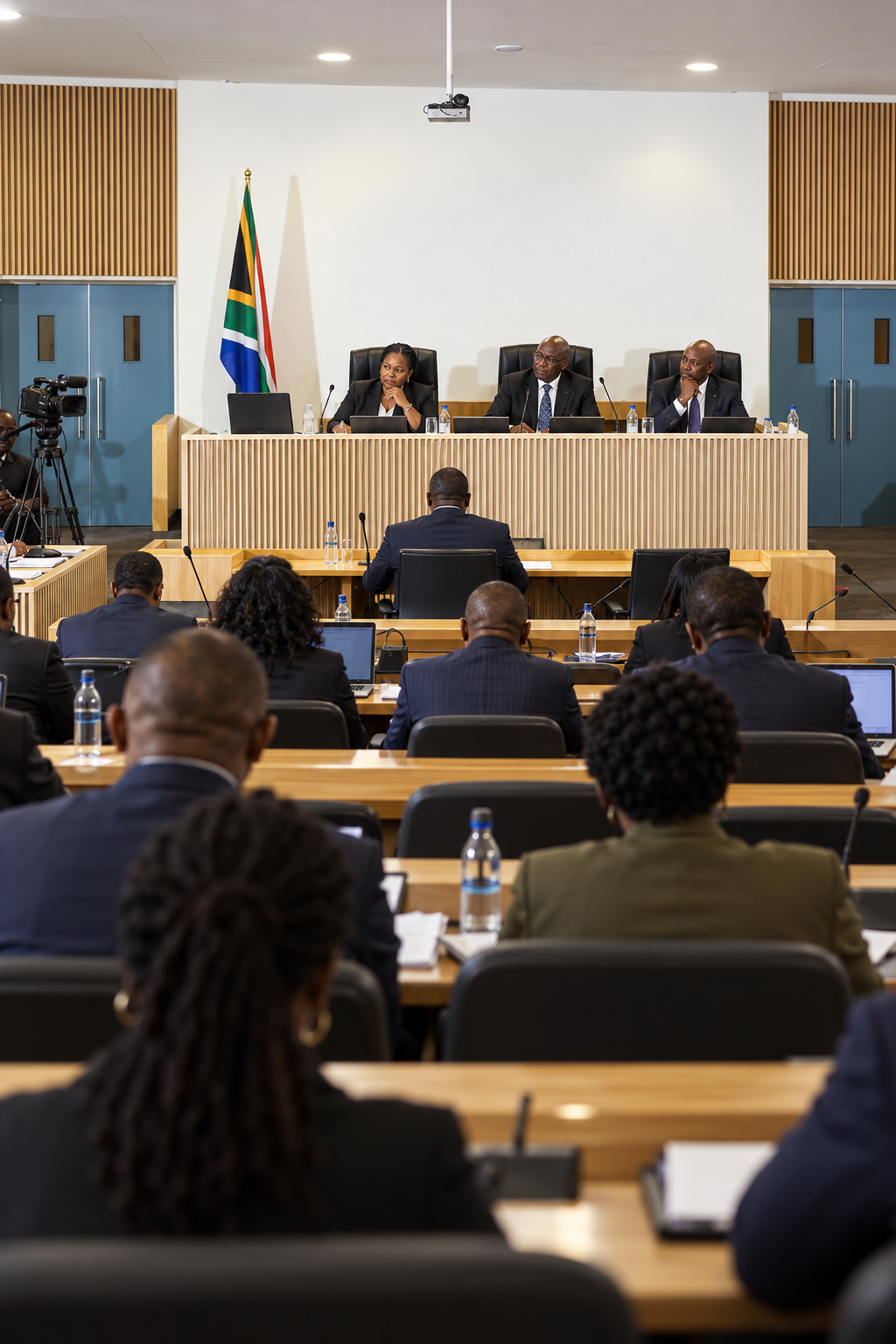
The constitutional project must be read against precisely this unfinished settlement. The 1996 Constitution is not merely a charter restraining public power; it is also a mandate to transform the conditions under which freedom is exercised. Its commitments to dignity, equality, non-racialism and the advancement of human rights require the state to repair inherited injustice while governing for all. Reconciliation, on this understanding, is not historical amnesia. It is the work of building common citizenship through justice.
Land, Dispossession and the Law of Repair
No issue exposes the distance between constitutional promise and material reality more clearly than land. Dispossession was never only about property; it organised settlement, labour, education, mobility, citizenship and belonging. The resulting geography still separates those who inherit proximity to opportunity from those who must travel vast distances to reach it. Any serious account of contemporary inequality must therefore treat land as both an economic asset and an architecture of social power.
Across the world, racial domination has frequently been enforced through control of space: removal, enclosure, segregation, gentrification and the conversion of lived places into transferable assets. Title deeds may record legal ownership while remaining silent about the coercion that preceded them. This does not render law irrelevant; it clarifies why law must recognise history rather than freeze its outcomes.
If law helped to stabilise dispossession, law must also be capable of advancing repair. Expropriation is one of the ordinary instruments through which modern states pursue public purposes, including infrastructure, spatial planning and land reform. Its legitimacy depends on constitutional authority, due process, a demonstrable public purpose or public interest, and a fair approach to compensation. South Africa’s challenge is not to choose between legality and transformation, but to make legality an effective vehicle for transformation rather than a shelter for inherited exclusion.
Redress and the Crisis of Institutional Credibility
Yet lawful authority alone cannot sustain public confidence in redress. Equality was never going to emerge spontaneously from a society deliberately engineered for inequality, and corrective measures are therefore not exceptions to the constitutional project but necessary instruments of it. Their legitimacy, however, depends on competence, transparency and measurable social purpose. Redress captured by patronage weakens transformation, while administrative failure allows opponents of equality to present implementation failures as proof that equality itself is misguided.
Affirmative action in South Africa addresses more than the marginalisation of a small minority. It responds to a system in which the majority was deliberately excluded from ownership, skilled work, quality education and institutional authority. The relevant question is not whether redress should occur, but whether it is designed and administered in ways that expand capability, widen participation and strengthen the public institutions on which transformation depends.
The credibility of transformation therefore turns on the quality of the institutions entrusted to carry it out. State incapacity, corruption, patronage and the abuse of public power have damaged the democratic project from within. These failures must be confronted without qualification. But they should not be used to naturalise racial hierarchy or to suggest that unequal ownership becomes legitimate when democratic governance disappoints. Institutional failure and historical injustice are distinct problems, and a serious republic must address both.
Public debate is impoverished when every dispute is reduced to either corruption or race. Corruption cannot explain away the durable structure of racialised wealth; nor can historical injustice excuse maladministration. The task is to examine how old patterns of power adapt to new institutions, and how new elites may reproduce exclusion in altered form. A public-intellectual politics must resist both nostalgia for inherited privilege and complacency about democratic failure.
Nationhood, Responsibility and the Politics of Mistrust
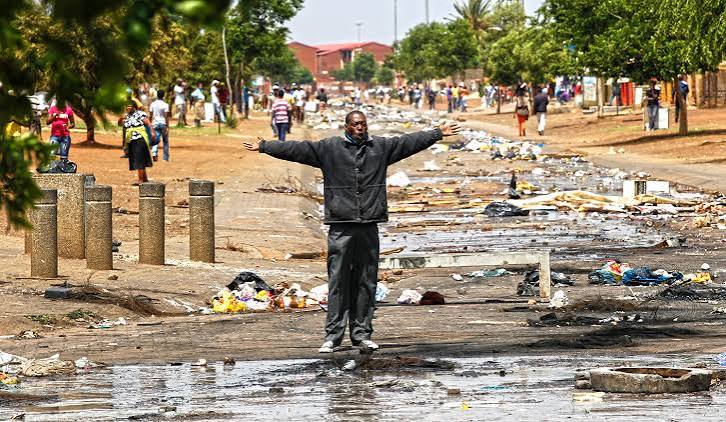
The cost of failing to hold these truths together is not merely analytical; it is national. South Africa’s fragile nationhood cannot survive indefinitely alongside living standards that remain so sharply divided by race, class and geography. Economic exclusion is not only unjust; it is destabilising. A society in which the majority experiences the economy as something observed rather than owned creates the conditions for recurrent anger, opportunistic mobilisation and social rupture. Stability purchased through exclusion is merely postponed crisis.
This is why reconciliation cannot be detached from responsibility. The generosity of the democratic settlement did not cancel the historical origins of advantage. Forgiveness cannot mean that beneficiaries of dispossession are exempt from acknowledging how privilege was produced; nor should recognition be treated as collective punishment. It is the beginning of a mature civic ethic: an acceptance that inherited advantage carries obligations toward repair, participation and the construction of a genuinely shared society.
Where that civic ethic is absent, mistrust readily becomes a political resource. Communities are encouraged to interpret equality as dispossession, integration as cultural erasure, and democratic majorities as permanent threats. Such narratives convert material privilege into moral victimhood and make dialogue more difficult, because any challenge to exclusion is experienced as an attack on identity. Non-racialism requires the opposite disposition: the confidence to preserve cultural belonging without turning it into a claim of superior entitlement.
The constitutional stakes are therefore larger than individual prejudices. In South Africa, racism is incompatible with the founding commitments of the constitutional order, and the state is obliged to dismantle institutions, practices and patterns of exclusion that reproduce racial domination. This obligation should not be confused with hostility toward any community. Its purpose is to ensure that cultural belonging can flourish without becoming a mechanism for preserving inherited privilege.
When Domestic Contestation Travels Abroad
This contest is not confined to South Africa’s borders. External pressure on the country increasingly intersects with disputes over land reform, economic redress and constitutional identity. Claims that lawful reform amounts to the indiscriminate confiscation of minority property distort the constitutional framework and amplify domestic mistrust. The more important question is how local grievances are translated into international narratives that weaken confidence in South Africa’s democratic institutions.
Using international platforms to challenge restitution, economic empowerment, and affirmative action has consequences beyond ordinary policy disagreement. When the history of apartheid and land dispossession is minimised to discredit corrective measures, the constitutional commitment to a South Africa that belongs to all who live in it is weakened. Legitimate criticism of policy must remain possible, but it should not erase the injustice those policies were designed to address.
These external narratives, in turn, shape the terrain on which South Africa must defend its democratic choices. The country’s international posture has become entangled with domestic disputes over race, land and constitutional transformation, and criticism from abroad can encourage the portrayal of policy disagreement as evidence that the democratic order itself is illegitimate. The appropriate response is neither rhetorical escalation nor diplomatic passivity, but a coherent defence of constitutional sovereignty, lawful reform and principled international engagement.
Such a defence will ring hollow, however, unless it is matched by democratic practice at home. South Africa’s constitutional reputation cannot substitute for institutions, an economy and a public culture that produce the non-racial citizenship promised in its founding law. When organised interests treat transformation as an existential threat, they erode the basis of common nationhood. The answer is not enforced conformity, but a renewed constitutional conversation about belonging, responsibility and repair.
From Constitutional Conversation to Social Compact
That conversation must eventually be translated into an institutional agenda. The case for a national dialogue now extends beyond failures of governance: South Africa needs a durable social compact on land reform, economic inclusion, institutional competence, non-racialism and the rights and responsibilities of citizenship. Such a process will have value only if it moves beyond ceremonial consensus and confronts the material conditions that sustain mistrust. Its purpose must be to convert constitutional principle into practical commitments that can be measured, implemented, and publicly defended.
Conclusion
After all is said and done, we are all Africans, and we owe our common future to this land. Nationhood will not be secured by silence, inherited entitlement or mutual suspicion. It will be built when justice is accepted as the condition of reconciliation, when redress is pursued through capable institutions, and when every community understands belonging as a shared responsibility rather than an exclusive claim. South Africa must refuse both racism and democratic failure, because surrender to either would betray the constitutional promise that the country belongs to all who live in it.





Leave A Comment