There are days that do not simply arrive on the calendar; they open old rooms inside us. Father’s Day is one of those days: a public occasion that becomes, almost immediately, a private reckoning. It asks us to remember not only the man who gave us a name, a bloodline, or a place in the world, but also the silences he left behind, the lessons that outlived his voice, and the invisible hand that still steadies us when life becomes a mountain to climb.
That is why this day carries different meanings for those of us who know the magic, burden, blessing, or emptiness of being fathered. For some, it arrives with celebration; for others, with silence, longing, unfinished conversations, or the ache of absence. It can mean recognition of the man whose seed brought you into being. It can mean the man who stood deliberately beside your mother and, when you arrived, accepted the obligations that come with the title “dad”. It can also mean the man who stepped into a space left vacant by a biological father, whether through death, distance, or circumstance. And it can mean those who fathered you in ways biology alone could not: mentors, coaches, elders, and role models who left fingerprints on the soul. Yet beneath all these meanings lies the first fact of arrival.
The fact that we are alive means that each of us begins somewhere, through someone, with a biological origin we may call a father. That relationship cannot be changed for what it is. It is the passage through which we came into the world. Yet, in the spirit of Khalil Gibran’s famous reflection on children, we came through those who brought us here, but we did not belong to them; and because we did not belong to them, fatherhood had to become more than origin.
It had to become obligation, presence, and care. Fatherhood is therefore not only biology; it is the relationship of being the centre of obligations that consenting adults assume over the life between them. It need not be biological; it must be obligation-fulfilling. It should be such that, as a child, you feel the friendship, shelter, and quiet authority of the man your mother taught you to call father. This, I submit with gratitude and grief, is how my father entered and remained in my life.
And this is how I remember him: not by measuring him against what I may have wished him to be, but by returning to who he was. Memory has now softened some edges and sharpened others. I remember a man who had a habit of placing choices before you; and when he realised that you had chosen the least preferable option, he would recalibrate the path and gently optimise away from the choice you had made. He corrected without humiliating. He guided without announcing that he was guiding. For him, the path towards where you needed to be mattered more than the mere fact of arriving there. Perhaps this is why his lessons rarely arrived as instructions; they arrived as images, journeys, and metaphors.
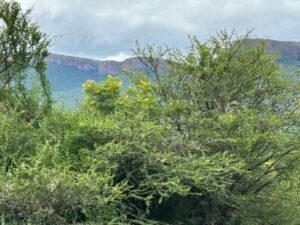
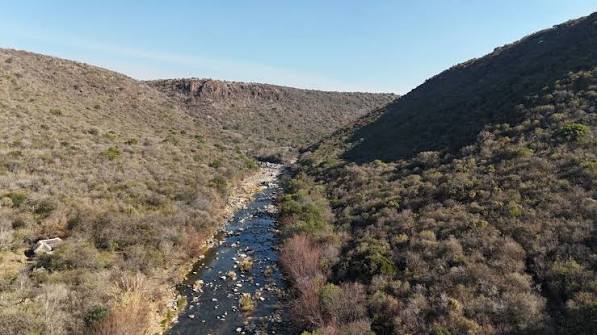
He was, above all, a man of metaphors. Trained as a herbalist by a consortium of elders, with his father, Mbolomane, as the fulcrum, he used the natural environment as a lecture hall. I still see those Saturdays. I still hear the rhythm of his explanations, the patient authority in his voice, the way the mountains, hills, rivers, and grasslands became pages in a book only he seemed able to read aloud. He took meticulous time to explain the species he selected to deliver a particular lesson, as though every leaf, root, and stone had been waiting for him to translate its meaning to me. Of all those translations, one has remained with me most.
It was the lesson of perspective: how large you may think you are when you see yourself apart from the ecosystem that knows you only as a thread connecting the rest. We would climb a mountain, enter its interior world, stand among the trees on it, disturb its tranquillity, take from it what we had come for, and then leave it as still as the space it had been before us. Only now do I understand that he was not merely teaching me about mountains. He was teaching me how to enter the world without imagining that the world began with me.
When we left the mountain, as when we were inside it and on top of it, he never forgot to remind me how small the trees now looked, and how large they had been when we stood beneath them. This was perspective explained through experience. He would also remind me how minuscule the houses we called home appeared from the summit. I did not know then that one day he too would become like that mountain in my memory: distant enough to be missed, near enough to still command reverence.
As I journey through life as a father to my own children, now ladies and a gentleman, I often return to those mountains. I ask myself: what mountain have I taken them to, and how have I demonstrated the significance of perspective? What silent spaces have I entered with my own noises, and what lessons have I left behind? In asking these questions, I hear him again—not as a voice outside me, but as a discipline within me.
My father knew, even then, that it was the deeper me he was called to father. He knew that tomorrow was my largest home. What fascinates me still, and what wounds me gently, is that he made me realise that I am a tenant in this space called life. I am a tenant in a legacy he too inherited as a tenant. He ensured that I understood that I may own the moment of my tenancy, but I do not own the property in which other tenants—my descendants—must one day come and dwell.
This perspective applies to how he taught me to see the environment, and the institutions I work in, build, join, and support. As a tenant, wherever I am positioned in the property, I carry obligations of presence, upkeep, redesign without destruction, and growth for those I may never know. My immortality lies in what I leave behind as a tenant who had a moment of presence. Perhaps this is what fathers finally leave us with: not merely instructions, but a way of standing in the world when they are no longer standing beside us.
I am an arrow my father launched when he had the rare opportunity to be the archer. Wherever I have landed, I remain a tenant. I carry the force of his hand, the direction of his eye, and the silence of his absence. My immortality, which is non-physical, belongs to the omnipresent landlord we all call life.
He was the tenant before me, the mountain behind me, the archer whose hand still steadies the arrow. He is absent, yet not gone; silent, yet not mute; departed, yet still fathering the deeper me. In every summit I climb, in every inheritance I hold with care, in every room I leave better than I found it, I meet him again.
I miss Khalanga, Gitsha Fanie Mathebula. Ntukulu wa Vagwena. Nkongwana wa ka Mashigo


Beautiful tribute Prof!
Wise words, Lucky, coming from respect for Life.
Thank you for sharing.