
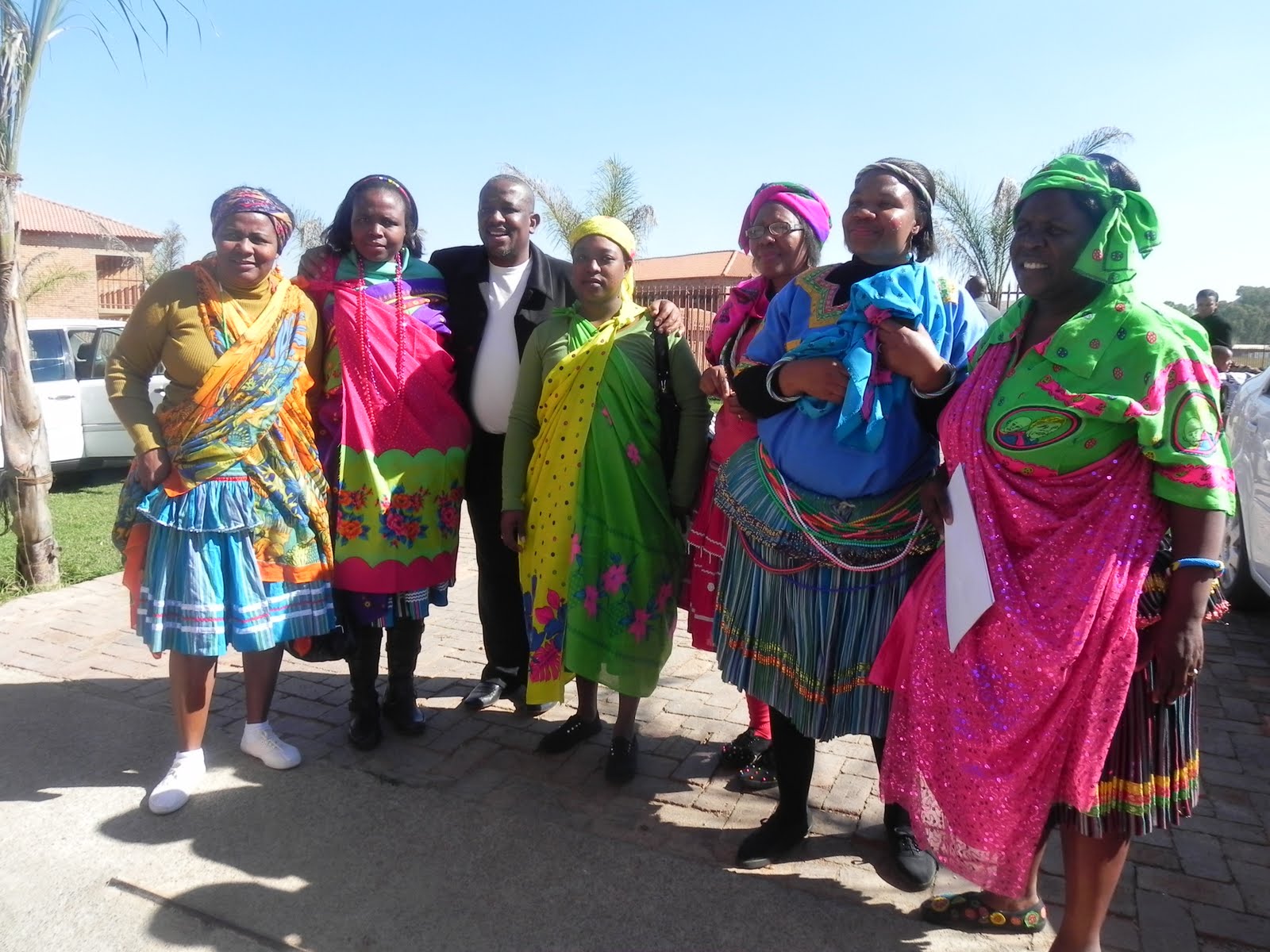
Every August, South Africa commemorates Women’s Month and recalls the courage of the women who marched to the Union Buildings in 1956. The ritual is historically necessary, but remembrance alone is politically insufficient. A democratic society cannot honour women symbolically while reproducing institutions, markets and households in which authority remains disproportionately masculine. Women’s Month should therefore be understood not as a ceremonial pause, but as an annual test of the country’s progress in redistributing power, security and opportunity.
This requires a more rigorous conception of women’s place in society. Too often, public discourse recognises women through biological or familial roles: mother, caregiver, nurturer and custodian of social values. These roles are profound, but they must not become the boundaries of women’s citizenship. Women are not socially valuable only because they give birth, raise children or sustain households. They are equally autonomous citizens, workers, intellectuals, entrepreneurs, political actors and makers of public institutions. The democratic claim to equality rests on personhood, not proximity to motherhood.
The distinction matters because appeals to reverence can coexist comfortably with exclusion. A society may praise mothers while underpaying women, celebrate female resilience while normalising violence, and elevate individual women while leaving patriarchal systems intact. The language of admiration is therefore an unreliable measure of transformation. The more demanding question is whether women possess substantive authority: over resources, institutions, their bodies, their labour and the decisions that shape their lives.
South Africa’s constitutional order provides a powerful normative foundation for gender equality, yet the distance between legal promise and lived reality remains considerable. Women continue to carry a disproportionate burden of unemployment, poverty, unpaid care work and insecurity. Labour-market data released in 2025 showed unemployment among women at 35.9 per cent, compared with 31 per cent among men. Even education does not neutralise the disparity: female graduates faced an unemployment rate of 15 per cent, against 8.9 per cent for male graduates. These figures expose gender inequality as a structural feature of the economy rather than an accumulation of isolated disadvantages.
The same structural logic operates in the household. Unpaid care sustains families, communities and the productive economy, yet it remains undervalued in policy and largely invisible in conventional measures of economic performance. Women’s disproportionate responsibility for domestic work restricts their time, mobility, earnings and participation in public life. A credible transformation agenda must therefore treat childcare, eldercare, social protection, transport, housing and access to basic services as central components of gender policy—not as peripheral welfare concerns.
Power must also be reconsidered within institutions. Representation is indispensable, but numerical inclusion alone does not transform organisational cultures, allocation systems or decision-making practices. Women can enter parliaments, boards and senior management while inherited rules continue to reward masculine networks and silence gendered experience. Transformation thus requires gender-responsive planning, budgeting, procurement and service delivery, accompanied by enforceable accountability. Public and private institutions should be judged not merely by how many women they appoint, but by whether their decisions improve women’s material conditions and institutional authority.
Men have a particular responsibility in this project. Respect for women cannot depend on whether a woman is one’s mother, sister, wife or daughter. Such relational ethics can humanise, but they can also imply that women deserve dignity because of their association with men. The stronger democratic principle is that every woman possesses equal dignity in her own right. Men must consequently interrogate how authority is exercised in homes, workplaces, political organisations and public spaces, and must actively dismantle practices that make domination appear normal.
The socialisation of boys is equally important, but responsibility cannot be placed on mothers alone. The proposition that women must raise better men risks transferring the burden of patriarchy back to women. Families, schools, faith communities, cultural institutions, media organisations and the state all shape masculine identity. Boys should learn that care is not feminine weakness, that consent is non-negotiable, that domestic labour is shared work and that leadership does not require control over others. Gender justice is therefore a society-wide educational project.
Women’s Month must also remain attentive to difference among women. Race, class, geography, disability and migration status shape access to safety, employment, land, finance and public services. A privileged account of empowerment that celebrates elite advancement while overlooking rural women, informal workers and poor households would reproduce the very exclusions it claims to oppose. Gender transformation in South Africa must therefore be inseparable from the broader struggle against poverty and spatial inequality.
The forthcoming local government elections should therefore be treated as a referendum on women’s lived conditions. Municipal dysfunction is profoundly gendered: unreliable water, unsafe sanitation, poor lighting, deteriorating roads and weak waste removal increase unpaid care, time poverty, insecurity and barriers to work. Women, who constitute most registered voters, should demand capable councils, gender-responsive budgets and accountable ward representation. Political parties must field women not merely as symbols, but as decision-makers able to reshape local priorities. A municipality that fails women cannot credibly claim to be developmental, democratic or socially just.
The practical agenda is clear. Government should publish measurable gender outcomes across departments and spheres; budgets should disclose their distributional impact; procurement systems should expand women’s access to productive markets; employers should address occupational segregation and unequal advancement; and the care economy should become visible in economic planning. Civil society and research institutions, in turn, should monitor implementation and translate women’s lived experience into evidence capable of shaping policy.
Commemoration matters when it renews public memory and moral purpose. But its legitimacy ultimately depends on what changes after the speeches, campaigns and ceremonies have ended. Women’s Month should leave behind stronger institutions, safer communities, fairer labour markets and a more equal distribution of care and authority.
South Africa does not suffer from a shortage of declarations about women’s importance. It suffers from the persistence of structures that deny women full social, economic and political power. The measure of our progress will therefore not be the eloquence with which we celebrate women in August, but the seriousness with which we transform the conditions of their lives throughout the year. Commemoration has value only when it changes the distribution of power, opportunity and social responsibility.






Leave A Comment