Introduction: Local Government as the Next Political Test
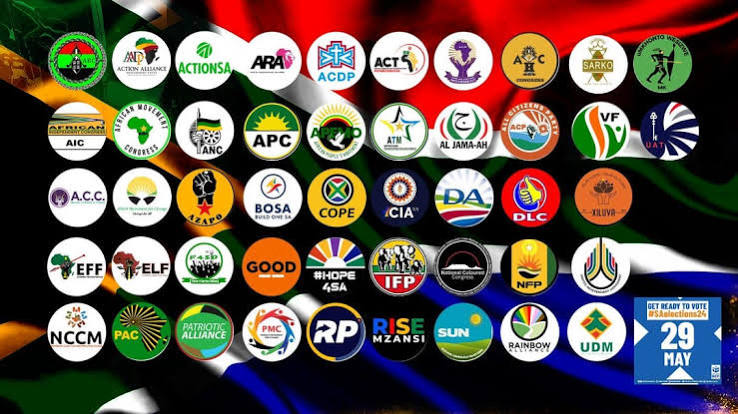
If the latest Ipsos polling is treated as an indicative measure of current electoral sentiment rather than as a definitive prediction, South Africa appears to be approaching the 2026 local government elections as a critical moment in the restructuring of municipal politics. The data suggest more than episodic shifts in party preference. They point to the possible reconfiguration of municipal authority, the weakening of previously secure urban majorities, the localisation of national political fractures, and the normalisation of coalition bargaining as a central feature of metropolitan governance. In this respect, the impending electoral contest should be understood not merely as a municipal event, but as part of a broader transition in the post-1994 party system. It is also the first major electoral waypoint on the road to 2029, when the unstable national settlement produced after 2024 will again be tested nationally.
Municipal Instability and the Logic of Catastrophe
Catastrophe theory offers a useful heuristic for interpreting this conjuncture: cumulative pressures can bring a system to a threshold at which apparently limited triggers produce abrupt and disproportionate change. Applied cautiously to politics, it illuminates the vulnerabilities concealed beneath an apparently stable distribution of power. The essay’s account of MK’s emergence illustrates this unpredictability. A party whose significance was initially underestimated became a consequential actor in the post-2024 political landscape, unsettling established expectations about electoral strength and potential coalition arrangements. Its rise demonstrates why projections of municipal power must allow for discontinuity rather than assume that existing alignments will simply reproduce themselves.
The point is not that democratic breakdown is inevitable, but that political stability requires sustained institutional maintenance. Crises that appear unrelated can converge at a breaking point, exposing structural weaknesses rooted in South Africa’s history and producing outcomes that no single electoral indicator can anticipate. South Africa’s municipal order has carried such stresses for some time: declining service reliability, unstable coalition arrangements, weakened party organisational capacity, fiscal strain, elite contestation over local resources, and citizens whose experience of democratic government is mediated through failing water systems, deteriorating roads, unsafe public spaces and unreliable electricity. The significance of the polling therefore lies not in its predictive certainty, but in its capacity to register wider social impatience with existing institutional arrangements.
The Polling Landscape: From Dominance to Fragmentation
The national pattern implied by the Ipsos polling is analytically significant. Among registered voters who expressed a party preference, Ipsos places the ANC at 31%, the DA at 25%, MK at 14%, the EFF at 11%, ActionSA at 6%, the IFP at 3% and the Patriotic Alliance at 2%. These figures suggest that the ANC remains the largest party but below the threshold of unchallenged dominance; that the DA is sufficiently competitive to contest several urban centres; that MK has consolidated itself as a consequential third force; that the EFF continues to occupy an important mobilising and bargaining position; and that ActionSA, the IFP and smaller formations may exercise decisive influence in specific municipalities.
Methodologically, however, these results should be treated with caution. Ipsos presents them as voting intentions rather than a forecast, and notes that turnout, campaign effects, undecided voters and the widening margins of error that occur when a national sample is disaggregated by metro may materially affect final outcomes (Ipsos, 2026). This is therefore not a political landscape organised around clear majorities and straightforward alternation. It is a landscape characterised by bargaining, veto players, minority administrations, coalition instability and contingent governing arrangements. Local government, as the sphere of government closest to everyday life, may therefore become the institutional site through which post-2024 national fragmentation translates into administrative practice.
Metropolitan Projections and Differentiated Outcomes
The metropolitan projections illustrate this differentiation. In Johannesburg, Ipsos places the ANC at 31%, the DA at 28%, ActionSA at 14%, the EFF at 8% and MK at 6%, suggesting a highly competitive council in which no party is close to majority control. Tshwane appears comparatively more favourable to the DA, with the party at 31% against the ANC’s 22%, ActionSA’s 11% and the EFF’s 9%, although this still does not necessarily translate into an outright majority. Ekurhuleni presents a fragmented configuration, with the ANC at 24%, the DA at 21%, MK at 18% and ActionSA at 13%, making coalition formation a structural necessity rather than a strategic choice. Nelson Mandela Bay is projected as a dead heat between the ANC and DA at 37% each, while Buffalo City is unusually competitive, with the DA at 33%, the ANC at 29% and the EFF at 27%.
Cape Town remains the DA’s strongest metropolitan base, with the party polling at 46% against the ANC’s 26%. eThekwini is the most consequential case: MK is placed at 55%, ahead of the DA at 17%, the ANC at 10% and the IFP at 6%, indicating that the party may not only enter the council as a significant actor but alter the political equilibrium of KwaZulu-Natal’s largest municipality. These figures should, however, be interpreted with caution: Ipsos emphasises that the survey is a measure of voting intention rather than a forecast; that margins of error widen substantially when the national sample is divided by metro; and that turnout, late campaign effects and voter mobilisation may materially alter final outcomes (Ipsos, 2026).
The ANC’s Dilemma: Plurality Without Authority
The ANC’s central dilemma is that electoral plurality no longer guarantees governing authority. A party may emerge first on the ballot while remaining dependent on coalition partners, abstentions or issue-by-issue bargains inside council. This constitutes a new municipal arithmetic. The conventional language of victory is analytically inadequate where a party can lead the field with a reduced share of the vote yet remain unable to govern without former adversaries, breakaway formations, ideological rivals or smaller parties with narrow but pivotal mandates. If the Ipsos trajectory holds, the ANC will need to manage two simultaneous contests: one against opposition parties in municipal councils and another against the continuing erosion of its historical constituencies.
MK and the Localisation of Liberation-Movement Discontent
MK’s emergence is therefore central to any academic analysis of the likely local government outcomes. Its rise should not be reduced to personal loyalty to Jacob Zuma, nor treated simply as an undifferentiated protest vote. It may be better understood as the institutional aggregation of several forms of discontent: dissatisfaction with the ANC’s post-Polokwane trajectory, resentment over perceived exclusion from political and economic networks, provincial identity mobilisation, opposition to the Ramaphosa leadership centre, and a wider perception among sections of the electorate that the liberation movement has lost organisational coherence and moral authority. In eThekwini, these forms of discontent may be translated into municipal power. If this occurs, the implications will extend beyond Durban, affecting debates on land, traditional authority, provincial patronage networks, service-delivery expectations and national coalition calculations.
The DA, EFF and ActionSA: Opposition Leverage in a Fragmented Field
The DA’s strategic position is distinct. It may benefit from ANC decline, but the polling suggests that anti-ANC sentiment does not automatically consolidate into DA dominance. The party has a relatively strong urban campaign machinery, visible mayoral candidates, and a governance-efficiency message that resonates with sections of the metropolitan electorate. However, its support ceiling remains uneven outside its established base. Cape Town is likely to remain its principal metropolitan anchor; Tshwane may represent its strongest Gauteng opportunity; and Johannesburg and Ekurhuleni are likely to remain contested. The DA’s central challenge is whether it can convert plurality into governing legitimacy without being perceived as presiding over an elite compact insufficiently responsive to the redistributive and social questions animating the electorate.
The EFF also occupies a structurally important position. Its projected strength in places such as Buffalo City suggests that it may not always govern directly. Still, it can shape government formation, policy concessions and the distribution of council authority. In municipalities without clear majorities, the EFF’s bargaining capacity may matter more than its aggregate vote share. ActionSA’s concentration in Gauteng introduces a different form of leverage. Its emphasis on urban management, anti-corruption politics and localised leadership appeal may make it an indispensable actor in Johannesburg, Tshwane or Ekurhuleni, even where it is not the largest party.
Coalition Arithmetic and the Problem of Political Settlement
A key institutional risk is that coalition arithmetic may again be treated as a substitute for political settlement. Municipal coalitions do not fail only because parties lack technical maturity; they also fail because councils become arenas in which unresolved national struggles are reproduced. These include succession politics, access to procurement, ideological positioning, factional competition and the pursuit of national visibility through local institutions. The Constitution assigns municipalities developmental, service-delivery and participatory obligations. Yet South Africa’s metropolitan councils increasingly function as theatres of national contestation. This dual character heightens the volatility of the coming local elections.
The Deeper Battle: Party-System Fragmentation and Democratic Renewal
The deeper analytical question is therefore not simply which party is likely to win which municipality. It is whether South Africa can build a more stable democratic settlement amid party-system fragmentation. The earlier ANC majority often obscured contradictions now made visible by electoral diversification. Black political representation is no longer institutionally concentrated within one organisation. African nationalism is increasingly distributed across organisational memory, populist mobilisation, radical economic discourse, provincial identity and civic disaffection. At the same time, historically advantaged constituencies have remained comparatively coherent in their party alignment, while the liberation constituency has fragmented. For this reason, local government outcomes may reveal the underlying structure of South African politics more sharply than national elections.
Likely Outcomes if the Ipsos Trajectory Holds
If the Ipsos polling holds up, several outcomes are plausible. First, outright majorities are likely to become exceptional in major metros, with Cape Town and possibly eThekwini representing contrasting exceptions. Second, Gauteng is likely to remain the epicentre of coalition volatility because Johannesburg, Tshwane and Ekurhuleni combine high symbolic value with fragmented electoral support. Third, the ANC may retain substantial municipal representation while losing the psychological authority associated with dominant-party rule. Fourth, MK may convert provincial discontent into local governing power in KwaZulu-Natal, thereby compelling the national political system to engage with a party whose significance was initially underestimated. Fifth, the post-election period may prove more consequential than election day itself, because governing authority will be constituted through coalition negotiations, speaker elections, mayoral votes, committee allocations and budget agreements.
Implications for Parties, Civil Society and the State
This conjuncture requires analytical seriousness from parties, business, civil society and citizens. Economic actors should not assume that stability can be secured through elite coalition arrangements that lack social legitimacy. The ANC should not assume that liberation memory can, on its own, restore municipal trust. The DA should not assume that administrative competence, however important, is sufficient to address questions of distribution, historical exclusion and social ownership. MK should not assume that oppositional mobilisation automatically produces governing capacity. The EFF should not mistake bargaining leverage for institutional construction. Smaller parties should not treat pivotal status as a licence to weaken municipal functionality. The legitimacy of the next local government order will depend not only on who governs, but on whether governing arrangements can deliver services, ensure accountability, and sustain institutional coherence.
The Road to 2029: Local Elections as National Rehearsal
The 2026 local government elections will also operate as a strategic rehearsal for the 2029 national election. Their significance lies in the fact that they will test whether the post-2024 national realignment is temporary, transitional or structural. The ANC’s decline below majority status in 2024 did not end its position as the largest party, but it did end the assumption that national power could be secured without negotiation. The Government of National Unity, the rise of MK, the DA’s participation in executive power, the EFF’s repositioning, and the growing importance of smaller parties have together produced a political field in which municipal-level contests are already shaping 2029.
Municipal outcomes in 2026 will therefore perform three national functions. First, they will provide evidence of whether the ANC can arrest its organisational decline through credible local candidates, improved service-delivery commitments and renewed ward-level mobilisation. Second, they will indicate whether MK can translate the affective energy of national protest into durable institutional organisation beyond KwaZulu-Natal. Third, they will reveal whether the DA, EFF, ActionSA and smaller parties can move from episodic leverage to sustainable governing credibility. In this sense, 2026 will not merely produce councils; it will generate the political data parties use to shape their 2029 strategies.
The ANC’s 2027 national conference will form the organisational bridge between these two electoral moments. If the party enters that conference after substantial municipal losses, weak coalition performance or intensified fragmentation in its provincial bases, succession politics will become inseparable from the question of national survival in 2029. Conversely, if it performs better than expected in the municipalities, it may enter 2027 with greater capacity to stabilise its leadership transition and renegotiate its relationship with alliance partners, provincial barons and disaffected constituencies. The road to 2029 will therefore pass through both municipal councils and internal party conferences.
The 2029 election may consequently be less a discrete national event than the culmination of a five-year process of political sorting. The key question will be whether South Africa consolidates a negotiated democratic centre, shifts towards a more polarised populist terrain, or enters a prolonged period of unstable coalition governance. Local government will be decisive because voters will experience whether new alignments can govern beyond symbolism. If coalition governments collapse, budgets fail, service delivery deteriorates and mayoral changes become routine, the politics of 2029 may be shaped by disillusionment with coalition democracy itself. If, however, municipalities show that fragmented party systems can still produce accountable administration, 2029 may become the moment when coalition politics is normalised rather than feared.
Conclusion: The Greater Battle Begins in the Municipal Sphere
The coming local government elections may therefore be interpreted as a dispersed democratic reckoning rather than merely as a sequence of municipal contests. Citizens will not only select councillors; they will test whether the democratic system can convert political disaffection into governable institutions. If political leaders treat the polling only as evidence of competitive party positioning, they will miss its broader significance. The electorate appears to be signalling that the post-1994 order has entered a more plural, unstable and negotiated phase. This phase will not end in 2026; it will extend through the ANC’s 2027 leadership transition and culminate in the national contest of 2029. Managed with institutional humility, this transition could create conditions for democratic renewal. Managed through patronage, elite bargaining and short-term coalition manoeuvring, it could deepen the crisis of governability. The greater battle is about to begin because local government is the sphere in which political fragmentation will either be disciplined into developmental administration or expressed as a more profound crisis of democratic authority on the road to 2029.









Leave A Comment