
Patrice Motsepe’s polling lead is less a prediction of the 2027 conference than a revolt against the ANC’s existing leadership supply.
The most consequential finding in the latest Social Research Foundation poll may not be the ANC’s fall to 34%. It is that Patrice Motsepe remains the clear public preference to succeed President Cyril Ramaphosa, drawing 37% against Fikile Mbalula’s 17%. It is a mystery that the SRF does not indicate where Paul Mashatile stands. However, the result does not forecast an ANC conference: branches nominate, delegates vote, and organised networks often prevail over public sentiment. It does, however, reveal that the succession race has already escaped the organisational boundaries within which the ANC once contained it; the branches are organisational entities, and there is a big political market beyond them out there.
The ANC’s 2027 choice will occur after the loss of its national majority, amid coalition government and profound distrust of the political class. The party is no longer selecting a leader whose authority over the state follows automatically from victory inside the organisation. It is choosing a contender who must rebuild a diminished party, hold together a coalition-era government and earn legitimacy from citizens who do not belong to the ANC. Public preference can therefore no longer be dismissed as external commentary on an internal affair.
Decline has changed the meaning of succession.
Under dominant-party rule, the ANC elective conference functioned as the hidden primary of the republic. The leader chosen by several thousand delegates was overwhelmingly likely to become President of South Africa. That political grammar ended in 2024. At 40.18%, the ANC lost its parliamentary majority and entered a Government of National Unity. At the present 34% polling level, the next ANC president may inherit neither a majority nor an uncontested claim to lead government.
This alters the mandate of succession. The winning candidate will have to do more than assemble a slate and control the national executive committee. The successor must negotiate durable coalitions, command confidence across institutional boundaries, reassure a sceptical public and rebuild an organisation whose urban base is collapsing. A leader optimised for branch arithmetic but incapable of national persuasion could win the ANC and still accelerate its electoral decline.
Our earlier work on succession after dominance argued that the central question is no longer who inherits authority, but who can justify exercising it and on what constitutional and moral terms. The new polling reinforces that proposition. It subjects the internal leadership market to an external test: can any candidate appeal beyond delegates, factions and patronage networks to the electorate whose support the ANC has lost?
Motsepe’s lead indicts the existing field.
Motsepe’s 37% is remarkable because he is not an openly declared organisational candidate and has publicly distanced himself from political ambition. By contrast, Mbalula occupies the strategic centre of the ANC’s machinery yet attracts less than half Motsepe’s support. The gap suggests that public demand is not following formal hierarchy. It is searching outside the familiar succession queue for competence, economic credibility, administrative seriousness and distance from factional combat.
This creates a difficult choice for the ANC. If it ignores public sentiment and selects a candidate principally on branch control, it may widen the gap between organisational legitimacy and electoral viability. If it reaches for a wealthy outsider as a rescue figure, it risks converting the leadership contest into proof that money and name recognition can bypass political apprenticeship. This has not worked with Ramaphosa. Motsepe’s lead is therefore a message before it is a candidacy: the established field has not yet persuaded the country that it can lead after Ramaphosa.
The succession market is wider than the Top Seven.
Political convention makes Deputy President Paul Mashatile the positional frontrunner. Mbalula possesses organisational visibility and generational seniority. Other names—including Gwen Ramokgopa, Thoko Didiza, Kgosientsho Ramokgopa, Jeff Radebe and Mcebisi Jonas—reflect the ANC’s uncertainty about the authority it now requires: organisational, technocratic, generational, gendered, economic or symbolic. Motsepe’s prominence adds an external-facing criterion to that uncertainty: who can recover trust among citizens no longer persuaded by internal credentials?
The result may intensify attempts to recruit candidates from beyond the conventional queue and encourage contenders to cultivate public brands before branch nominations begin. It could also sharpen factional suspicion around Ramaphosa’s family and business networks. Any perception that Motsepe is an anointed continuity candidate would provoke resistance, while any attempt to suppress discussion of him could strengthen his outsider appeal. The prudent course is neither coronation nor exclusion, but transparent rules applied equally to all contenders.
The branch–electorate gap is now the central risk.
Public polling does not bind ANC delegates, nor should leadership be reduced to popularity alone. But a party polling at 34% cannot afford to treat electability as ideologically suspect or organisationally irrelevant. The next president must secure two mandates: one from the conference and another from an electorate that has already demonstrated its willingness to remove the ANC from power. Victory in the first without credibility in the second would be pyrrhic.
This is also why succession cannot be financed and brokered in secrecy. Resource-intensive campaigns distort branch deliberation, reward factional brokerage and create obligations that later migrate into appointments and procurement. The ANC should require disclosure of campaign funding, equal access to internal platforms, independent enforcement of nomination rules and public policy debates among contenders. A movement that cannot discipline the terms of its own succession cannot credibly promise to discipline the state.
What the polling requires of the succession debate
Five implications follow. First, succession is already underway, regardless of official attempts to postpone it. Second, Ramaphosa’s declining authority makes an unmanaged contest dangerous for government stability. Third, Motsepe’s lead exposes dissatisfaction with the recognised field rather than guaranteeing his candidacy. Fourth, the winning candidate must be judged on coalition competence, ethical credibility, governing record and national appeal—not branch arithmetic alone. Fifth, no individual can rescue an organisation that refuses institutional renewal.
The ANC should therefore use the period before 2027 to define the office before selecting its occupant. What kind of party is it trying to become after dominance? What coalition doctrine should guide it? Which ethical exclusions are non-negotiable? What economic and institutional programme must the successor implement? Contenders should be compelled to answer these questions publicly. A slate is not a programme, biography is not strategy and wealth is not administrative proof.
The polling has brought the ANC’s leadership deficit into the open. Motsepe’s lead may fade, consolidate or never become an actual campaign. Its significance lies elsewhere: voters are already judging the succession on criteria broader than the branches, and they are not satisfied with what they see. The 2027 conference will therefore decide more than who follows Ramaphosa. It will test whether the ANC can move from inherited authority to earned legitimacy—or whether its next leader will preside over the final conversion of decline into opposition.





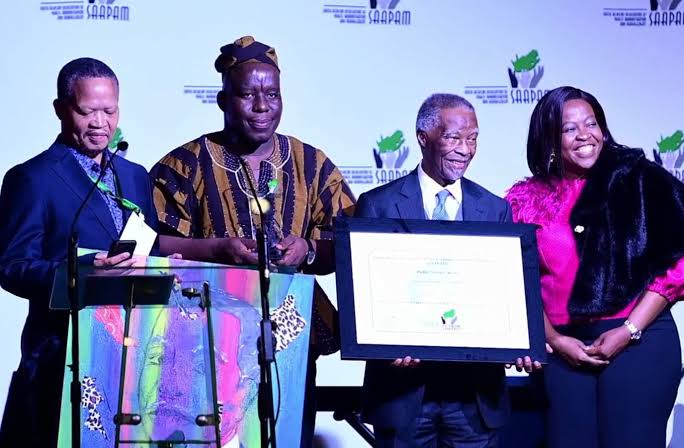
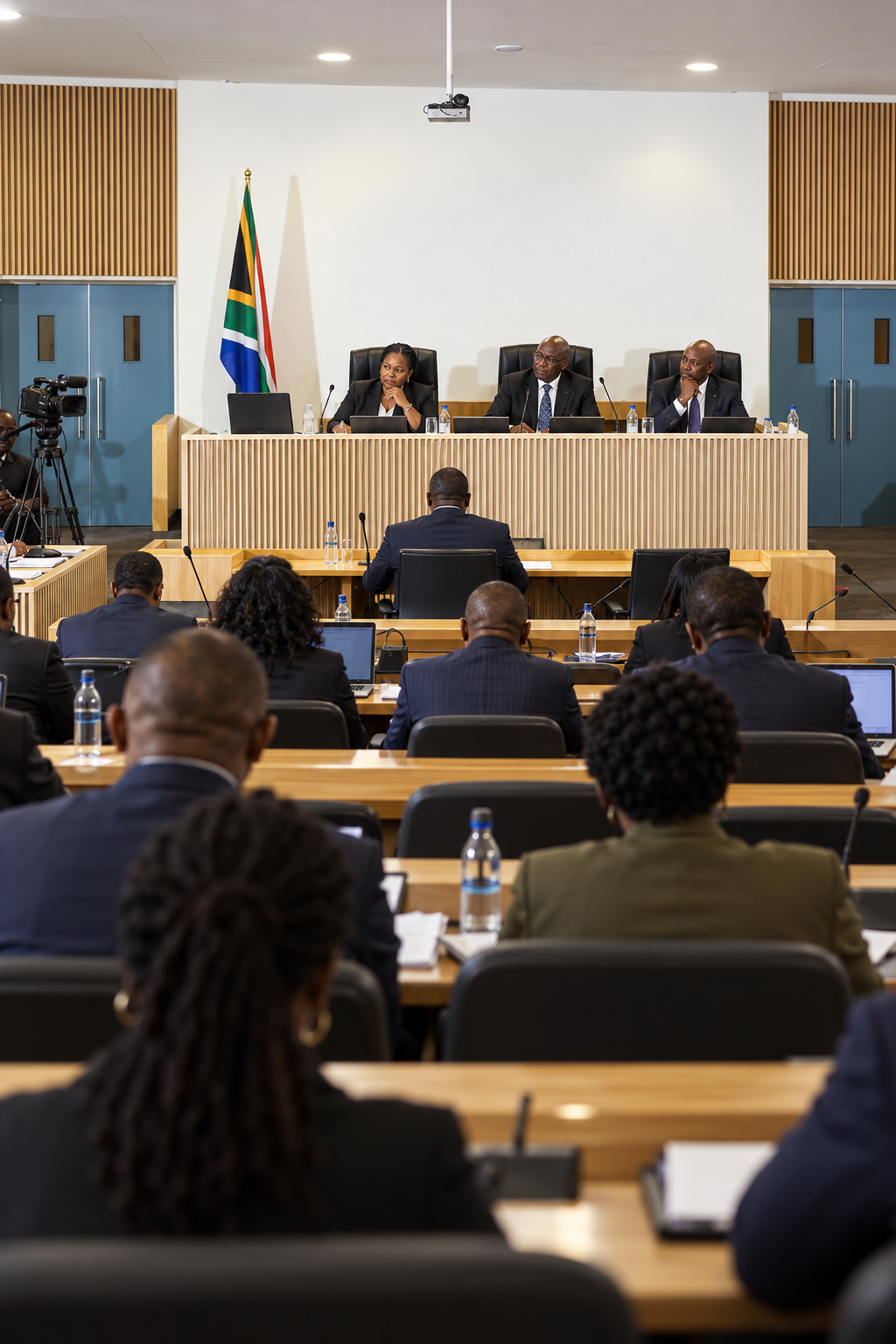
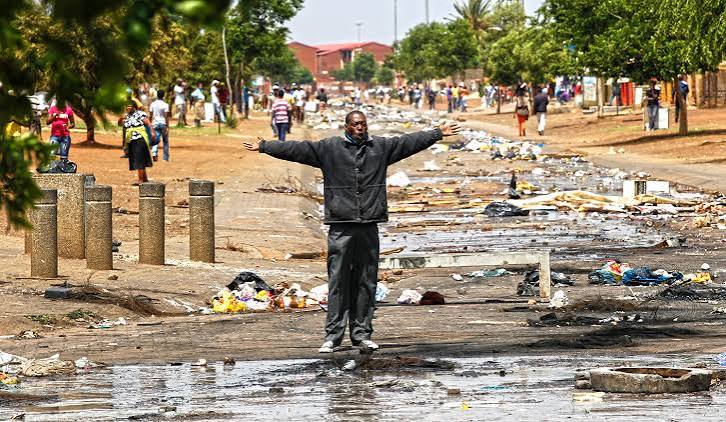
The ANC should seriously face the hard truth of reviewing the essence of real membership and organisational renewal pursuant to the principle of selflessness and collective leadership of the society and not segmental leadership, and put people first than anything else.