
An opinion on renewal, coalition governance and the movement’s duty to rebuild local democracy
The local government elections on 4 November 2026 will be more than a contest for wards and councils. They will be a referendum on whether the African National Congress can convert its enduring political agency into cleaner government, more reliable services and renewed confidence in democratic local power.
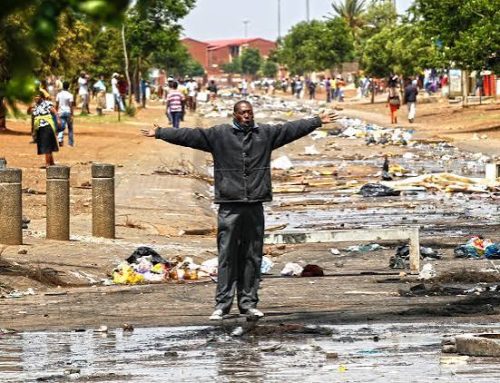
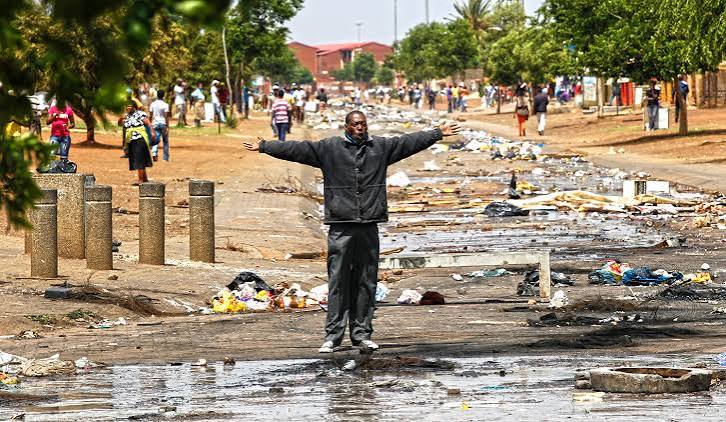
The Electoral Commission has begun the formal campaign toward election day, placing voter participation and democratic responsibility at the centre of the national moment. For the ANC, however, mobilisation cannot be reduced to registration drives and campaign machinery; it must begin with an honest account of what communities’ experience when water fails, refuse is not collected, roads decay and councils become arenas of perpetual political manoeuvre.
The ANC’s task beyond November is therefore clear: it must use its political weight to stabilise coalition governance, restore ethical and capable leadership, and align municipal action with the constitutional promise of a united, developmental and effective state. This task is a message to the 2026 National and Provincial elections coming up in 2029.
The election will measure more than support
Whatever the final percentages, the era in which the ANC could assume an automatic right to govern has ended. Declining electoral support has already changed the character of political power in metropolitan and local councils. Yet diminished dominance does not mean irrelevance: the ANC will remain central to the formation of governments, the stability of councils and the direction of the state.
That residual agency carries a heavier obligation than electoral victory. It requires the movement to decide whether it will use influence defensively, to protect positions and distribute offices, or strategically, to build durable governing arrangements in the public interest. In an age of fragmented mandates, maturity will be measured by the capacity to cooperate without surrendering principle and to share authority without abandoning accountability.
Renewal must become visible in municipalities
The words “National” and “Congress” express an enduring proposition about nationhood. The ANC was created to gather diverse constituencies into a common political project and later became the principal vehicle for building a free, non-racial and democratic society. That history should not be invoked as entitlement; it should operate as a standard against which present conduct is judged.
Municipal government is where that standard becomes tangible. Citizens encounter the state through billing systems, clinics, roads, water, electricity, waste removal and the conduct of councillors. Renewal will remain an internal slogan unless it is visible in competent candidates, transparent appointments, disciplined oversight and consequences for corruption and non-performance.
The ANC’s own rules for the 2026 candidate-selection process recognise this imperative: branches must be restored to meaningful participation, and candidates must combine representativity with the skills required to direct and oversee developmental municipalities. The test is implementation. Communities will judge whether the movement chooses credible public servants or recycles factional compromises.
Coalitions require a new political discipline
Coalition government is no longer an aberration; it is becoming part of the normal architecture of South African democracy. The ANC’s record of civic nationalism, pragmatism and negotiated settlement should equip it to lead in this environment. But history alone will not secure legitimacy. Coalition leadership must be anchored in written programmes, transparent decision-making, stable budget agreements and measurable service-delivery commitments—not in the trading of positions.
The movement must also practise the consultation it expects from its partners. Multi-party governance punishes unilateralism and rewards disciplined consensus-building. Where the ANC leads a coalition, it should set the standard: agreements must be public, disputes resolved through agreed mechanisms, and municipal administrations insulated from recurring political disruption.
Agency must serve a developmental state
The ANC’s capacity to imagine beyond the immediate political moment has not disappeared. What has weakened is the organisational discipline required to elevate leaders who embody that tradition. A new generation must understand that leadership is not possession of office; it is stewardship of a constitutional project whose legitimacy depends on whether the state works for ordinary people.
After 4 November, the movement should establish a compact for every municipality in which it governs or participates: competent leadership, professional administration, responsible coalition conduct, quarterly public reporting and rapid intervention where services collapse. Such a compact would translate renewal from rhetoric into a governing practice that citizens can see and measure.
A call to ANC members
Every ANC member must now become an agent of renewal: rebuild the branch as a centre of community problem-solving, insist on ethical and competent candidates, reject factional gatekeeping and the trading of public office, and hold ANC deployees to measurable standards of service and accountability. Members must return to streets, wards and civic forums not merely to campaign, but to listen, organise and solve problems alongside communities; where coalition government becomes necessary, they must defend transparent agreements that place stable administration and reliable services above partisan advantage. Renewal will become credible only when members demonstrate, through daily conduct, that the movement serves the people before it serves itself.
The movement’s internal values must guide where cadres can contribute most effectively in the organisation and the state. Strategic foresight must discipline emerging leaders to repair what is broken, retain what works and reject change pursued merely for factional advantage. The challenge is not whether the ANC will retain agency after November; it is whether that agency will be exercised with the courage, humility and competence required to renew local democracy. That is the choice before the organisation—and the standard by which history will judge it.





Leave A Comment