
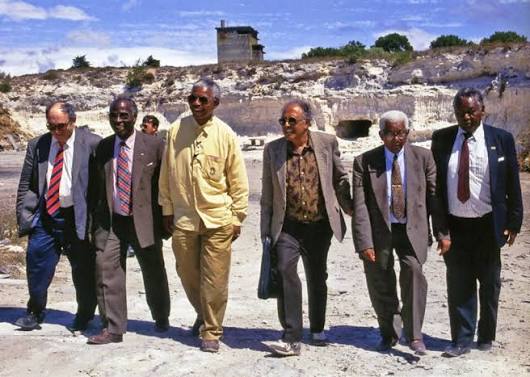
“A liberation movement earns its place in history; a governing party must earn its mandate at every election.”
The African National Congress’s local government manifesto faces a dilemma no liberation rhetoric can resolve: it still advances liberation promises, yet the electorate increasingly judges it as a political party. In the democratic era, historical legitimacy may explain why an organisation deserves gratitude; it cannot indefinitely explain why it deserves power. Elections convert memory into a present-tense test of competence, integrity and relevance. On that terrain, the ANC no longer competes as a liberation movement against colonialism and its racist adjunct apartheid. It competes against societal expectations of government efficiency, while challenging parties offer rival accounts of the future.
This tension has been building since the 2016 and 2021 municipal election outcomes. The May 2024 moment sounded a consequential warning shot for a total loss of political power. The ANC entered government carrying two distinct identities: a liberation movement mandated to complete the unfinished work of liberation, and a governing party required to administer a normative constitutional state. For much of the first three democratic decades, incumbency concealed the contradiction. Large majorities allowed the movement to treat organisational authority, state power and popular consent as though they were mutually reinforcing. They were not. Incumbency enlarged the ANC’s reach, but it also exposed the organisation to patronage, corruption, factionalism and administrative ineptitude. The state changed the movement as much as the movement changed the state. This was especially true in the local government sphere, across 257 municipal jurisdictions.
The constitutional order has also nationalised much of the ANC’s historic programme. Non-racialism, equality, dignity, social justice and accountable government are no longer the proprietary language of one movement. They are constitutional obligations binding every government. Any party seeking office must now campaign, in one form or another, on terrain once dominated by the ANC’s liberation vocabulary. This is one of the movement’s greatest victories, and one of its most profound electoral challenges. The ANC helped create a republic in which its foundational ideals could survive without its permanent rule. The ANC’s political conundrum is that the freedom it fought for may find its ultimate expression in its removal from state power, and it would be expected to be content that the outcome represents the apex of its understanding of its Freedom Charter claims about the will of the people.
Notwithstanding, the organisation has struggled to convert its struggle victory into a modern political identity. Liberation nostalgia and resurgent veteranism continue to compete with institutional renewal. Symbols, rituals and credentials that once produced solidarity can become evasions when they are used to answer contemporary questions about electricity, water, crime, jobs, municipal collapse and ethical government. Voters do not reject history when they demand delivery. They insist that history prove its value in the present.
However, the ANC has modelled its manifestos around its pursuit of liberation promises, seen as a continuum dispersed over political terms of office. The ANC draws the legitimacy of its manifestos from its historical mission declarations expressed in the 1923 African Bill of Rights, the African Claims Document, the 1949 Congress League Programme of Action, the 1955 Freedom Charter, the National Democratic Revolution, the Morogoro and Kabwe Chronicles, the Harare Declaration, the CODESA Accords, and ultimately the 1996 Constitution and its post-liberation pronouncements such as the Reconstruction and Development, GEAR, ASGISA, and the National Development Plan. Plausible as the approach may be, it does not break the continuum into short-term chunks measurable over five years in the immediate political market of voters that see these documents as their own and no longer the ANC’s.
The electoral consequences are now unmistakable. In 2016 and 2021, the ANC lost its urban influence when its metropolitan municipalities repudiated its service delivery record and the integrity of its public representatives. In 2024, the ANC received 40.18% of the national vote and 159 of 400 National Assembly seats, down from 57.5% and 230 seats in 2019. For the first time since 1994, it could not govern alone in South Africa’s consequential centres of state power. The resulting municipal coalitions and the post-May 2024 Government of National Unity were not merely a coalition arithmetic exercise. It was the institutional expression of a deeper judgement: a growing share of citizens no longer regarded liberation history as sufficient security for an electoral mandate.
Identity confusion affects electoral outcomes through three linked mechanisms. First, it weakens accountability. A liberation movement tends to interpret criticism as disloyalty or counterrevolutionary to a historic project; a democratic party must treat criticism as information from citizens it can remove. When poor performance is defended through moral inheritance, voters experience the organisation as entitled rather than responsive. They punish that posture by switching allegiance, withholding turnout or fragmenting their support among new formations.
Second, the dilemma blurs the offer to voters. Is the ANC asking for support because it remains the custodian of liberation, because it can govern better than its competitors, or because its continued power is supposedly necessary for national stability? These are different claims requiring different evidence. When they are bundled together, campaign messaging becomes defensive and internally directed. The party speaks to its own history while an increasingly young electorate asks about its future.
Third, failure to modernise encourages splinter politics. Former leaders and constituencies can claim to represent a purer, more militant or more authentic version of the movement. The rise of competing formations drawing on fragments of the ANC’s ideological, regional and symbolic inheritance demonstrates that liberation capital is divisible. Once divided, it no longer guarantees majorities; it produces rival claims to authenticity and converts internal factional conflict into external electoral competition.
Low turnout sharpens the warning. Electoral withdrawal is not always apathy; it can be a withdrawal of consent. Citizens who believe that changing their vote will not change the conduct of power may stay home. For a former dominant party, abstention among previous supporters can be as devastating as direct defection. The ANC’s electoral problem is therefore larger than opposition mobilisation. It includes demobilising its own social base.
The answer is not to abandon the movement’s non-racial, non-sexist and egalitarian inheritance. Those commitments remain strategic assets in a society fractured by race, class, geography and resurgent ethnonationalism. But they must be translated into constitutional leadership and measurable government. The Constitution should be embraced not as the settlement that interrupted liberation, but as its most authoritative democratic achievement and its continuing terrain of struggle. The unfinished business lies less in discovering another constitutional vocabulary than in building a capable state able to realise the one already adopted.
For the ANC, becoming a modern political party need not mean surrendering its liberation character. It means converting moral authority into institutional restraint, ethical candidate selection, internal democracy, policy clarity and competent administration. The movement must learn to campaign in a republic where citizens owe no party permanent loyalty and where every mandate is conditional. If it succeeds, its history can remain a source of trust rather than a claim of entitlement. If it fails, the electorate will continue doing what democratic electorates are designed to do: redistribute power, deepen fragmentation and force yesterday’s movement to negotiate for tomorrow’s government.





Sterling analysis of the Movement’ s conundrum as it continues to clutch at straws , detached from the citizens and their needs.Indeed the Constitution is the epitome of all rights and freedoms that should be enjoyed by the citizens including the right to life as well as adequate housing and related services eg water , sanitation, health , education etc . Needless to say , all the clauses of the Movement ‘s Freedom Charter are arguably encapsulated in the country’s Constitution.No need for a parallel rhetoric based on erstwhile liberation struggle. Municipalities ought to be the coal face of service delivery rather than political gymnastics. All power , to the people!
Subject: From Liberation Credentials to Liberation Performance – Political Reflection
Dear Comrades,
The article “When Liberation Rhetoric Faces Voter Demands for Government Efficiency” raises an important political question: Can liberation history and political rhetoric continue to secure electoral support when citizens increasingly judge government by the quality, speed and reliability of services they experience every day?
The uncomfortable truth is that historical legitimacy alone cannot guarantee present-day electoral support. Citizens may recognise the ANC’s historic contribution to democracy while simultaneously being dissatisfied with poor service delivery, unemployment, corruption, crime, weak municipal administration and dysfunctional institutions.
This is not necessarily ingratitude. It is democracy.
1. Liberation must produce competent government
The ANC should not see political education and efficient government as competing priorities.
Rather:
«Liberation must produce competent, ethical and accountable government.»
A cadre in 2026 must understand not only political theory and the history of the liberation struggle, but also administration, governance, financial discipline, accountability and community participation.
2. Voters are asking practical questions
The key question should no longer simply be:
«“How do we convince people to vote ANC?”»
It should be:
«“Why should citizens believe that voting ANC will improve their lives and the quality of government in their ward?”»
The answer must be supported by evidence:
– What has been delivered?
– What has not been delivered?
– Why?
– Who is accountable?
– What is being corrected?
– What will be done differently?
3. Political education must evolve
Political education should move beyond explaining historical achievements and defending the movement against criticism.
It must develop cadres capable of listening, diagnosing problems, solving problems and accounting to communities.
The voter can respect the history of the liberation movement while demanding better government today. These positions are not contradictory.
4. The 2026 electoral challenge
For the 2026 Local Government Elections, the ANC needs to connect its liberation mission directly to people’s lived experiences.
If liberation means dignity, government must provide dignified services.
If liberation means equality, government must fight inequality.
If liberation means economic freedom, government must create opportunities for employment and productive enterprise.
If liberation means democracy, government must listen to communities and account to them.
Conclusion
The political lesson is therefore not to abandon liberation politics, but to translate liberation politics into effective government.
The ANC should move from:
«“Vote for us because of who we were.”»
to:
«“Vote for us because of what we stand for, what we have learnt, what we have corrected and what we can demonstrably deliver.”»
I would therefore propose the political-education theme:
FROM LIBERATION CREDENTIALS TO LIBERATION PERFORMANCE
Historical achievements provide the foundation. Competent, ethical, accountable and people-centred government gives liberation its meaning in the lives of citizens today.
Regards,
Comrade Roy Bernard Msiza