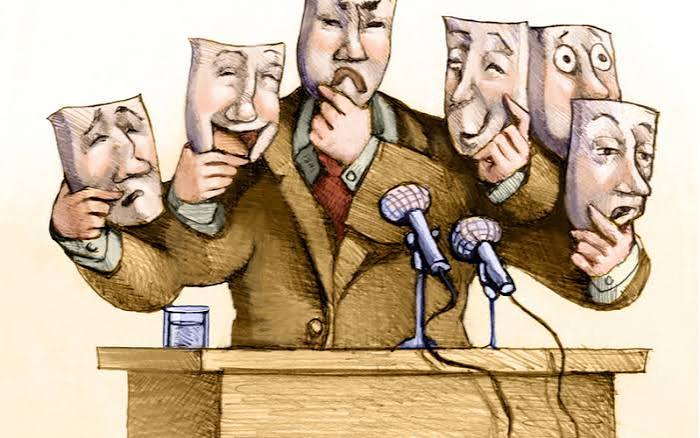
Democracy’s gravest danger is not that power has no face, but that power learns to wear the face of (we) the people
Introduction
Democracy is commonly described through its visible institutions, elections, constitutions, legislatures, courts and systems of social provision. Yet institutions are also stages on which power performs legitimacy, public service and equality while concealing the interests, exclusions and hierarchies that shape social life. This essay argues that democratic citizenship requires more than watching the performance or applauding its familiar rituals. It requires the courage to read beneath the script and identify the masks through which authority presents itself as neutral, benevolent or inevitable.
Drawing on the theatre of humanity as its governing metaphor, the discussion examines the masks of politics, elections, political economy, social relief, justice and equality. Each mask contains an element of democratic promise, but each may also disguise the distance between constitutional ideals and lived reality. To unmask democracy is therefore not to reject its institutions; it is to reclaim them from spectacle by insisting that power remain visible, accountable and answerable to the people in whose name it acts.
The Theatre of Humanity
William Shakespeare observes that, “All the world’s a stage, and all the men and women merely players; they have their exits and their entrances, and one man in his time plays many parts.” In this observation, Shakespeare captures the theatrical quality of human (social, political, economic, or otherwise) life within the theatre of humanity. On this stage, we wear a variety of masks to cover our faces, conceal our authentic selves and project what each scene demands of us as actors. That we are human is a background of permanence no mask can conceal. As consummate performers, we learn throughout our lives, irrespective of age, to elicit particular responses from others through our conduct and posture.
Within this theatre of humanity, we assume roles without assigned scripts because we are simultaneously the scriptwriters, actors, audience and, in many instances, directors of the drama. In displaying our acting prowess, we accept both the rewards and burdens attached to our roles. The masks we wear are expressive and elaborate, carefully projecting what we want those with whom we interact to see and experience. We often adopt them without conscious effort; the ease with which we move between masks makes our multiple selves appear normal. Indeed, these masks have become so central to the identities we project that language, rather than clarifying meaning, may sometimes contradict the performance.
Language, as a carrier of culture and tradition, shapes the quality of our conversational life. In written form, it records the epochs of our civilisations and provides future generations with reference points for understanding the norms and standards that have shaped our ways of living. We also use language, and the texts that preserve it, to express moral judgements. Yet the masks we wear have become a second language: one that transcends speech and writing because it can be understood without mastery of their lexical demands. Since these masks are observable and decodable, and since the impressions they create can be managed, they have become a dimension of our humanity that shared norms must guide. Without such guidance, the wide latitude afforded to performance may produce apparent pathways to peace that ultimately collide with established civilisations
The insatiable human desire to communicate feelings without compromising relationships has elevated masks into a mechanism for regulating the tensions inherent in social life and preventing them from contaminating the theatre of humanity. Although these masks may conceal underlying realities, they inevitably leak through gestures, tone of voice, facial expressions and posture. Only through training—or habitual hypocrisy—can people consistently sustain the intentions demanded by a particular act and scene.
Humanity’s capacity to perform what it does not believe—or to believe in a role selected for a particular scene—is rooted in the pursuit of interests, whether selfish, generous or mixed. Because competing interests are a condition of human diversity, acting to advance one interest over another has become a dominant feature of almost every drama in the theatre of humanity. Only the disciplined use of society’s collective intelligence can protect us from entrenched, interest-driven actors who dominate social scripts under the euphemistic label of leadership. Unless we recover the curiosity that defines children, the masks worn in spaces of power will prevent us from examining the intentions beneath the performance and leave us as consenting participants in narratives whose destinations we do not know.
Democracy as Performance
In a democracy, these performances are often attached to themes that naturally provoke public concern. Humanity’s attachment to the accepted benchmarks of civilisation creates the platform on which the currency of the trusteeship market—elections—circulates. Within this market, corruption is commonly located in the public sector, while the private sector is presented as an unwilling beneficiary of conduct that threatens civilisation. Private collusion is then portrayed as an expression of hostility towards political power and superiority, turning the corruption-themed scene into one of the great global masks through which humanity becomes a cheering victim. Beneath that mask lies the scriptwriters’ intention to sedate an otherwise unsuspecting audience. In this numbed condition, society may begin to celebrate its own demise as a species capable of choice.
From Visible Crises to Invisible Masks
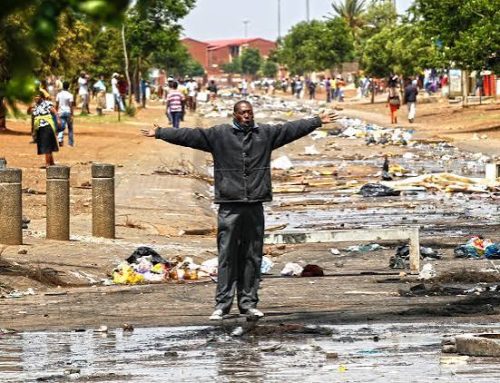
It is these invisible masks that we need to think about; we are often called to wear the visible masks occasioned by a much more threatening reasons: administrative ineptness, service delivery failures, uncoordinated public policy formulation, dysfunctions in health, education, crime prevention, national security, and political economy management amidst a declared intent to recognise the injustices of the past and heal division emanating from there.
Like the invisible human pandemic of inveterate lying, information manipulation, con artistry, manufactured deception, and manufactured consent, the psycho-social and emotional costs of the mask-wearing pandemic will be the most consequential in defining human civilisation beyond the human headcounts that are legitimately the focus of our intervention. The question, therefore, is: what other nonphysical masks require our observation, decoding, and management as a society? Conditions such as COVID-19, which had death as a consequence, thus a clear threat, called for extraordinary measures; at the apex of such was the space of arbitrary decision-making, notwithstanding a towering normative constitutional order, accorded to all who were in leadership positions, or rather, who predominate the societal scripts at play in this phase of the human act, as this rendition argues. The masks of politics, political economy, social relief, justice, and equality continue to require unpacking to triangulate the masks that we are also wearing as a society.
Unmasking Democratic Society
The Mask of Politics
Politics is perhaps the most visible of the invisible masks because it converts contests over interests and power into performances of public service, necessity and collective purpose. During crises, political actors may present exceptional decisions as ideologically neutral, even when those decisions distribute authority, protection, sacrifice and hardship unevenly. The mask is sustained by speeches, symbols and claims of urgency that invite citizens to identify with the performance rather than scrutinise the interests beneath it. Unmasking politics therefore requires asking who defines the emergency, who writes the response, whose voices are excluded, which institutions are weakened and whether temporary powers are quietly being normalised.
The Mask of Elections
Elections are the constitutional currency through which citizens confer, renew or withdraw the trusteeship of public power. Yet the ritual of voting can itself become a mask when the holding of regular, free and fair contests is treated as sufficient proof of a living democracy. Campaigns compress complex realities into slogans, manifestos rehearse promises that may disappear after the count, party brands substitute for direct accountability, and the electorate is invited to perform sovereignty for a day while remaining an audience for the years that follow. South Africa’s 2024 election pierced this mask by ending the governing party’s national parliamentary majority and compelling a new era of negotiated, multiparty government. Its deeper lesson is that an election is not democracy’s conclusion but its recurring audit: the ballot must be followed by transparent coalition agreements, responsive representation, institutional oversight and continuous citizen participation if electoral choice is to become accountable government rather than merely a change of cast.
The Mask of Political Economy
The mask of political economy conceals the distributional choices embedded in apparently technical decisions about budgets, markets, taxation, procurement, labour and ownership. It presents the economy as a self-regulating sphere governed by expertise and inevitability, while obscuring the political power that determines who owns productive assets, who absorbs risk, who receives public support and who is expected to endure austerity. In this performance, private accumulation may be celebrated as efficiency while public deprivation is attributed to individual failure. To remove the mask is to recognise that economic policy is also social policy: it allocates dignity, opportunity and vulnerability. It must therefore be judged by whether it transforms inherited inequality or merely administers it.
The Mask of Social Relief
Social relief wears the compassionate face of an emergency intervention, yet it can conceal the structural conditions that repeatedly make relief necessary. Grants, food parcels and temporary income support may protect life and dignity. Still, they also risk being staged as discretionary generosity rather than the practical expression of a constitutional obligation to advance social security. The Special COVID-19 Social Relief of Distress grant showed both dimensions: it provided an essential lifeline to unemployed and vulnerable adults, while its temporary character exposed the depth and permanence of economic insecurity. Unmasking social relief therefore means asking whether it is a bridge to inclusion and capability or a mechanism for managing poverty without changing the relations that reproduce it.
The Mask of Justice
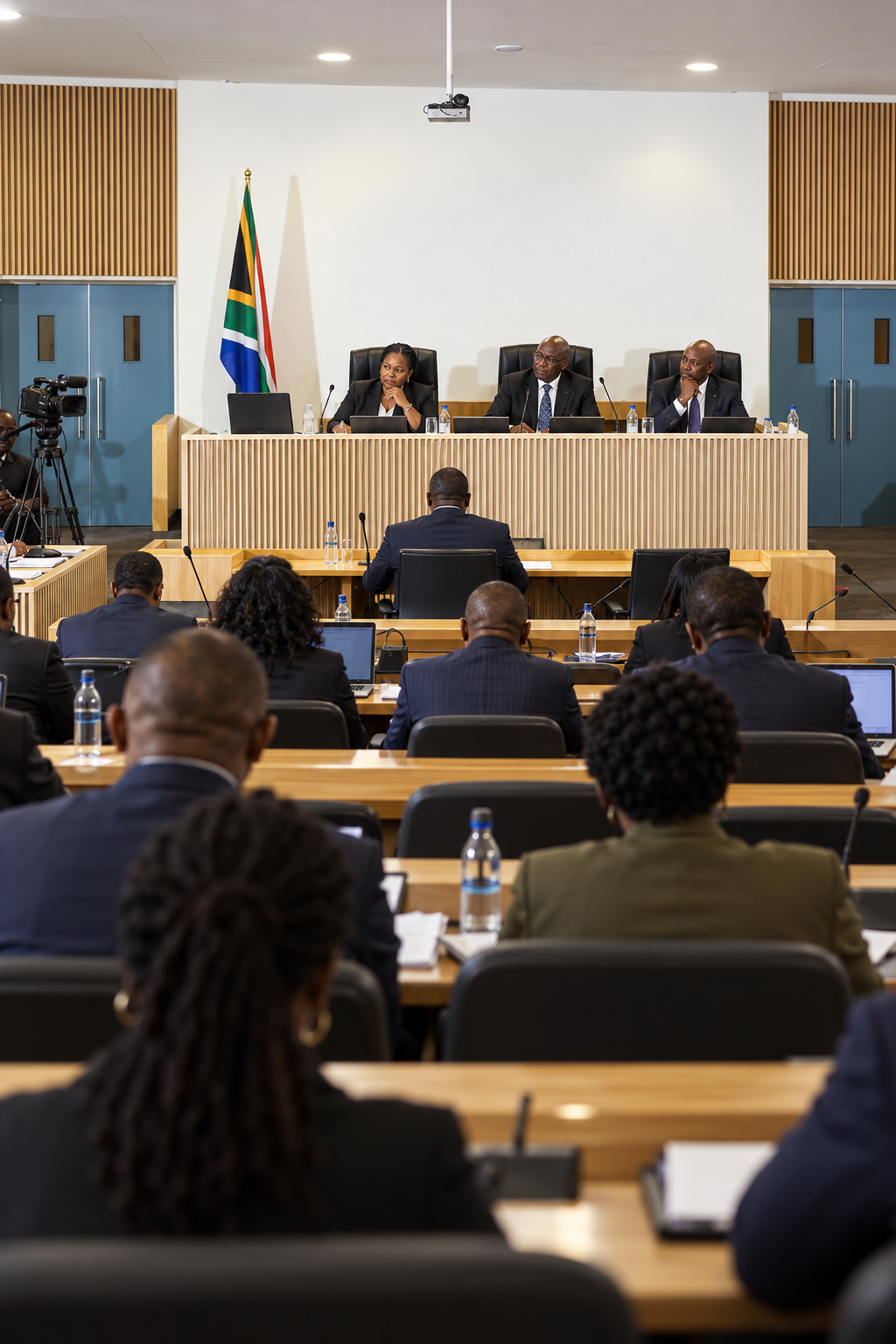
The mask of justice appears whenever formal legality is treated as proof of substantive fairness. Courts, rules and procedures are indispensable, but equal procedures can reproduce unequal outcomes when access to legal representation, information, time and institutional power is uneven. Justice is also masked when accountability is selectively demanded—harshly from the powerless, cautiously from the powerful—or when lawful administrative conduct is accepted despite its indifference to lived suffering. To unmask justice is to test law and public action against the constitutional demand for dignity, fairness and redress, ensuring that the rule of law becomes an instrument of transformation rather than a ceremonial shield for inherited privilege.
The Mask of Equality
Equality is masked when identical treatment is mistaken for equal freedom. Formal equality may proclaim that every person stands before the same law. Yet, it can ignore radically different starting points shaped by dispossession, race, class, geography, gender and unequal access to education, health care and economic opportunity. The performance of sameness then becomes a means of protecting inequality, because measures of redress are portrayed as unfair advantages rather than efforts to secure full and equal enjoyment of rights. Unmasking equality requires moving beyond abstract declarations toward substantive equality: deliberate action that dismantles structural barriers, repairs past injustice and enables every person to participate in society with dignity and real capability.
What the Masks Reveal
Taken together, these masks yield several enduring lessons. First, every public performance must be examined for the interests, assumptions and distributions of power concealed beneath it. Second, elections confer authority but do not exhaust democracy; the ballot must be followed by accountable representation, transparent governing arrangements and sustained citizen vigilance. Third, political and economic decisions are never merely technical: they determine whose dignity is protected, whose hardship is normalised and whose voice counts. Fourth, relief without structural reform can preserve life while leaving the machinery of deprivation intact. Fifth, legality without substantive justice, and equal treatment without redress, may reproduce the very inequalities they claim to overcome. Finally, an alert citizenry must refuse the passive role of audience and instead question the script, scrutinise the actors and insist that public institutions serve constitutional democracy, human dignity and the common good.
Conclusion: From Audience to Author
Democracy, then, must be judged not by the persuasiveness of its performances but by its capacity to expose power to public scrutiny and translate constitutional promises into lived reality. Elections may change the cast, relief may soften immediate hardship, and law may affirm formal rights. Yet, none of these is sufficient if political and economic arrangements continue to reproduce exclusion, dependency and unequal citizenship. The democratic task is therefore to cultivate a society that can read beyond the script, one in which citizens remain vigilant after the ballot, institutions resist capture, leaders are held to account, and justice and equality are pursued as substantive conditions of human dignity. Only when the audience becomes an active author of the democratic drama can public life move from managing appearances to transforming reality. The future of our humanity will depend not on how convincingly we wear our masks, but on whether we dare to remove them.




Leave A Comment