

An essay on elite circulation, democratic authority and the reconstruction of elite–mass linkages. It supports deeper conversations between the Thinc Foundation, partners, and vision-sharing institutions as they chart a strategic path beyond narrow party politics and the contestation for personalised number plates.
Introduction
South Africa is living through the painful construction of its post-apartheid elite structures. The process is difficult precisely because it carries a double historical burden: the country must dismantle institutions, privileges and habits formed through racial domination while constructing a non-racial future in which authority, expertise and social advancement serve a common citizenship. Democratic transition altered the formal basis of rule and widened access to positions once monopolised by a white minority. Yet it did not automatically dissolve inherited concentrations of wealth, knowledge and institutional power, nor did it ensure that newly ascendant political, professional and business strata would remain socially connected to the majority. The central question is therefore not simply whether an old elite has been displaced, but whether the emerging order is democratising authority or merely diversifying privilege.
To ask whether history is a graveyard of aristocracies is thus to ask how ruling groups lose legitimacy, how new elites are recruited and how power can be prevented from closing around its incumbents. In this essay, African is read in a deliberately non-racial civic sense: not as a biological designation or an exclusive claim to belonging, but as a shared political location and an obligation to build a just future on this continent. This reading does not erase the racial past or weaken the case for redress. It insists, rather, that redress must dismantle the structures through which race became destiny while enlarging the institutional foundations of equal citizenship.
The argument proceeds through authoritative concerns with coercion, organisation, opinion, elite circulation and the relationship between rulers and the ruled. Its governing claim is that elites are unavoidable, but aristocracy is not. A democratic society may require specialised leadership and organised centres of influence; it need not tolerate inherited supremacy, factional entitlement, impunity or social distance. South Africa’s historic task is therefore to civilise elite formation: to open recruitment, bind power to law, institutionalise scrutiny, create durable channels of popular voice and cultivate civic fidelity among those who acquire influence. The quotations that punctuate the discussion serve as navigational markers through this inquiry, testing South Africa’s experience against the enduring warnings of elite theory while refusing to treat oligarchy as destiny.
“History is the graveyard of aristocracies.” Pareto’s severe proposition supplies the right question for South Africa, but not a predetermined answer. The country is not merely replacing one ruling group with another. It is attempting the more difficult work of reconstructing authority after centuries in which race organised citizenship, property, education, prestige and access to the state. Its democratic project must therefore alter who occupies positions of influence without reproducing the closed habits of the order it displaced. The issue is not whether elites will exist: every complex society generates leadership, expertise and institutional hierarchy. The issue is whether South Africa’s emerging elites can become constitutionally restrained, socially permeable and answerable to the people from whom democratic authority proceeds.
The Question Behind the Title
The authoritative question is already embedded herein: what is the relationship “between rulers and the ruled, between representatives and the represented, between leaders and the led?” In South Africa, this is inseparable from a second question: can the social advancement of those historically excluded produce a genuinely new public order, or will it merely alter the complexion of privilege? The answer turns on two movements of power:
- the downward movement by which elites organise institutions, define public problems, mobilise consent and exercise authority; and
- the upward movement by which citizens organise interests, discipline representatives, contest agendas and compel responsiveness.
The term African is used here through a non-racial lens. It does not name a biological population or an exclusive entitlement to belonging. It names a civic location, a historical responsibility and a shared political future on this continent. Sobukwe’s formulation remains the clearest compass: “Every person who is in Africa will be African, and a man’s colour will be as irrelevant as is the shape of his ear.” The African elite contemplated in this essay is therefore a South African elite constituted from all communities, judged not by pigmentation but by its fidelity to constitutional democracy, social justice, competence and the common good.
Coercion: From Racial Command to Constitutional Authority
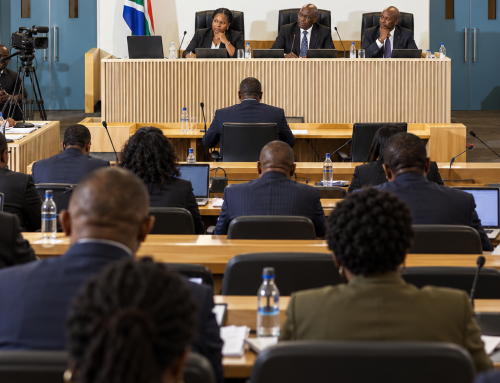
“Every state is founded on force,” Weber approvingly quotes Lenin. Apartheid made this maxim brutally concrete: coercion was racialised and deployed to preserve a closed political and economic aristocracy. Democratic South Africa cannot abolish the state’s coercive capacity, but it must transform its moral and institutional character. Police, courts, revenue authorities and regulatory institutions are legitimate only when force is subordinated to law, equally applied and publicly reviewable. Where coercive institutions become partisan, predatory or purchasable, elite replacement degenerates into elite capture. The democratic state then ceases to protect the public and becomes an instrument through which competing factions convert political access into private advantage.
Organisation: The Promise and Peril of the New Elite
Michels’s warning—“Who says organisation, says oligarchy”—is especially pertinent to a liberation movement that became a governing party, and to professional, business and administrative strata enlarged by democratic reform. Organisation is indispensable: complex societies require specialists, disciplined parties, capable bureaucracies, universities, think tanks, corporations and associations. Yet organisation accumulates informational advantages, controls recruitment and creates incentives for incumbents to reproduce themselves. In South Africa, demographic transformation opened institutions that had been racially sealed. That achievement is historically significant. But representation at the top does not by itself democratise the structure beneath it.
The danger is a bargain between old capital and new political access: inherited wealth preserves its commanding position while politically connected entrants gain selective admission. Such circulation can change the faces of privilege while leaving the architecture of exclusion substantially intact. The decisive test is therefore not simply who has entered the elite, but what kind of elite has been produced: productive or rent-seeking, institution-building or extractive, publicly accountable or socially distant. A democratic elite must make institutions larger than its members; a predatory elite makes institutions instruments of its members.
Opinion, Agenda and the Distance from the Masses
The “cascade” model of opinion is a useful description of democratic inequality. Information and interpretation travel more easily downward than upward: from political and economic elites, through media and organised opinion leaders, to citizens. South Africa’s communications order has multiplied voices, but access to agenda-setting remains unequal. The person without water knows the fact of deprivation; the elite often retains the power to name its cause, rank its urgency and choose its remedy. Hence Schattsneider’s formidable aphorism: “He who determines what politics is about runs the country.”
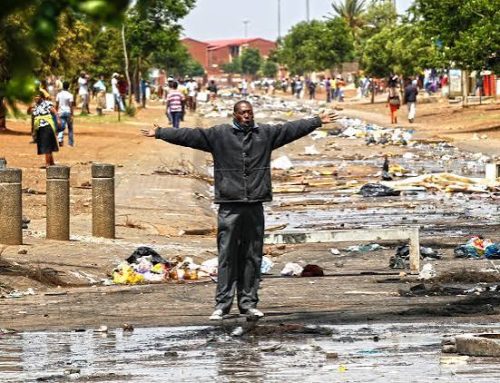
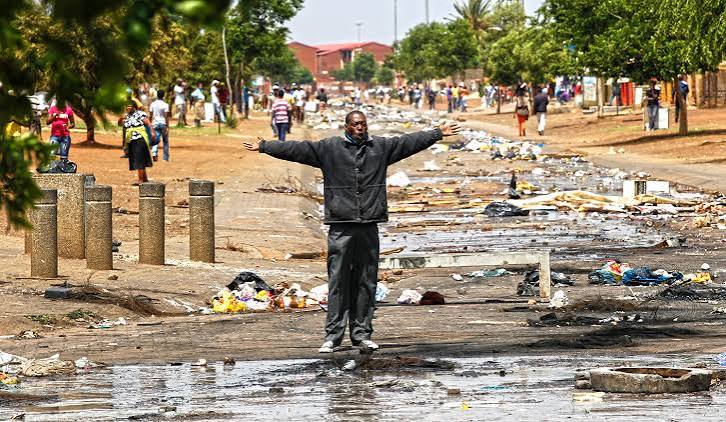
This does not mean that citizens are inert. Public protest, elections, trade unions, community organisations, courts, investigative journalism and digital networks all create “capillary movement” upward. But episodic protest is a weak substitute for durable representation. When communities become visible only when they burn tyres, democratic communication has already failed. The middle strata—teachers, nurses, public servants, professionals, entrepreneurs, clergy, scholars, journalists and civic organisers—should operate as connective tissue: translating lived experience into public reason and converting policy into intelligible obligation. Their historical vocation is not to buffer elites from popular anger, but to prevent the governing class from becoming deaf.
Between the isolated citizen and the commanding heights of power stand organised formations deliberately created to cultivate civic fidelity and public voice. Civic fidelity is not a declaration of loyalty or a ceremonial attachment to constitutional values; it is observable conduct. It is shown when members obey the law even when evasion is convenient, disclose conflicts of interest, protect public resources, give reasons for decisions, submit authority to scrutiny, defend the equal standing of political opponents, participate consistently in civic institutions and remain answerable to communities after acquiring status or office. Foundations, professional associations, alum networks, civic academies, research institutes, neighbourhood forums and movements of public ideas are therefore not merely interest groups.
At their best, they are schools of democratic character. They gather dispersed experience, submit private ambition to collective purpose, teach the disciplines of evidence and argument, and prepare members of the emerging middle strata to regard advancement as a public obligation rather than an exit from society. In this sense, elite formation is never only the accumulation of qualifications, wealth or office; it is also the organised production of norms that can be recognised in practice. A democratic elite must be socialised into fidelity to the Constitution, the rule of law, ethical leadership and the dignity of those without institutional access—and must demonstrate that fidelity through its choices, procedures and public consequences.
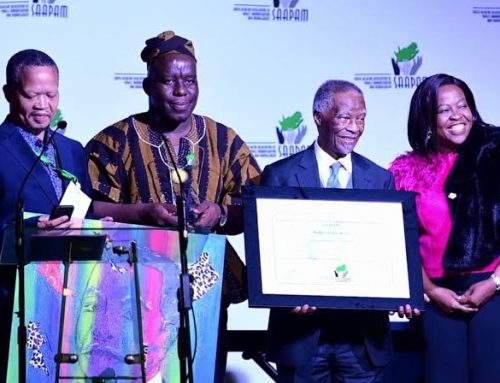
Ideation platforms such as The BPI Foundation, Ndhavuko, Trailblazers, and several other Thinc Foundation vision-sharing bodies and professional associations exemplify this mediating vocation. The Thinc Foundation helped conceptualise, institutionalise, and establish several institutions and platforms where leaders and citizens can exchange ideas, conduct and respond to research, advocate, build networks, and address challenges confronting communities. The purpose of these bodies is not simply to gather prominent voices, but to help forge principled agreement around ethical leadership, the rule of law, development and social stability.
Their significance should be measured by democratic additionality: what civic capacity exists in them that would otherwise be absent? Relevant evidence includes whether they bring new constituencies into public deliberation, convert community experience into credible policy influence, develop ethical leaders beyond established networks, return knowledge and practical solidarity to communities, and strengthen citizens’ ability to hold power to account. Non-partisan voter mobilisation and community outreach illustrate the two directions such formations must sustain—upward, by carrying social experience into national debate; and downward, by widening constitutional literacy, organisation and agency. Properly constituted, organisations of this kind become nurseries of a non-racial African elite: not closed circles validated by the prominence of their members, but civic institutions demonstrably enlarging who can speak, organise, lead and exact accountability.
The difficulty is that upward mobility may produce social distance. As households escape insecurity, they may withdraw into private provision—private education, private health care, private security and insulated residential space. Exit then replaces voice. The emerging stratum becomes less a bridge to the majority than an archipelago of personal escape. The result is a paradox: racial diversification at the summit can coexist with deepening class separation below it. Research on South Africa’s social space confirms that privilege remains strongly racialised even as forms of middle-class advantage extend beyond the formerly exclusive white core. The intellectual mistake would be to choose between race and class; the national task is to understand their intersection without allowing either category to become a permanent civic destiny.
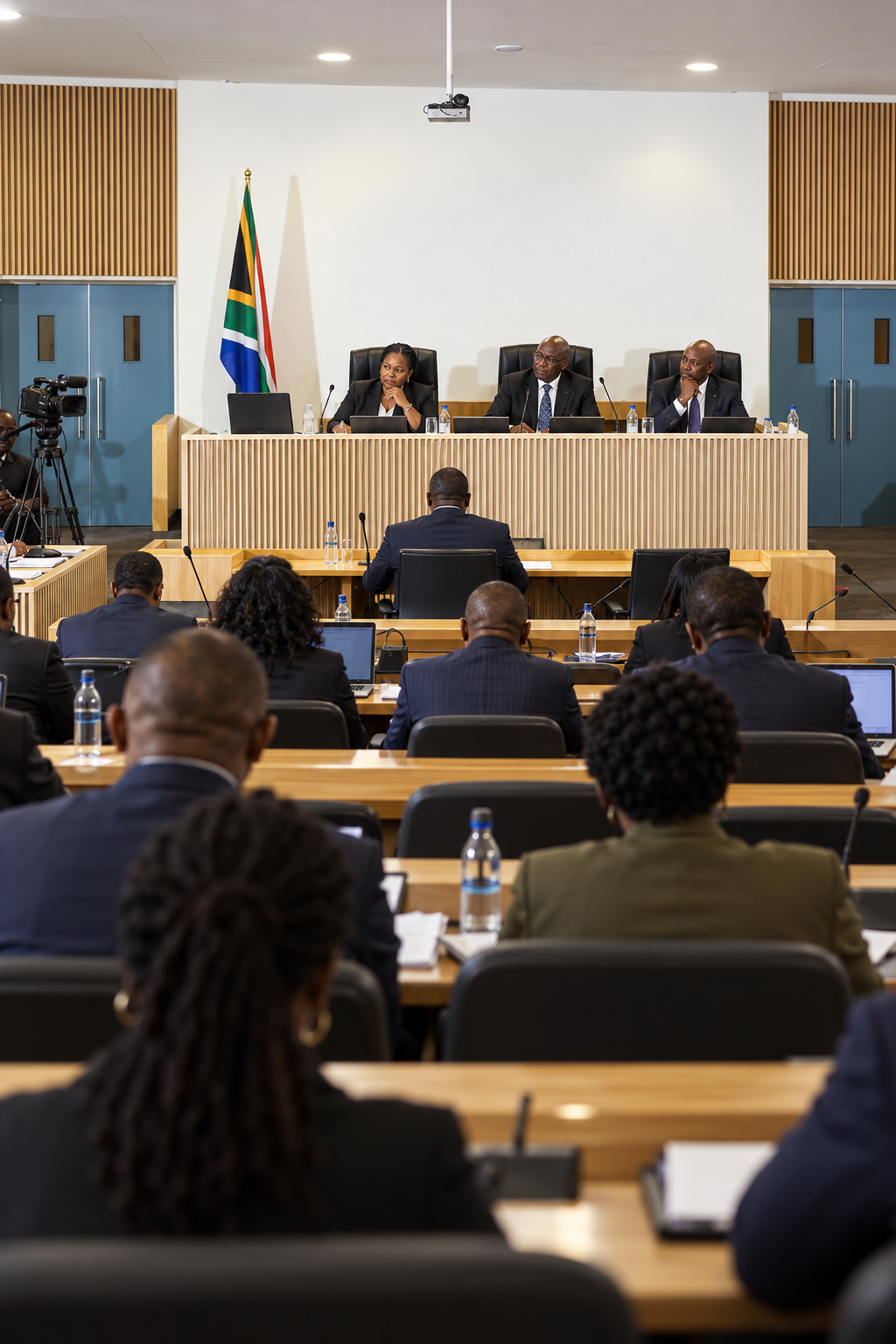
Leadership remains necessary because, as this discussion observes, elites mediate “between the world of remote and complex events and the mass of the public.” But mediation is democratic only when it clarifies rather than mystifies, listens as well as instructs, and exposes itself to correction. The country needs elites capable of translating private pain into public questions without appropriating the citizen’s voice. It equally needs institutions that permit the public to reject the translation.
Is South Africa Building a New Aristocracy?
The honest answer is: it is constructing several elites at once. One is inherited, grounded in accumulated capital, property, education and networks. Another is political, generated by party office and control over public appointments and procurement. A third is professional and technocratic, deriving authority from specialised knowledge. A fourth is cultural and communicative, exercising influence over what society sees and how it interprets itself. These formations overlap, bargain and compete. None is racially pure; none is politically innocent. The danger lies in their convergence into a closed establishment whose members circulate among party, state, corporation, consultancy and media while the majority remains an audience to decisions.
Yet Pareto’s graveyard is not destiny. Elites perish when they lose adaptive capacity, moral authority and contact with the society beneath them. They endure democratically when recruitment remains open, performance is exacted, corruption carries consequences and citizens can remove leaders without destroying the institutions they temporarily occupy. The point of constitutional democracy is not to abolish circulation but to civilise it: office must be temporary, reasons must be public, and succession must be governed by rules rather than inheritance, faction or violence.
From Elite Replacement to Democratic Reconstruction
If elite circulation is to be civilised rather than merely managed, South Africa must translate the preceding diagnosis into institutional disciplines. The task is to move beyond a thin politics of representivity—concerned principally with who enters positions of influence—toward a thicker politics of democratic reconstruction, concerned with how authority is recruited, exercised, scrutinised and renewed. Five disciplines are essential:
- Open recruitment with substantive redress. We must repair historical exclusion, and entry into public authority should pair representivity with demonstrated capability, ethical fitness, and transparent selection.
- Professional institutions. The state, universities, professions and public corporations must cultivate expertise that serves constitutional purposes rather than factional markets.
- Organised upward voice. Ward systems, legislatures, unions, professional bodies and civic forums must convert experience into influence before frustration becomes rupture.
- Material bridges. Quality public education, health care, transport, safety and digital access are not only services; they are the shared institutions through which separated classes encounter a common citizenship.
- Rule-bound circulation. Term limits, oversight, asset disclosure, competitive appointments, independent enforcement and credible succession planning must make elite renewal ordinary rather than catastrophic.
These disciplines give concrete meaning to the proposition that “South Africa belongs to all who live in it.” Non-racialism is neither historical amnesia nor a prohibition on redress. It refuses to make inherited racial classification the final grammar of the future. Redress must dismantle racialised structures while enlarging a common civic world. Read in this way, African names are neither a gate nor a quota of belonging; they name the democratic home we are obliged to build together.
Call to Action: Organise the Democratic Middle
The argument must now leave the page and enter organised life. South Africa cannot wait for a virtuous elite to appear spontaneously, nor can it entrust democratic renewal to periodic elections and eruptions of public anger. Citizens, professionals, workers, entrepreneurs, scholars, faith communities and cultural leaders must deliberately constitute a democratic middle: a field of organised civic power capable of connecting communities to institutions, knowledge to action and advancement to obligation. Our immediate task is to join, build, and sustain formations that develop constitutional literacy, convene difficult non-racial conversations, monitor public institutions, cultivate ethical leaders, and translate local experience into credible policy demands. Their success should be judged by observable civic fidelity: lawful conduct, transparent decisions, accountable leadership, protection of public resources and continued answerability to communities. Voice becomes consequential when it is organised; fidelity becomes durable when it is practised in institutions.
- Citizens must move from spectatorship to membership: participating in community forums, professional bodies, public consultations and accountability campaigns, while insisting that race-conscious redress serves a shared non-racial future.
- Organised civic formations, such as the BPI Foundation, must become permanent schools of public leadership—identifying talent beyond established networks, mentoring emerging thinkers and practitioners, and creating channels through which marginalised voices can shape national agendas.
- The emerging middle strata must resist private escape as a complete social philosophy. Education, expertise, networks and professional standing should be reinvested in public institutions and communities rather than used only to purchase distance from collective failure.
- Political, economic and administrative elites must open recruitment, publish reasons, accept scrutiny and make succession rule-bound. Authority deserves respect only when it can account for itself.
- Universities, the media and knowledge institutions must widen the circle of legitimate speakers, turn technical information into public knowledge and defend evidence-based debate against propaganda, factionalism and racial essentialism.
This is not a call for consensus without contestation. It is a call to organise disagreement within a common constitutional home and to make public leadership answerable to those who live with its consequences. The test for every foundation, association, party, board, university and professional network is therefore simple: does it widen democratic agency, circulate opportunity and return knowledge to society, or does it merely reproduce access among insiders? South Africans should support the former, reform the compromised and withdraw legitimacy from the latter. If the country is to prevent its new elite from becoming a new aristocracy, the democratic middle must stop being an audience and become an author of the republic.
Conclusion: What Belongs in the Graveyard
Is history a graveyard of aristocracies? Yes—when ruling groups mistake temporary command for permanent entitlement, confuse access with virtue and sever themselves from the people. But South Africa’s ambition should not be to place one racial aristocracy in the graveyard and install another above it. What must be buried is aristocracy itself as a principle of closure: inherited supremacy, politically allocated privilege, impunity, social distance and the monopolisation of voice. What must be built is a non-racial African elite whose distinction lies in service, whose authority rests on competence, whose power is restrained by law and whose renewal is secured by citizens. The future will not be non-racial because South Africans cease to remember race. It will become non-racial when the institutions that once converted race into destiny are replaced by institutions that convert equal citizenship into lived reality.





Incredible!