
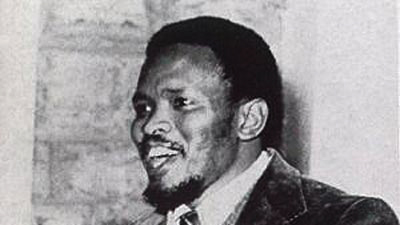
“It is the episteme of what you are about which makes you sustainable”
Steve Biko occupies a singular place in South African political thought because he understood that politics is never only a contest over institutions, policies or offices. It is also a struggle over consciousness: over how a people see themselves, name their condition, interpret their humiliation, and imagine their freedom. To describe Biko merely as an anti-apartheid activist is therefore too narrow. He was a thinker of power, dignity and political agency, and his philosophy of Black Consciousness offers one of the clearest South African examples of the relationship between ideas, interests and the nature of politics.
The theoretical problem may be stated simply: do ideas shape politics, or are they merely rationalisations of interests? One view, associated with a hard realist tradition, suggests that political language often disguises the pursuit of power. People speak of justice, religion, nation, order, peace or liberty, but beneath these elevated phrases lie struggles over control, advantage and authority. In this view, ideas do not possess an independent life; they function as masks worn by interests. Politics becomes the art of translating ambition into principle and domination into moral vocabulary.
Biko’s life and thought complicate this view. His ideas certainly arose from material and historical conditions: apartheid’s racial order, the exclusion of Black people from political power, the humiliation of pass laws, the violence of police repression, the distortions of Bantu Education, and the paternalism of white liberal politics. Biko is arguably one of the central voices of Black liberation in a period when major Black political organisations had been banned, and disenfranchised Black youth were receptive to new forms of organisation. His thought did not descend from the clouds; it grew from the lived circumstances of a people rendered politically marginal and psychologically wounded.
Yet Biko also shows that ideas are not merely decorative language attached to interests after the fact. Black Consciousness transformed diffuse suffering into an organised political imagination. It taught Black people to see themselves not as passive victims awaiting rescue, but as agents capable of defining themselves and confronting the system that diminished them. The Black Consciousness Movement encouraged Black people to recognise their inherent dignity and self-worth, while promoting cultural pride and political solidarity. In this sense, Biko’s idea did not simply express an existing interest; it helped constitute that interest as a conscious political force.
The point is crucial for political theory. An interest is not merely an objective condition shared by people. It becomes politically effective only when people recognise their common situation, attach meaning to it, and act upon it. Poverty, exclusion or racial domination may exist for generations, but they do not automatically produce political mobilisation. Between condition and movement lies consciousness. Biko understood this intervening space with unusual clarity. Black Consciousness was therefore not a slogan added to politics; it was the mental and moral work through which people became available to political action.
For Biko, the first terrain of struggle was the colonised mind. Apartheid ruled not only by law, police, bureaucracy and economic exclusion, but also by persuading the oppressed to internalise inferiority. This is why his famous insistence that “black is beautiful” was not cultural romance but a political intervention. This phrase calls on Black people to recognise themselves as fully human. Once a people cease to accept the oppressor’s definition of them, the political order begins to lose one of its deepest sources of stability.
This is where Biko departs from the extreme rationalisation view. If political ideas were only disguises for power-seeking, Black Consciousness would have to be read as a strategic cloak for elite ambition. But such a reading is inadequate. Biko’s thought did not flatter the masses in order to manipulate them; it called them into authorship of their own liberation. Its language of dignity, self-worth and psychological emancipation was not a fraud concealing a private interest. It was a disciplined attempt to reveal the real structure of oppression and restore the oppressed’s capacity to act.
At the same time, Biko was not naïve about interests. He understood that politics is organised around power and that groups enter politics because something material and existential is at stake. The Black interest under apartheid was not an abstract moral category; it involved land, labour, education, movement, residence, citizenship and bodily security. But Biko’s genius was to show that these interests could not be pursued effectively by people who had been taught to doubt their own worth. The struggle for external power required an internal revolution.
Biko also illuminates the individual’s role in politics. Individuals are not puppets moved mechanically by large interests. They bear interests, but some also occupy positions of strategic insight and influence. Biko was both a product of his time and a maker of political time. To this end, Biko co-founded the South African Students’ Organisation in 1968, became its first president the following year, and helped carry Black Consciousness from university campuses into wider urban communities. His significance lay not in standing outside history, but in interpreting its pressures with such force that others could recognise themselves in his words.
The creation of the South African Students’ Organisation was therefore not merely an organisational event. It was a theoretical act. Biko had become dissatisfied with forms of liberal anti-apartheid politics in which Black people appeared as beneficiaries of white sympathy rather than authors of their own struggle. Biko’s break from white-dominated liberal structures, notably NUSAS, was not anti-white hatred, but a rejection of white supremacy and of political arrangements in which even sympathetic whites could speak over Black experience. This distinction matters because it shows that Biko’s politics was not racial essentialism; it was a theory of agency under conditions of domination.
In the language of interest theory, Biko sought to prevent the Black interest from being mediated through institutions and vocabularies that diluted its urgency. He insisted that those who suffer domination must become the primary interpreters of that domination. This does not mean that allies have no role; it means that the oppressed cannot outsource their consciousness. The first act of freedom is the refusal to be represented as an object in another person’s moral drama.
Biko’s politics also reveals that political conflict is not only about who governs, but about whose reality becomes authoritative. Apartheid depended on more than coercion. It rested on an entire structure of classification: white and Black, civilised and backward, ruler and subject, centre and periphery. Black Consciousness challenged this symbolic order by asserting that the oppressed had the right to define themselves. Politics, in this sense, is a struggle over naming. Whoever names the world often governs the world. This insight connects Biko to Latin American decoloniality theory, particularly the work associated with Aníbal Quijano, Walter Mignolo and Nelson Maldonado-Torres. Decolonial thought argues that colonial domination survives formal colonialism through the coloniality of power and knowledge: durable hierarchies of race, labour, authority and epistemology that define European and Western ways of knowing as universal while rendering other knowledges inferior. Biko’s insistence that Black people must define themselves can thus be read as a decolonial challenge to the authority of apartheid’s knowledge system and to the broader colonial grammar that made racial domination appear natural.
The apartheid state understood the danger of this politics of consciousness. It could tolerate certain forms of managed dissent more easily than a movement that restored confidence to the oppressed. Sadly, Biko died in security police custody on 12 September 1977, and his death drew international attention to South Africa, followed by intensified repression against Black Consciousness-aligned organisations. The violence directed against Biko confirms that the regime recognised ideas as politically dangerous when they altered the will of a people.
Here lies the deepest lesson Biko offers to political theory: ideas matter most when they are rooted in interests but not imprisoned by them. An idea detached from social reality becomes abstraction. An interest without political imagination remains grievance. Biko joined the two. He gave philosophical clarity to a historical condition and turned a wounded identity into a source of collective power. Ngũgĩ and Latin American decolonial theorists help deepen this point. Ngũgĩ shows that domination is reproduced through language and culture; decoloniality theory shows that modern power is sustained through the coloniality of knowledge, race and authority. Biko adds a South African grammar of political consciousness to these traditions. His contribution is to show that liberation requires not only institutional reform or access to state power, but also a reconstitution of the subject denied dignity, history, and epistemic authority.
This is why Black Consciousness should be read as both political philosophy and practical strategy. It was philosophy because it asked fundamental questions about humanity, freedom, selfhood and recognition. It was strategy because it altered the balance of political possibility by producing subjects who could no longer be governed through inferiority. Biko saw that before the oppressed could seize the future, they had to recover the self that oppression had tried to confiscate.
For contemporary South Africa, Biko remains unsettling precisely because his questions have not expired. Formal political liberation did not automatically resolve the deeper problems of dignity, social power, economic exclusion and epistemic authority. His thought asks whether a society can be free if large numbers of its people remain structurally marginal, spoken for by others, or taught to lower their expectations of history. It also warns against a politics that reduces liberation to access to office while neglecting the transformation of consciousness and social relations. In this respect, Biko speaks directly to contemporary debates on decolonisation, including the decolonisation of education, language, culture and knowledge production. His thought converges with Ngũgĩ’s insistence that colonial domination lives on in the languages and cultural forms through which people are educated, and with Latin American decoloniality’s argument that colonial power persists in the epistemic hierarchies of the modern world.
Studying Biko through the theory of ideas and interests therefore rejects two simplifications. The first is the idealist simplification, which imagines ideas floating above history, pure and autonomous. The second is the cynical simplification, which treats ideas as nothing more than masks for ambition. Biko’s example points to a richer understanding: ideas emerge from social conditions, but once articulated with moral force, they can reorganise interests, awaken agency and change the possibilities of politics.
Steve Biko was therefore one of South Africa’s great thinkers not because he produced a closed system of doctrine, but because he identified the hidden battlefield on which domination is reproduced, and liberation begins. He understood that the oppressed must first stop collaborating with the lie of their inferiority. In doing so, he showed that politics is not only the competition of interests for governmental power; it is also the struggle to create human beings who know that they are entitled to freedom. Biko’s enduring challenge is this: a people who have recovered their dignity become difficult to govern unjustly.







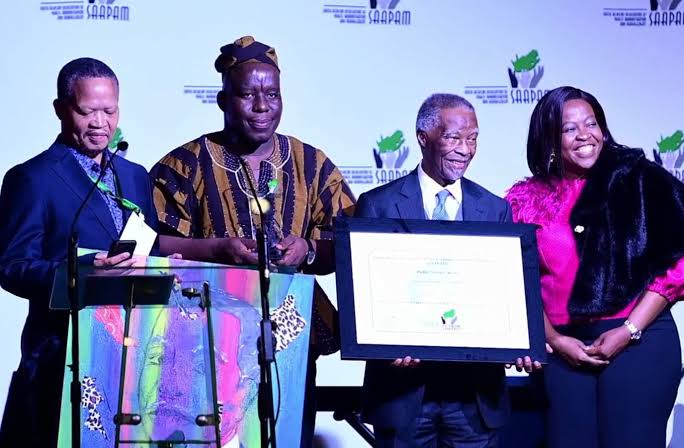

“It is the episteme of what you are about which makes you sustainable” Steve Biko.
Ngũgĩ shows that domination is reproduced through language and culture; decoloniality theory shows that modern power is sustained through the coloniality of knowledge, race and authority.
Black Consciousness should be read as both political philosophy and practical strategy.