
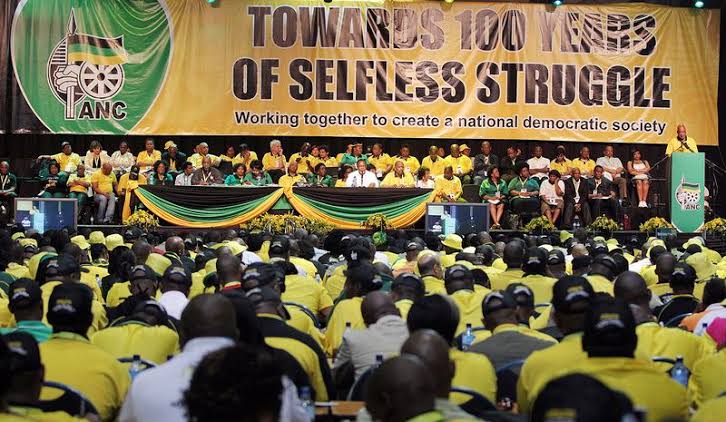
State Power, Coalition Accountability and the Burden of Democratic Renewal
Abstract: This essay examines the African National Congress as a layered historical formation whose contemporary electoral challenges stem from the unfinished transformation of liberation memory into democratic accountability. It argues that the ANC’s evolution from a petitioning body into a nationalist movement, liberation front, revolutionary alliance, governing party, site of class formation, regionalised organisation, coalition actor and possible custodian beyond office has produced both resilience and contradiction. The essay shows how the Tripartite Alliance, elite formation, NEC regional representation, money politics, constitutional obligation, coalition government and custodianship without incumbency each test the ANC’s capacity to govern beyond historical legitimacy. Central to the argument is the claim that the 1996 Constitution juridically inscribes the liberation promise by obliging the democratic state to respect, protect, promote and fulfil rights. For the ANC, this promise endures into posterity as a political and moral duty: to convert regional presence into NEC accountability, coalition compromise into constitutional mandate, class advancement into public purpose, state power into democratic service, and loss of office into principled custodianship rather than existential defeat. The essay concludes that negotiation, once a terrain of struggle against apartheid, must now become the discipline through which the ANC renews itself, responds to electoral decline, behaves responsibly inside or outside government, and makes freedom governable, credible and accountable.
Introduction: A Liberation Movement in a Democratic Age
The African National Congress was formed in 1912 in response to the exclusionary constitutional settlement produced by the 1909 National Convention and the creation of the Union of South Africa, a political order that granted statehood to white settler interests while denying the African majority meaningful citizenship. Its founding generation understood that the newly constituted state was not merely administratively unjust; it was founded on a deeper political exclusion that required organised national resistance. This essay argues that the ANC’s contemporary challenges in electoral democracy cannot be understood apart from the layered character produced by this history: a petitioning body, a nationalist movement, a liberation front, a revolutionary alliance, a governing party, a site of class formation, a regionalised organisation, a coalition actor, and potentially a custodian of the liberation promise even where it no longer governs. The central tension is that the ANC must retain enough state power to complete the liberation promise where voters permit it to govern, while also learning to protect the core of that promise where democratic outcomes require it to share power, lose power, or serve outside government. Democratic legitimacy now depends on accountability to voters, fidelity to the Constitution, ethical governance, credible partners, principled opposition where necessary, and converting liberation memory into public purpose.
From Petitioning to National Consciousness
In its earliest form, the ANC carried what may be described as a politics of respectful demand: deputations, memoranda, appeals to imperial authority, and requests for recognition within an unjust order. This was not political weakness in a simple sense; it reflected the limited terrain available to Africans under a state that had closed the formal avenues of representation. Yet this petitioning character also revealed the contradiction of an organisation born to represent a people whose political subjecthood had not yet been acknowledged. As whites-only nationalism consolidated itself electorally, African nationalism was forced to mature outside the institutions of state power, learning to speak as a nation before it was recognised as one.
The Youth League and the Radicalisation of Method
The emergence of the ANC Youth League marked a decisive rupture in the organisation’s political method. A younger generation began to question whether appeals to colonial conscience could ever deliver freedom to a dispossessed people. Their intervention did not simply add youthful energy to the ANC; it altered the organisation’s internal grammar by insisting that mass mobilisation, defiance, and popular agency should replace over-reliance on elite deputations. The Youth League’s relative autonomy within the ANC also introduced a permanent feature of the movement’s character: contestation from within as a source of renewal. From that moment, the ANC was no longer a single voice speaking through established elders, but a broad movement whose direction would be shaped by generational pressure, ideological struggle, and competing conceptions of how to pursue liberation.
Global Anti-Fascism, Non-Racialism and the Recasting of Struggle
Changing geopolitical conditions after the Second World War further transformed the ANC’s character. The global defeat of Nazism delegitimised explicit racial supremacy and exposed apartheid as part of a wider family of racial authoritarianisms. In this context, the ANC’s struggle could no longer be framed merely as an African plea for inclusion; it became part of a universal democratic claim against racial domination. The widening of alliances across racial, ideological, religious and class lines gave practical expression to non-racialism. The ANC thus became the centre of a broader liberation formation, but it also had to accommodate forces that did not always share identical ideological premises. Its character was consequently shaped by the discipline of coalition politics long before it entered electoral democracy.
The Freedom Charter and the Popular Re-Founding of South Africa
The adoption of the Freedom Charter in 1955 was a profound moment of ideological and organisational redefinition. Its opening claim that South Africa belongs to all who live in it, black and white, supplied the liberation struggle with a democratic and non-racial horizon that exceeded narrow ethnic nationalism. The Charter’s method was as important as its content: communities gathered demands, which were synthesised into a political programme and adopted as a statement of popular will. In this sense, the Freedom Charter did not only state what the future South Africa should become; it enacted a participatory conception of citizenship before such citizenship existed in law. The ANC’s legitimacy thereafter rested not simply on its organisational history, but on its claim to carry a people’s mandate for a radically democratic society.
National Liberation and the South African Exception
The ANC’s liberation struggle developed under conditions that differed significantly from many classical anti-colonial movements elsewhere on the continent. In much of colonial Africa, the coloniser had a metropolitan home to which sovereignty could formally return. In South Africa, however, the settler colonial state had made itself local, permanent, and institutionally embedded. The struggle was therefore not simply about replacing a foreign flag with a national one, but about dismantling an internal system of racial power whose beneficiaries claimed the country as their own. This shaped the ANC’s character as a movement of phases: African nationalism, non-racial democratic mobilisation, class struggle, armed resistance, international solidarity, negotiation, and constitutional state-building all coexisted within its historical repertoire.
Movement, Party and Government: The Burden of Multiple Identities
These multiple identities continue to shape the ANC’s internal contestations. Before 1994, the ANC could hold together diverse ideological tendencies because the central contradiction was apartheid itself. After the democratic breakthrough, the movement had to operate simultaneously as a liberation movement, a mass organisation, a registered political party, and the governing party of a constitutional state. This transition has never been merely administrative. It has required the ANC to subject its liberation inheritance to the rule-bound disciplines of electoral competition, public administration, constitutional accountability, and citizen judgement. The difficulty is that the symbolic authority of liberation does not automatically translate into the institutional competence required for democratic governance.
The Tripartite Alliance and the Burden of Shared Sovereignty
Revolutionary Alliance as a Source of Liberation Depth
The ANC’s revolutionary alliance with COSATU and the SACP added another layer to its character: the movement was never only an electoral vehicle, but the centre of a broader social bloc whose moral force derived from workers, communists, civic militants, intellectuals, churches, communities and underground activists acting in concert against apartheid. This alliance gave the ANC a depth that ordinary party machinery could not provide. COSATU anchored the struggle in the organised power of labour, workplace discipline and a living language of class exploitation. At the same time, the SACP supplied ideological memory, strategic vocabulary and an internationalist imagination of social transformation. Together, they helped convert liberation from a nationalist claim into a mass project with economic, social and moral content. The alliance therefore expanded the ANC’s reach beyond branches and elections: it gave it unions, shop stewards, cadres, study circles, community organisers and a vocabulary through which political freedom could be connected to bread, work, land, dignity and social justice.
Shared Sovereignty Without Equal Electoral Exposure
Yet electoral democracy has turned this historic strength into a more demanding constitutional and political test. The alliance now operates as a form of shared sovereignty without equal electoral exposure: COSATU may claim the authority of organised labour, the SACP may claim the authority of revolutionary theory, and the ANC may claim the mandate of government, but only the ANC is directly judged at the ballot for the accumulated consequences of alliance choices. This produces a subtle democratic distortion. Policy can be negotiated in alliance forums, delayed by ideological veto, contested through labour mobilisation, and defended as revolutionary continuity. At the same time, the voter sees only whether government works, whether services arrive, whether corruption is punished, whether jobs are created, and whether public institutions retain credibility. The ANC therefore carries the electoral invoice for decisions whose authorship is often dispersed, negotiated and sometimes deliberately obscured by the protocols of alliance unity.
Mandate Clarity, Veto Power and Deferred Accountability
The unresolved alliance question therefore turns less on loyalty than on mandate clarity. The ANC, COSATU and the SACP may share a historical vocabulary of revolution, transformation and working-class emancipation, but electoral democracy requires traceable responsibility when choices fail. Alliance consultation can enrich policy by testing government against the needs of workers, communities and people with low incomes. Yet, it can also blur accountability when vetoes, compromises and ideological blockages occur outside voters’ direct gaze. The difficulty is that the alliance can influence the content, timing and direction of public policy without each component bearing equal constitutional or electoral consequence. For the ANC, this means that alliance management must become more transparent, programmatic and accountable. If the movement is to govern credibly amid electoral decline, it must distinguish between principled alliance consultation and deferred responsibility. The liberation alliance remains valuable only if it strengthens democratic delivery, clarifies public mandate and deepens social justice; otherwise, it risks becoming a mechanism through which hard choices are postponed, and accountability is dispersed.
Elites, the Emerging Bourgeoisie and the Middle Strata
Class Formation and the Ambiguity of Liberation’s Rewards
The ANC’s character has also been shaped by the social ascent of its own elites, the emergence of a black bourgeoisie, and the growth of professional and middle strata whose aspirations were made possible, in part, by the democratic breakthrough. This was not an accidental development. A liberation movement that sought to dismantle racial exclusion could not be indifferent to the creation of black managers, entrepreneurs, professionals, administrators and owners in a society whose economy had been historically organised around white privilege. Yet this process has produced a difficult ambiguity. The rise of ANC-linked elites and middle strata can be read as evidence of deracialisation and social mobility. Still, it can also generate a politics in which proximity to the movement becomes a route to accumulation, influence and class consolidation. Electoral decline begins to acquire a class dimension when those who speak in the name of people with low incomes appear increasingly located among the beneficiaries of the post-apartheid order. The problem is not black advancement itself, but the political meaning attached to advancement when liberation’s rewards appear unevenly distributed between connected insiders and citizens still waiting for schools, clinics, housing, land, safety and work.
Elite Influence and the Softening of ANC Accountability
ANC elites, business-linked networks, and middle-strata interests have also altered the internal meaning of accountability. Where party networks, state contracts, deployment systems and business opportunity become interwoven, accountability can be softened by mutual dependence. Those who should answer for failure may also be funders, brokers, patrons, deployees, advisers or gatekeepers of organisational survival. In such circumstances, the movement’s historic language of emancipation risks being translated into the grammar of class reproduction. The ANC is then required to speak simultaneously as a party of the dispossessed, a manager of the state, a custodian of black advancement, and a broker of elite interests. This creates an accountability deficit because organisational discipline bends toward those with resources, access and influence. At the same time, ordinary members and voters encounter accountability mainly as conference rhetoric, disciplinary selectivity or campaign-season apology. The greater danger is that elite influence may convert the ANC from a movement that once organised sacrifice into one that negotiates protection for its own social strata.
Voter Trust, Social Distance and Electoral Decline
This class formation feeds directly into the ANC’s electoral decline because voters judge not only policy outcomes, but the visible social distance between those who govern in the name of liberation and those who continue to live at the margins of its promise. Electoral democracy exposes symbolic contradictions that liberation history alone can no longer conceal. A party may speak the language of people with low incomes. Still, if its public face increasingly reflects security estates, tender accumulation, professional insulation, bureaucratic entitlement and internal contests over access to office, citizens begin to read decline as both material and moral. The erosion of voter trust is therefore not caused by unemployment, service failure, or corruption alone; it deepens when these failures appear connected to a governing class whose fortunes rise while communities remain stagnant. The transition from class distance to electoral punishment is therefore not abstract: it appears in abstention, protest voting, local revolt, declining campaign credibility and the quiet withdrawal of historical loyalty. The ANC’s challenge is to rebuild the ethical bridge between class formation and public purpose: to demonstrate that black advancement is not a private dividend of political proximity, but part of a wider democratic project capable of enlarging opportunity for the many. Without that bridge, the social question becomes an electoral question, and the electoral question becomes a verdict on whether liberation still belongs to those in whose name it is invoked.
Electoral Democracy, Internal Power and Organisational Accountability
Internal Contestation and the Ballot as Discipline
From this social and organisational terrain, electoral democracy produces its sharpest paradox for the ANC. Citizens now possess constitutional mechanisms to withdraw consent through the ballot. Yet, many social grievances are still channelled through internal ANC contests, factional alignments, deployment battles, and community struggles against ANC-led state institutions. This creates a centre-destructive tension: society recognises government as the immediate site of service delivery, employment, procurement and development, while ANC members often experience the party as the route to state access. The ballot therefore disciplines the ANC from outside, just as internal competition intensifies over who will control the power voters temporarily confer. Electoral democracy does not merely test the ANC’s popularity; it tests whether the organisation can prevent public authority from being swallowed by its own internal struggles.
The Arithmetic of Representation and the Weakening of the Centre
A more cryptic but no less consequential institutional challenge lies in the deconcentration of representation within the ANC’s highest decision-making structures, especially the National Executive Committee. Over time, the NEC has come to resemble, in miniature, the movement’s broad regional spread: a political map whose legitimacy is drawn from territorial inclusion, provincial balance, slate accommodation and the symbolic presence of many centres of influence. In one sense, this gives organisational expression to the ANC’s national footprint and guards against the arrogance of a single metropolitan or ideological command. Yet the same dispersal becomes an electoral liability when the party must account for declining voter confidence across local, provincial and national arenas.
Electoral democracy does not reward the mere presence of regions in the highest organ; it tests whether such representation improves political judgement, policy coherence, candidate quality, campaign credibility and responsiveness to citizens. Where NEC composition mirrors regional bargains more than public accountability, the national centre risks becoming answerable upward to conference arithmetic rather than outward to voters. Regional representation can then shield electoral underperformance by dispersing blame across provinces, leagues, factions and deployees, leaving no single authoritative centre sufficiently responsible for the party’s collective decline. The ANC may therefore possess a wide representative surface while lacking a disciplined accountability core.
The NEC’s obligation should be to convert regional presence into national responsibility: to read electoral setbacks honestly, hold deployees and structures accountable, intervene where local organisation corrodes public trust, and insist that representation in the centre carries consequences for performance in society. Without that conversion, the organisation’s regional footprint becomes a constitutional map without electoral intelligence; a chamber in which fifty-two regional anxieties, ambitions and bargains are represented, but where the hard democratic meaning of voter withdrawal is softened, postponed or negotiated away.
Money, Office and the Vulnerability of Liberation Ethics
The convergence of internal contestation, regional arithmetic and organisational ambition leads directly to the vulnerability of liberation ethics. The most serious risk to the South African democratic experiment lies in the growing divergence between the ANC’s liberation mandate and the political aspirations of some of its members. Party-political machinery is expensive, and where internal competition becomes a route to public office, it becomes vulnerable to private funding, patronage networks, slate politics, and the capture of organisational processes by interests that do not necessarily coincide with the public good. Under such conditions, the ANC’s historical claim to embody liberation aspirations is weakened by practices that make it appear as an arena for distributive contestation over state resources. The ethical capital accumulated through struggle can be depleted when the organisation becomes a ladder to office rather than a school of public duty. This is why the question of money and office cannot be separated from electoral democracy: voters increasingly judge whether the ANC still treats power as an instrument of social transformation or as the internal currency of organisational survival.
Government Power and Democratic Obligation
This is where the argument moves from organisational diagnosis to democratic obligation. The centrality of government power in defining the arrangements by which society lives therefore obligates any party in power, and especially a liberation movement in government, to treat state authority as a public trust rather than organisational property. The democratic state cannot be reduced to the institutional extension of party memory, however noble that memory may be. Its authority derives from the Constitution, the electorate, the law, and citizens’ continuing consent. For the ANC, this means renewal cannot be limited to internal moral appeals; it must include a disciplined separation between party, state, and private interest, and a renewed commitment to building institutions that serve citizens beyond factional, regional, or organisational loyalties. The route out of electoral decline is therefore not only organisational renewal, but constitutional fidelity expressed through competent, ethical and accountable government.
The 1996 Constitution and the Liberation Promise into Posterity
The 1996 Constitution should therefore be understood not as a departure from the liberation promise, but as its juridical inscription into the permanent architecture of the democratic state. The constitutional injunction to respect, protect, promote and fulfil the rights in the Bill of Rights converts the moral vocabulary of liberation into a binding public obligation. For the ANC, this carries a special historical burden.
Having led the struggle that made constitutional democracy possible, the movement cannot treat the Constitution as a neutral legal instrument external to its own history. In a profound sense, it is the institutionalised promise of liberation: the translation of dispossession into restitution, exclusion into citizenship, racial domination into equality, and political struggle into accountable government.
To respect the liberation promise is to refrain from conduct that diminishes the dignity, rights and agency of citizens; to protect it is to defend democratic institutions against capture, corruption and authoritarian drift; to promote it is to deepen public understanding of constitutional citizenship; and to fulfil it is to use state power to advance substantive freedom through education, health, land reform, work, safety, social security and spatial justice.
This obligation does not expire with a generation of leaders, nor can it be exhausted by reference to past sacrifice. It binds the ANC into posterity, requiring each generation of its members to measure organisational conduct, policy choices and the exercise of public office against the emancipatory promise written into the Constitution. It is precisely because the Constitution turns liberation into a continuing public duty that coalition government becomes such a demanding test: the ANC may need power to complete the promise, but it cannot pursue power in ways that empty the promise of constitutional meaning.
Coalition Government, State Power and the Continuity of the Liberation Promise
State Power as the Instrument of Unfinished Liberation
Coalition government introduces a further test of the ANC’s character because it forces the movement to confront the constitutional limits of its claim to state power. For a liberation movement, retaining state power is not merely an instinct of incumbency; it has historically been justified as the means through which land, work, education, health, safety, equality and dignity can be progressively realised in the lives of the dispossessed.
Yet electoral decline alters the moral meaning of power. Once voters withhold full confidence, state power can no longer be treated as a natural extension of liberation history or as organisational entitlement. It must be negotiated, shared and justified under the discipline of constitutional accountability. Coalition politics therefore asks a sharper question: can the ANC retain enough authority to complete the liberation promise while accepting that constitutional democracy now limits, audits and conditions that authority?
The distinction is decisive. If state power is retained for constitutional transformation, it remains an instrument of public duty. If it is retained to shield organisational position, protect patronage networks, mute electoral decline or preserve symbolic dominance, it becomes a contradiction of the very liberation project it claims to defend. In this sense, the Constitution turns power into a trust, not a trophy; a mandate to be accounted for, not a memory to be invoked against accountability.
Coalition Partner Selection and the Test of ANC Character
The selection of coalition partners therefore becomes more than a tactical arithmetic of seats; it becomes a constitutional test of the ANC’s character. A party formed against exclusion, matured through non-racial democratic struggle, and bound by the obligation to respect, protect, promote and fulfil rights cannot enter coalitions as if all partners are politically equivalent.
Coalition choices reveal what the ANC is prepared to compromise, what it regards as non-negotiable, and whether its claim to liberation remains anchored in democratic substance or merely in access to office. Partners who strengthen constitutionalism, clean administration, social justice, developmental capacity and public accountability may help convert reduced electoral authority into responsible government.
Partners who normalise chauvinism, corruption, administrative instability, racial resentment, lawlessness or tender brokerage may deliver office while hollowing out constitutional accountability. Coalition politics thus exposes the difference between retaining power under constitutional discipline and retaining power by evading it. The danger is not compromise itself, but compromise that purchases executive control at the price of institutional integrity, lawful administration and public trust.
Mandate Discipline, Compromise and Electoral Trust
Coalition government also sharpens the problem of electoral accountability because compromise can either deepen democratic maturity or conceal mandate evasion. In a fragmented electoral environment, no party can govern as if voters have not spoken; coalition government is itself a constitutional message that society has imposed conditions on power.
For the ANC, the challenge is to translate compromise into mandate discipline rather than opportunistic survival. It must explain why it chose a coalition partner, which elements of the liberation promise it is advancing, which constitutional principles are non-negotiable, and how it will share accountability without dissolving responsibility.
If coalition agreements become private bargains among elites, voters will read them as another form of internal settlement rather than a democratic response to electoral decline. But if coalition arrangements are transparent, programmatic, and constitutionally grounded, they may allow the ANC to retain state power while accepting the limits, scrutiny, and humility the electorate has imposed.
This is where coalition politics returns the ANC to one of its oldest strategic disciplines: negotiation. What once served as a method for defeating apartheid without destroying the possibility of a shared society must now serve as a democratic discipline for governing amid plural mandates, reduced dominance and heightened constitutional scrutiny. Yet coalition politics does not exhaust the democratic lesson of electoral decline. It tests how the ANC behaves when it must share power; custodianship tests how it behaves when it cannot hold power at all. The movement’s next threshold, therefore, is to distinguish the liberation promise from the machinery of incumbency. If the ANC can understand state power as one instrument of liberation rather than the sole location of liberation, it can preserve its historical mission even where voters deny it full control of the state. The question is no longer only whether the ANC can govern with others, but whether it can remain faithful to the core of liberation when it governs less, governs locally in some places but not others, or does not govern at all.
Custodianship Without Office: The Liberation Promise Beyond Governing Status
Custodianship as a Democratic Role Beyond Incumbency
A mature reading of the liberation promise requires the ANC to embrace the possibility that it may, in some jurisdictions, no longer hold state power or governing-party status, yet remain a custodian of the core values for which it fought. Custodianship is not the same as incumbency. It does not require control of budgets, mayoral committees, provincial executives, or national departments as proof of historical relevance. It requires the movement to defend equality, non-racialism, democratic accountability, social justice, constitutionalism and the dignity of the dispossessed wherever it is located in the political system. In this sense, electoral defeat or displacement from office need not mean abandonment of the liberation mission. It may instead become an occasion for the ANC to separate the promise from the possession of office, and to demonstrate that its historical character can survive outside the immediate machinery of government.
Opposition, Minority Status and the Ethics of Democratic Continuity
If the ANC treats loss of office only as humiliation, betrayal or interruption, it risks mistaking governing status for the liberation promise itself. Yet the democratic order it helped found requires parties to move in and out of office without turning electoral outcomes into existential crises. In municipalities, provinces or future national elections where the ANC may not govern, it can still act as a principled opposition, a constitutional watchdog, a defender of people with low incomes, and a custodian of the historical memory that insists public power must serve substantive freedom. Such a role would demand discipline: opposing without sabotage, negotiating without surrendering principle, supporting progressive measures even when proposed by others, and holding new governing coalitions accountable without reducing accountability to revenge. This would show voters that the ANC’s commitment to liberation is not conditional on possession of the state.
Retaining the Promise When Power Is Lost
This theme also disciplines the ANC’s approach to coalition government. If the movement believes liberation can exist only where it governs, it may be tempted into coalitions that preserve office while compromising constitutional accountability. But if it understands itself as a custodian of the liberation promise even outside power, it gains the moral freedom to refuse coalitions that contradict its non-racial, democratic and transformative character. The ability to lose power without losing purpose may therefore become one of the highest tests of renewal. It would allow the ANC to distinguish between retaining office for transformation and relinquishing office to protect the deeper integrity of the liberation promise. In electoral democracy, this may be the hardest lesson for a former dominant movement: that posterity may judge it not only by how it governs, but by how it behaves when voters instruct it to govern less, share power, or stand outside government altogether.
Conclusion as Epitaph: Custodianship, Democratic Maturity and the Liberation Promise
The essay’s central claim, therefore, is that the ANC’s contemporary electoral difficulties arise from the accumulated weight of its own historical character. It began as a petitioning body formed against exclusion, matured into a national liberation movement, radicalised its methods through generational contestation, embraced non-racial democratic struggle, adopted the Freedom Charter as a popular mandate, and entered constitutional democracy carrying the burdens of movement, party and government at once. It must now add another discipline to that inheritance: the ability to remain a custodian of the liberation promise even where it does not govern.
Its revolutionary alliance with COSATU and the SACP gave it social depth, yet produced the challenge of shared sovereignty without equal electoral exposure. Its own elites, the emerging bourgeoisie and the middle strata, embodied deracialisation and mobility, yet also introduced class distance, soft accountability and voter distrust. Its NEC and regional footprint gave organisational breadth, yet risked dispersing responsibility precisely when electoral decline required a disciplined national centre.
Its access to state power made transformation possible, yet constitutional democracy now insists that such power must be treated as a trust, not as an inheritance. Coalition government gathers these strands into a single democratic test. Whether the ANC can retain or share power for the liberation promise while accepting constitutional accountability, mandate humility and public scrutiny, without which that promise loses legitimacy. Custodianship without office extends the test beyond coalition arithmetic: whether the ANC can protect the core values of liberation even when voters instruct it to share power, surrender office, or act as opposition.
The challenge before the ANC is therefore not to abandon its past, but to govern—and sometimes to steward—its inheritance differently. Negotiation, once elevated by Nelson Mandela into a terrain of struggle, must now become an inward and outward democratic discipline.
Inwardly, it must help resolve factional conflict, restore organisational legitimacy, discipline money and office, convert regional representation into NEC accountability, and hold elites and deployees responsible for electoral decline. Outwardly, it must guide the ANC in managing alliances, choosing coalition partners with constitutional seriousness, clarifying mandates, accepting opposition or minority status where voters require it, and listening to the electoral verdict without evasion.
The liberation promise written into the 1996 Constitution requires the ANC to respect, protect, promote and fulfil freedom not by invoking history alone, but by enlarging citizens’ lived rights, dignity and opportunities in the present. Its future character will depend on whether it can convert alliance memory into accountable partnership, class formation into public purpose, regional representation into national responsibility, coalition compromise into constitutional mandate, state power into democratic service, and loss of office into principled custodianship answerable to law and citizens.
In that conversion lies the difference between a liberation movement that merely remembers freedom and one that continues to make freedom governable, credible, accountable and democratic for posterity—whether it governs, shares power, or carries the promise from outside office. This is where the conclusion becomes an epitaph, not in the sense of burial, but in the sense of inscription: a final statement of what must endure if the organisation is to remain morally intelligible beyond the decline of dominance.
Custodianship is not the same as incumbency. Incumbency sits in the chair of power; custodianship keeps faith with the reason power was sought. Incumbency commands the office, signs the warrant, allocates the budget and appears before the cameras of the state. Custodianship walks with the promise when the motorcade is gone. It remembers the poor when power becomes comfortable, guards non-racialism when resentment becomes useful, defends the Constitution when expediency seeks an easier road, and holds fast to justice when office tempts the movement to mistake possession for purpose. The ANC’s deepest test may therefore come not only in victory, but in the humility of reduced power; not only in governing, but in serving; not only in holding the state, but in keeping the promise alive when others hold the state. If incumbency is the visible face of authority, custodianship is its moral shadow, following power so that it does not forget the people from whom it came. Where authority is lost, purpose may still keep liberation alive. But where purpose is lost, even incumbency becomes only a flag over an empty house, a memory without discipline, and a promise no longer able to recognise itself.







Leave A Comment