South African history
tells us that the Voortrekkers, Dutch-speaking settlers known as Boers, left
the British Cape Colony in Southern Africa between 1835 and the early 1840s in search
of independence and new territory. This journey called the Great Trek, involves travelling overland to the continent’s interior using
ox-drawn wagons. Also known as Trek-Boers, the motivations behind this
significant migration included disputes with British
policies on various issues, particularly regarding cultural rights and the
abolition of slavery.
In addition to their
aspiration to create independent Boer Republics, they departed in search of
farmland to escape the nearly constant territorial conflicts over land
dispossession from Indigenous peoples they initially met, a widespread issue
faced by all settler communities. This migration north led to new white settler
communities that evolved into the Natal Colony and the two self-declared Boer
Republics of the Transvaal and the Orange Free State.
The symbolism associated
with the pioneering spirit of the Voortrekkers evolved into a cultural concept
that allowed Afrikaner history and legacy to be somewhat independent of land
dispossession and the less-documented methods employed to ensure the availability
of occupied lands for settler colonialism, distinct from a British
interpretation of colonialism.
Without its
ethnonationalist sub-context, the Voortrekker idea has served as a unifying
force around which innovation and pathfinding have coalesced to drive South
Africa’s development, competitiveness, and global economic status. Aside from
its ambition to remain an exclusively Afrikaner endeavour, despite historical
records indicating a predominance of mixed-race DNA within the Afrikaner
community, the Voortrekker idea could be redefined as a movement that South
Africa might adopt to convey the true meaning of ‘respect those who have worked
to build and develop our country,’ as stated in the preamble of the
Constitution. Nation-building involves acknowledging past injustices while
recognising the genuine benefits that emerged for future generations, some of
which stemmed from those injustices. It encapsulates the pioneering spirit of
the leaders within South African society across all its enclaves, including
what is referred to as the ‘Western community at the southern tip of the
African continent.’
As the trekkers
inquired, “Waarna toe?” which has today been reworked into Wanatu, an
e-hailing service, pity with exclusionary and self-serving parlance, to ask
where to in South Africa? In those times, the interior would have been where
the leaders of the Voortrekker movement pointed out. In today’s terms, the
search for independence, avoiding the modern-day frontier tensions in all their
forms, seeking their own Republic, and searching for farmland is a complex
endeavour that new Voortrekkers must engage in.
The answer to the Wanatu
question should commence by embracing the truism that South Africa belongs to
all who inhabit it. Once this principle is established as a foundation for
exploring the new Wanatu, those at the forefront (the new pioneers) ought to
calibrate their ideological GPS to seek the optimal approach for pursuing a
non-racial, non-sexist, united, democratic, and prosperous South Africa. The
New Trek should heal past divisions and create a society rooted in democratic
values, social and economic justice, and fundamental human rights. It should
focus on human dignity, achieving equality, and advancing human rights and
freedoms.
The answer to Wanatu
cannot revolve around retreating from society or seeking refuge in an undefined
laager, voluntarily becoming a refugee among a substantial population of 400
million like that of the USA. Wanatu, as the metaphorical e-hailing operator,
must be involved in navigating without excluding the urban and rural
neighbourhoods and spaces that belong to all of us, the people.
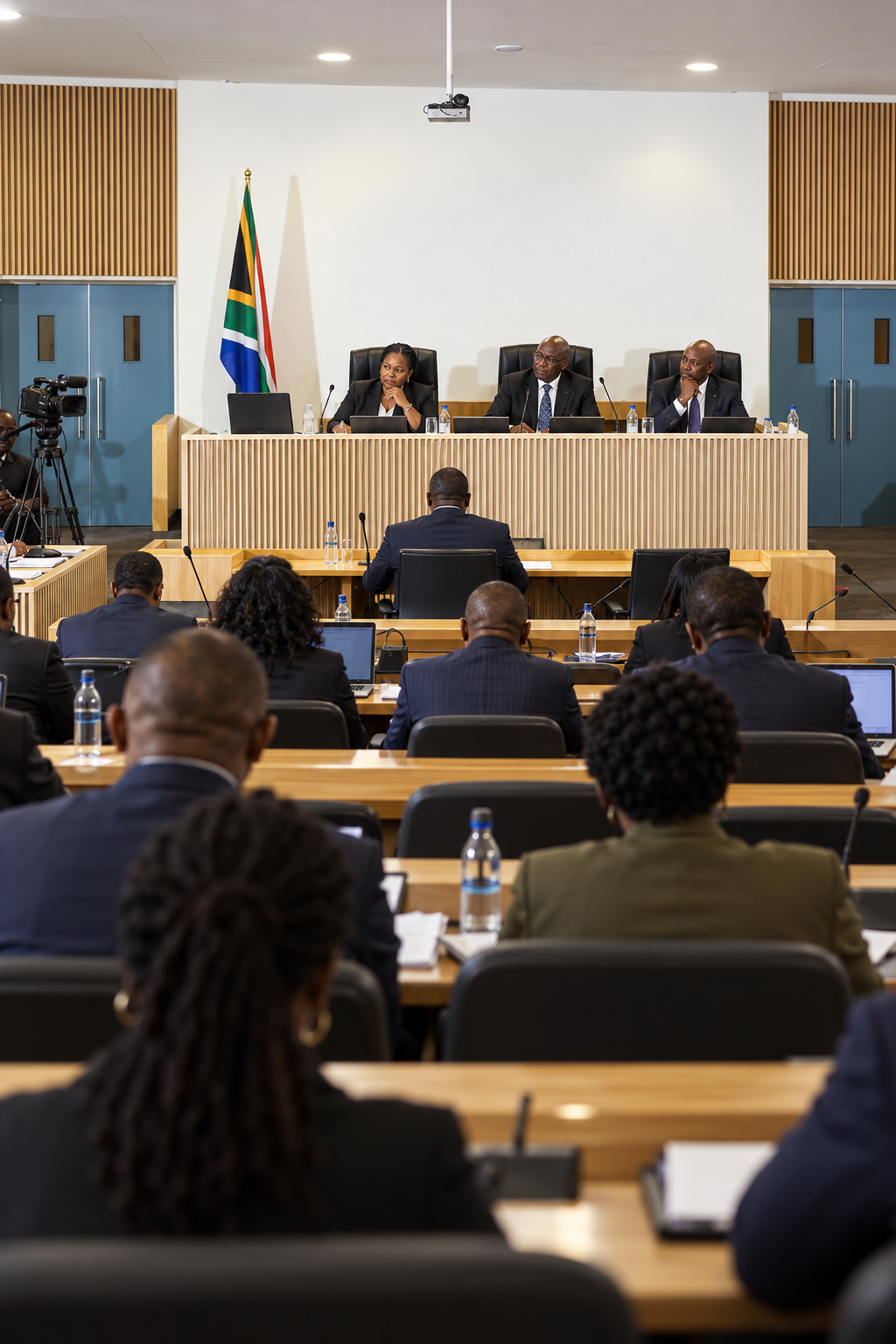
The answers to the
Wanatu question must emerge from a National Dialogue that values inclusivity.
This dialogue should address the ‘poor black problem’ without creating a new or
adjacent ‘poor somebody problem’. It should confront the shame of uneven competence
development issues, ensure access to land (including expropriation) for
development, and enhance human dignity through improved settlements. As we
respond to the Wanatu questions, RSA must level the playing field to provide
each citizen with a fair opportunity for a good start. It must emphasise the
indivisibility of the Republic, making every voice and perspective integral to
the process.
A brigade of new
Voortrkkers should be established and trained in the principles of
non-racialism without compromising the need to uphold the actual diversities
that define us as South Africans. A socio-cultural and economic compact must be
forged within a non-racial context to transform mindsets that still harbour the
notion of a community exclusively reserved for purists and separate
development-driven human settlements. Defining who we, the people, are will
provide a solid foundation for any National Dialogue aimed at addressing the
Wanatu question. It is about e-hailing the spirit, as the Afrikaners would say,
die gees, of South Africans from one point to another. CUT!!





Leave A Comment