
South Africa is in a political transition towards a post-2029 era of new political configurations. The time for one party dominance is up. Multiparty coalition government across all spheres of government is here to stay. This state of affairs triggers thinking on how the country would politically look like.As a given, unless requisite thresholds are met to fundamentally amend it, the 1996 Constitution represents the arrangements with which society has agreed to govern itself. It establishes 9 Provinces, and through a municipal demarcation policy framework it establishes 44 district, 8 metropolitan, and 205 local municipal jurisdictions. The 318 jurisdictions plus the national sphere of government all have political mandates assigned to the freely elected representatives.
In all these jurisdictions, and to the extent that voters allow, the absolute power to govern alone by any political party characterises the nature, form, and content of how government as the prize of politics is contested for. This impacts not only on how the heads of executive, in whom the executive authority of the country, the provinces, and municipalities, are elected, but how the electoral system facilitates that. Parallel to this reality is how contesting political parties are organised to dovetail into how government and state power is structured.
To date, the secret to the strength and resilience of RSA’s post-apartheid democratic order lies in its constitutional order and the ritual of convening public representatives chambers; parliament, provincial legislatures, and municipal councils. This practice welds the sovereign and the people together, and within jurisdictions, into a body politic regulated by the Constitution as the supreme law of the land.
In its maturation process, RSA democracy’s strength, the closeness between those with government authority and the people, began its resilience path through the stretching of its multiparty character to mitigate the risks associated with one dominant party tyrannies. The experiment of electoral democracy and freely elected representation challenged single party majority rule and introduced multiparty majority rule as its alternative.
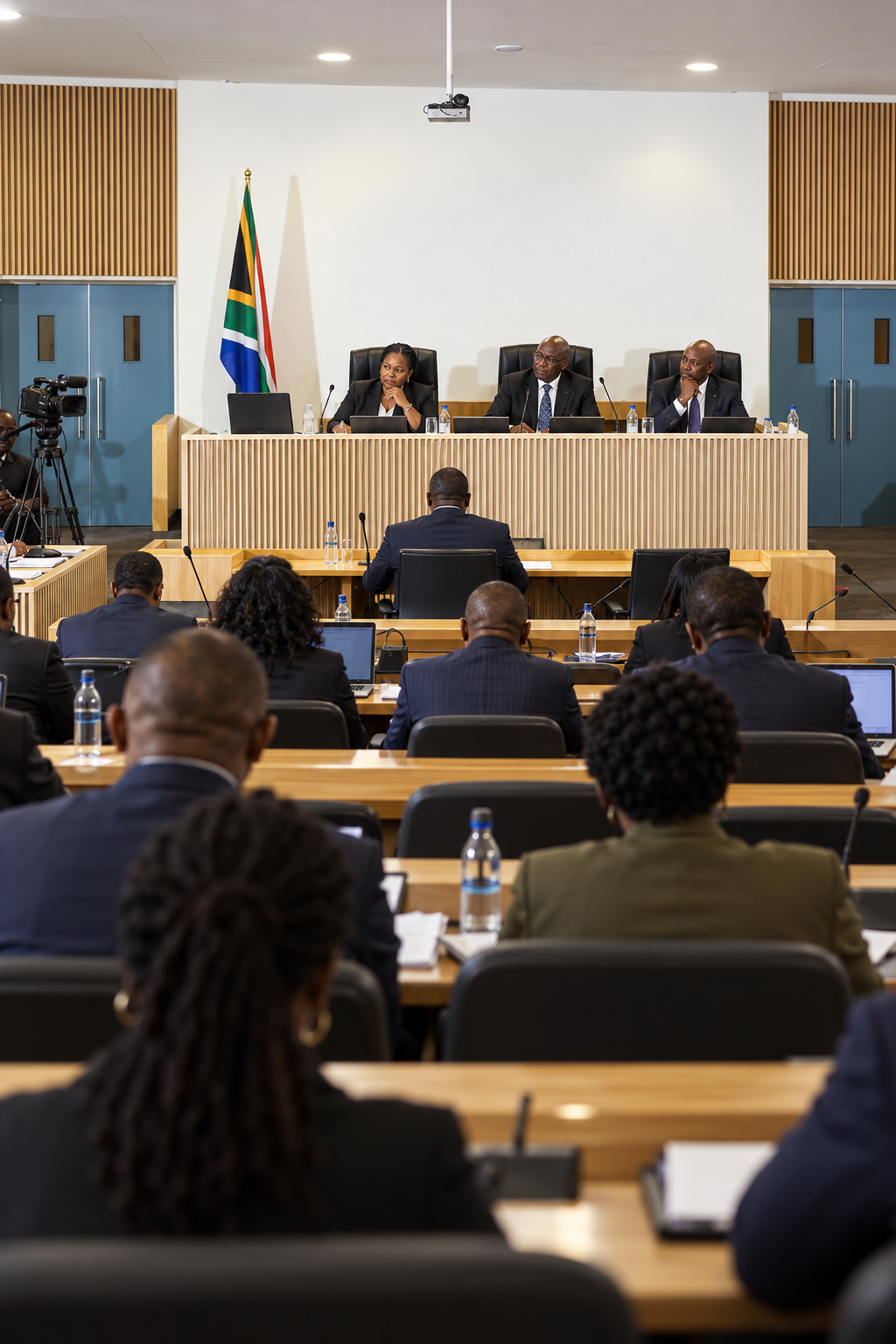
The democratic order is now faced by a context where chambers constituted by freely elected representatives will have a decisive influence on who ultimately becomes the head of state, premiers of a province, and mayors of municipalities. The setting reality of none of the current political parties polling more than 35% of the national vote calls for thinking on how to configure the national executive for the democratic order’s sake. In short, how does South Africa mitigate the risks of the centre not holding.
Several scenarios could be considered.
Constituting the national and provincial legislatures
Parliament consists of 400 seats which are filled through a formula that places freely elected representatives on them; the same process applies to provincial legislatures. With the reality of multipartyism being determinate on the election of the President and Premiers, how these legislatures are constituted should now be calibrated to ensure that representation in them has spatial legitimacy.
It would thus be prudent to institutionalise spatial representation either by imposing a spatial representation quota system or elevating the significance of a constituency based representation. Parliament could build this assurance by institutionalising that each of the 52 districts are allocated direct Parliamentary seats according to a formula. The constitution of the NCOP is left as the current process proposes, save for it being subjected to spatial legitimacy criteria. The rest of the seats can then be allocated according to a proportional representation criteria within the limits of available seats for such a purpose.





Leave A Comment