
It was in 2004, on a
sweltering night in Kinshasa, the capital of the Democratic Republic of the
Congo (DRC). We were sitting in one of the only two good hotels that had
survived the destruction of war when Kabila senior led his troops in the march
to Kinshasa and the neglect of many years under Mobuto Sese Seko. We were
reflecting on the future of Africa, dreaming of the day when the DRC would
rise, leaving the pain of dictatorship, war, killing and plunder behind. How it
would lift the East, South, Central Africa and the entire continent.
Rich Congo
It is vast, beautiful
and naturally endowed. Its water is teeming with fish, and torrential rains
fuel the thick forests that give rise to massive logs, powering the European
and Chinese economies. Its rich soils and ample rains allow almost anything
dropped on the ground to grow. Its belly has abundant deposits of copper, gold,
diamonds, cobalt, uranium, coltan and oil, the wealth that was to be its curse.
Mbeki’s African
Renaissance
These were the days
of president Thabo Mbeki of South Africa. His African Renaissance vision saw
him go to all the corners of the world, preaching a social democratic form of
governance to his African compatriots, whilst seeking to convince the rest of
the world that Africa was changing, there would be no more wars, there would be
regular elections that reflected the will of its people, there would be the
reconstruction of its social and economic life and the rule of law.
The president was
leading a government and business delegation to the DRC. All aspects of
development were being explored, from the population registration and
identification system to rebuilding the Public Administration System, Central
Bank, Police and defence.
Naturally, the
discussions and brainstorming went beyond formal meetings. It was daunting but
fascinating to embrace the continent and its challenges. It was Pan-Africanism
in practice. The hosts appreciated the South African assistance, and they
showed it. South African and Congolese government officials spent endless hours
in working sessions and socialised together. It was a proud moment to be South
African and, more importantly, African.
South African
Exceptionalism
One of the hotel
patrons joined us. He was attracted by a captivating discussion, I assumed. He
quickly enquired whether we were not South Africans, which we quickly affirmed.
He was well-built, dark and well-dressed in his smart casual wear. He looked expensive
in every respect. It was clear that he was not a civil servant. His accent was
unmistakably Nigerian. After we confirmed that we were South Africans, he
launched quickly and heavily: “ You South Africans have this naïve
exceptionalism. You believe that somehow you are not part of Africa. You think
that the problems of the north will not affect you. You are Africans like all
of us in the north. The problems of the north are coming down south”.
I immediately sensed
an attack on us and our integrity as a country. I interjected. “What problems”.
He replied: “The problems of corruption, stealing, incompetence and failure of
the state”. I could not wait for him to finish. “Your problem is to assume that
because you ran down your country, everyone else will”. The atmosphere was
rising dramatically, and he had to calm things down and make me understand his
argument better. He told us that he was Nigerian, born and bred on the
continent. He was a businessman in the oil industry. He said: “Don’t get me
wrong. I am an African. But I live in London and New York. I am here for my
deals, and when I am done, I leave. Africa is a tough place to live in ”.
Problems of the North
Coming Down South
“You will know that
the problems of the north have come down south when every house resembles a
small local government”, he said. “You will have to supply your own water with
boreholes and tanks, supply your own electricity with solar panels on your roof
and generators, and collect your own refuse. “Every house has to own a pick-up
truck for refuse”. I was furious. I thought he had a very jaundiced
view of Africans, born from his peculiar experience. He had no right to
extrapolate like that because his experience could not possibly be applicable
across Africa.
We left
Kinshasa in the early evening on our departure date, making us fly over
Southern Africa at night. In a four-hour flight,t there would be a smattering
of lights on the ground, interspersed with long distances of darkness. When we
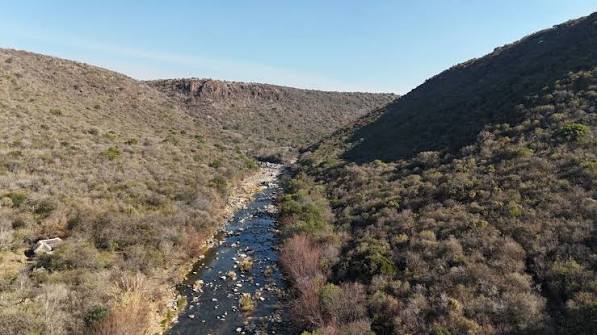
crossed the Limpopo River, there was almost a long continuous field of light,
culminating in nearly the daylight brightness of Gauteng. These lights seemed
to confirm how wrong our Nigerian compatriot was until November 2007, when we
hit our first Eskom load shedding. President Mbeki came forward and apologised:
“we were wrong”. Eskom was right”, about the increased demand, for
electricity and the government’s failure to heed the call.
Companies and
families can afford to spend a small fortune on solar panels and electric
power generators. Potholes seem to be growing bigger, just to laugh at me and
my arrogance laced with ignorance. When I go home from Johannesburg, I see a
sea of Jojo water tanks from Elim to Giyani. Donkey carts line the streets with
donkeys buckling under the weight of water drums, oblivious of the R3,3 billion
just spent to relieve their pain. Newspaper headlines scream “CORRUPTION” every
weekend as they proclaim the latest scoop, and television screens give voice to
the complainants as their faces bear testimony to this vice.
I try and find ways
to explain my anger against my Nigerian compatriot’s prophecy. I don’t have his
means nor want the land to have a house in foreign lands. I am an ordinary
villager. What will I do with the graves of the dear parents, sister, aunts,
uncles and grandparents? If I were to go to a neighbouring country, who would
look after them. How will our neighbours treat me? Will they mistake me
for a South African who lynched them and stole their limited possessions as they
faced accusations of job theft? Can I ever be employed in their countries with
my funny-sounding name, whose choice of food, clothes, and music is a subject
of ridicule by my own South Africans?
I didn’t take the
Nigerian’s contact details nor remember his name. But I also know I don’t want
to be anywhere except my beautiful, haunted South Africa. My only
wish is to grow sufficient wisdom to tell “when the problems of the North are
ABOUT to come down South”, not when they have arrived. Can you tell? Please
don’t forget me.
I apologise, Ninger
man.
Love Always
Africa Shall Rise.


Leave A Comment