The increasing
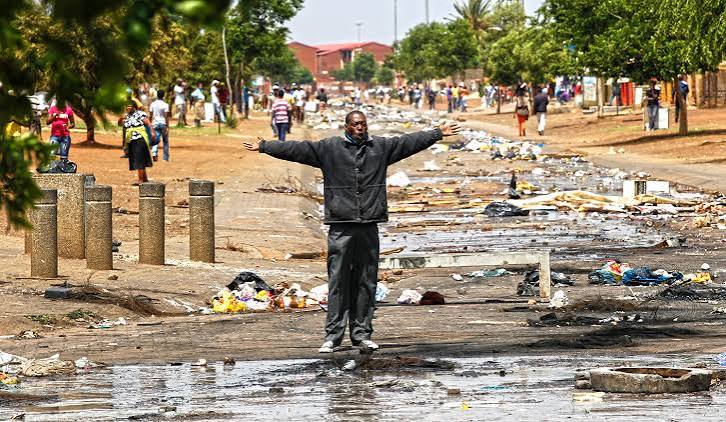
dysfunctions, the collapse of public infrastructure in most parts of
Johannesburg CBD, and the erosion of lawfulness as a civic responsibility in
South Africa’s economic capital demand a political response. Leadership is
identified as the most crucial factor in revitalising the city. It requires a
leader who can engage with its cosmopolitan, megalopolitan, and multi-party-political
landscape. Joburg is now a hub of various interests, from being a strategic
centre for global drug and human trafficking to being the heart of South Africa’s
multicultural society. It hosts the continent’s most prestigious stock exchange
and leading financial services companies.
The
Joburg voters, who are the most diverse in RSA, have, for some time, notably
since 2016, shown how they were gasping for leadership guidance. Through their
vote, they prompted a multiparty democratic path for a Johannesburg that was,
and still is, not yet ready for a people-focused coalition government. The
Joburg transition, a 2016 abstraction of what the country would eventually face
after May 2024, laid the foundation for a proper shift from a reality of a
single dominant party system to a multiparty coalition arrangement.
This
was a monumental shift in RSA electoral politics. Few recognised the profound
political changes of 2016 and 2021. Only those nostalgic for a unitary state
with one dominant political party still believe in the outdated notion of a
resurrected political party.
Johannesburg is now considering recycling Hellen Zille, arguably South Africa’s First Lady of coalition government arrangements. She
represents the DA’s value proposition in a landscape where competing
propositions from other parties resemble (political) dung beetles. Dung beetles
are known for rolling and burying animal dung for food and nesting. Apart from
the faltering party brands behind them, the candidates vying for the
Johannesburg Mayoralty are, in many ways, no match for Hellen Zille herself.
On
the horizon, no emerging political leader in Johannesburg can match Helen Zille
pound-for-pound as South Africa approaches the upcoming Municipal Elections.
The possibility of a coalition comprising more than 50% of the DA and the
right-leaning ANC political parties taking control of Johannesburg and
transforming it before the 2029 political power reconfigurations is not
far-fetched. Entering the 2029 National and Provincial government elections,
with Johannesburg and arguably Tshwane in the hands of a DA-led coalition, will
be a symbolic pre-election victory march to the Union Building.
The
Helen Zille for Joburg strategy is about gravitas and daring other political
parties to take who they nominate as their candidates seriously. The unified leadership
character these parties must respond with will depend on their moral and
ethical authenticity with South Africans. They must seek mayoral candidates
from among their members in areas they have never considered. The selection
criteria must change, the dung nest must be abandoned, and the many dung
beetles should be asked to give up and step aside.
The
response to the Helen Zille onslaught will reveal how other parties select
mayoral candidates. Whatever criteria they choose will shape the post-Ramaphosa
leadership model that the country will face. The significance of her raising a
hand goes beyond Joburg; it stands as a symbol in our politics that needs to be
unpacked.
The
question of political leadership in South Africa remains unresolved. The truth
is that we depend on options chosen by political parties through mechanisms
over which we have no influence, aside from being members subject to
accountability. Despite being amidst the state capture season when a commission
of enquiry was appointed to address it, we could not legally scrutinise
internal party funding. Whether good or bad, personalities often come as part
of a political package with party legacies that voters find difficult to
abandon entirely.
The
Helen Zille-for-Joburg return is a call to challenge the leadership question in
South Africa. It allows one to scrutinise the electoral system and its
implications beyond the elections. If, as some argue, individuals can stand as
candidates, the law should allow them to appoint the executive outside those
elected because the mandate is individual. This would empower political leaders
with the necessary gravitas to discover better breeds of leadership lying
underused in the country because they could not be part of the dung heap, to
the dung beetle’s nest.
The
democratic order has, over time, managed to elevate leadership talent beyond
party political boundaries. The May 2024 moment has made the prospect of
individuals rising as strong independent candidates a reality that South Africa
should prepare to embrace. Local government elections should focus on what
local leaders offer as a value proposition; it can no longer be about what a
central party structure decides is best for the local community or
jurisdiction.
The
sovereignty of the individual voter is what is at stake. When it comes to the
257 municipalities, parties should be houses of branded local leaders rather
than a branded house of leaders, which can justify why they should lead, except
that they have mastered the art of manipulating how to be regional or otherwise
leaders in the party.
The
South African leadership environment is unfairly limited to assessing how
corrupt, susceptible to influence, or outright inept individuals are. It
struggles to focus on the core questions — who the people are we are voting
for, what they have achieved as individuals, and how they attain their
positions. We should be worried about whether we can trust them with our public
power. It is a borrowed power we entrust to them.
For
the past few years, in RSA, there have been inertial forces of resistance to
raising beyond reproach and ethical leaders within the past five administrations’
governing parties. This has made political parties seem poorly equipped to be
trusted and responsible for deciding on the country’s leadership
questions.




Leave A Comment