
The
South African Police Services used to be feared by criminals. Although
sophisticated crime syndicates operating in RSA chafed under the SAPS, they all
accepted its authority over law and order. Throughout its various reform and
transformation journeys, those who were at variance with the law knew their
limits. As a result, society knew and believed the police would protect them
against criminality.
The
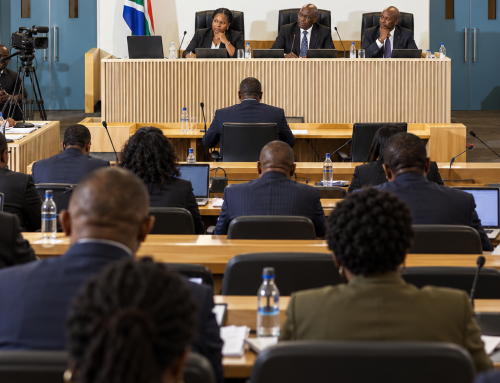
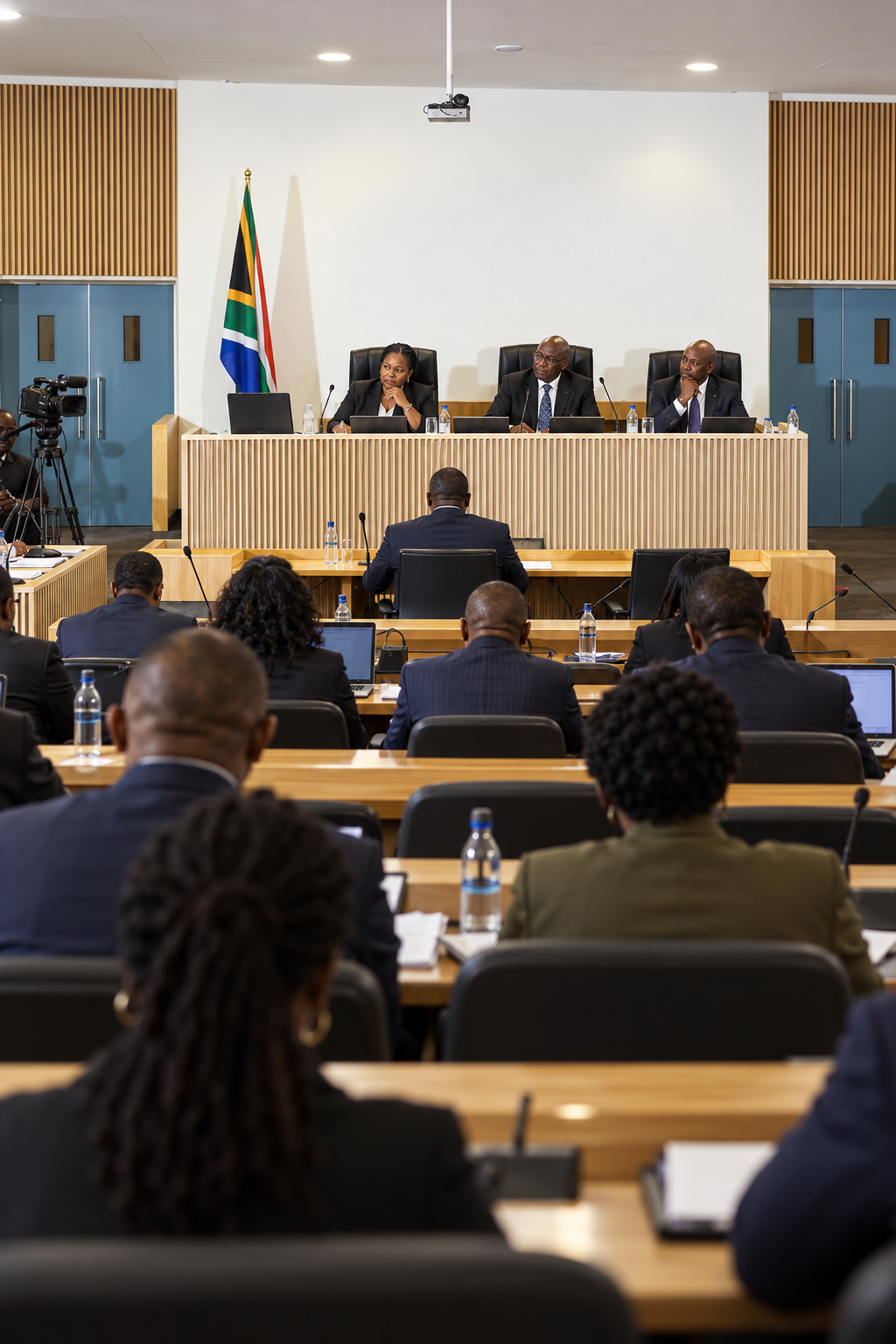
commencement of the Madlanga Commission might be one of the clearest signs that
those days could be behind us. The revelations during Lt General Mkhwanazi’s
press conference about divisions within the criminal justice system value chain
may have dealt a severe blow to the trust between SAPS, in particular, and
society. These revelations, aside from casting doubt on the credibility of the
policing system and elites, are the culmination of a system that had already
begun to suffer from an integrity gap with the public.
The
private household expenditure on security, asset insurance, car tracking
services, and recently kidnappings and anti-GBV litigation costs reflect a
country where the police can no longer be trusted to ensure citizen safety or
uphold the rules-based order that the constitutional framework promises. The
unchecked freedom of criminals in society, the contempt for lawfulness, and the
theft of strategic infrastructure at the expense of scrap metal and underworld
copper wire syndicates demonstrate a nation abandoned by its policing system.
In
Mkhwanazi’s vocabulary, which the Madlanga Commission is established to either
confirm or disprove, the senior levels of the criminal justice system are
mingling with kingpins involved in criminal activities. The arrest of senior
officials in the SAPS crime intelligence unit, the suspension of the police
minister, the sidelining of the second-in-command at SAPS, and the turmoil
surrounding certain police dockets point to a system in crisis. There is no
doubt that among those running the system, several high-ranking officers are
compromised.
While
the country expects criminality to be scrutinised at the Madlanga Commission,
the judge’s opening statement will reveal who or what is truly on trial. The
foundation of the executive authority’s indecisiveness that has overwhelmed
South Africa has strengthened the criminal element, leading them to believe
that the government has neglected its primary duty of safeguarding its
citizens. The mkhwanazisation, a condition where police officers become
confident only in loyally executing lawful policies and orders of the government
of the day, of SAPS, might be on trial more than criminality if society does
not remain vigilant.
Although
some commissioners have already stated that the President will not be bound by
its findings, the commission undoubtedly continues the post-apartheid state’s
journey of self-reflection. It will send positive and strategic signals about
how the entire public service should be supported in its mission to loyally
execute the lawful policies of the government of the day. Judge Madlanga faces
a significant historical moment that few before him have experienced. He will
define or redefine what it means to tell the truth to power beyond 2026 and
2029.
It
is not only the revelations of new or different personalities like Vusi ‘Cat’
Matlala that will be at stake; it will be about understanding why the system
allowed such personalities access to the powerful and their influence. It is
the innocence of the South African establishment, its political elites, and
most importantly, its legal cognitive elites, which will also be on trial. In
Thuli Madonsela’s terminology, this will not be the state capture commission
but a criminal justice cluster chapter of the state of capture enquiry. The
focus of the public concern, which the law states is the basis upon which the
President exercises his power to establish commissions, is unequivocal.
When
the Commission begins sitting, there will be a temptation to submit criminal
dockets that should usually be handled by regular policing. The police service,
especially its mkhwanazis, would have to overhaul everything about policing to
survive, especially as the Commission might become an active participant,
though with noble intents, in efforts to further undermine the inherent
independence of the criminal justice system.
While
it is true that the President exercises executive authority as head of state
alongside other Cabinet members, in this case, the Minister of Police, the
Constitution clearly states who controls policing. It assigns the supervision
and management of the police service to the National Police Commissioner and,
through a formal delegation process, to other commissioned officers. This
provision endorses the mkhwanazisation of the police services in a way that
might offer South Africa a chance to escape from deep state capture, which
Judge Madlanga would help RSA understand to what extent.
Clearly,
the police service is a constitutional institution; professional officers can
work together to safeguard policing as a vocation that lawfully executes the
lawful policies (and orders) of the government of the day. As a professional
body, the police should focus beyond self-preservation towards the safety and
security of citizens. It should involve weakening the criminal elite and its
power networks. The Madlanga Commission is more than merely an enquiry; it is a
stepping stone for ethical policing.
With
the establishment of a coalition government system, there will be an increase
in individuals serving as head of state loyal to the interests of a coalition
that commands a certain threshold. This means that the advantage of size and
scale in politics will decrease, and single-issue politics, which might be
unlawful, could become more dominant, with power held by a strong interest
group defending an individual. During these times, public functions such as
policing, defence, and national intelligence will need to rethink what it means
to loyally carry out the lawful policies and orders of the government of the
day. It is a national responsibility.





Leave A Comment