
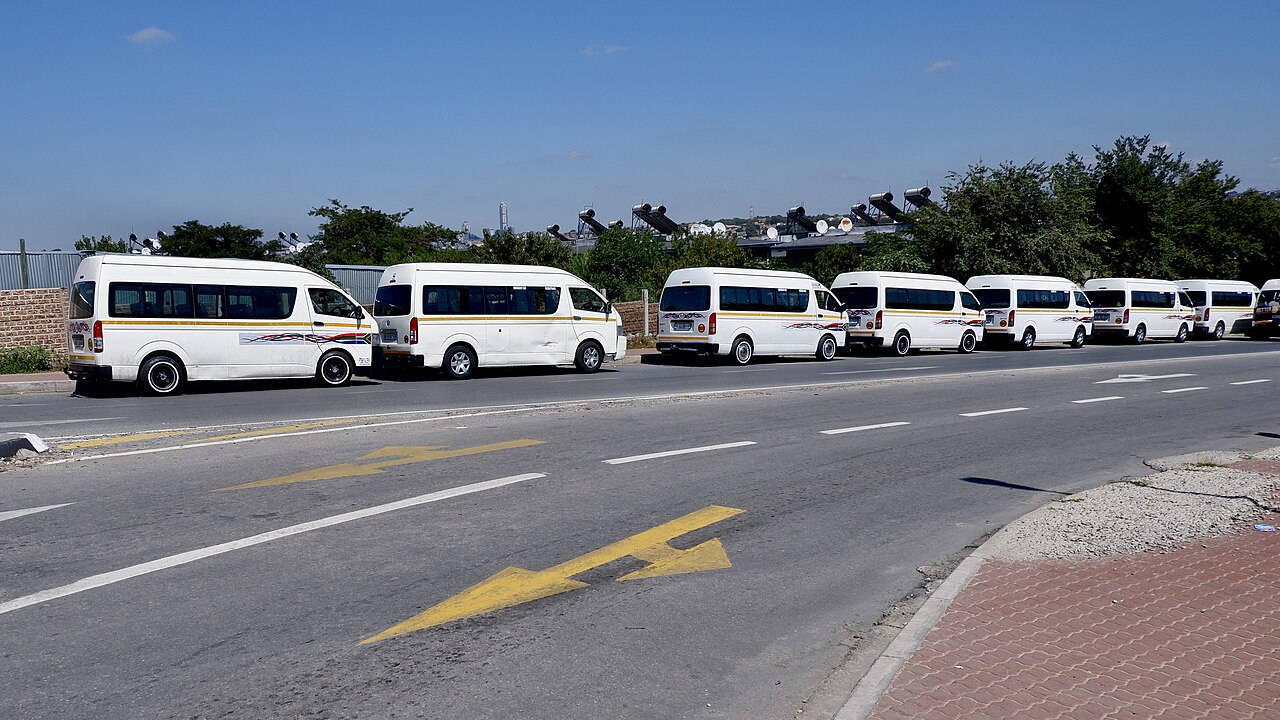
Beyond the recklessness of scholar transport drivers, the unregulated nature of the booming scholar transport industry, and the general road safety challenges in South Africa, the deaths of schoolchildren in the Vaal point to a deeper local government issue: spatial injustice.
The real problems are not surfacing for decisive policy action or intervention.
At best, there will be a race among funeral undertakers volunteering to make the send-off for victims of spatial injustice appear grandiose, elevating death to a form of admiration, without addressing those who may be waiting in line for the same fate. As part of this ritual, politicians will occupy front-row seats as national chief mourners, ostensibly representing “we the people” who voted them into office.
Spatial justice concerns the fair and equitable distribution of resources, opportunities, and quality of life across geographical spaces. Its opposite is spatial injustice.
One of the most complex outcomes of urbanisation is access to agglomerated services for those entering urban spaces. How human settlements enable a better life for all forms the foundation of social justice, human dignity, and societal well-being, including the prevention of avoidable accidents and tragedies.
In South Africa, access to nodes of agglomeration remains shaped by historical injustices, as recognised in the 1996 Constitution. It remains deeply unjust that children must travel long distances to access a fundamental human right such as education.
The proximity and mobility of basic social services relative to human settlements are central to achieving social and economic justice. This requires new thinking within local government systems. Anything less perpetuates injustice.
The apartheid design of human settlements created labour reserves to service urban centres. People were settled in areas where they could be transported into cities for work and returned afterward.
This spatial template has persisted in access to perceived quality education. Basic amenities such as education were historically structured within a racial caste system that excluded the majority. Today, those on the periphery of opportunity, shaped by apartheid spatial planning, continue to experience its legacy.
The transition to non-racialism through the 1996 Constitution granted legal access to opportunities previously denied on the basis of race. Yet this did not resolve the spatial realities that continue to shape access beyond legal frameworks.
Public policy, as a mechanism to extend access to facilities that remain physically distant, imposes itself on historically privileged suburban spaces. The result is a persistent tension between proximity and distance.
The movement of learners to and from educational institutions has evolved into an unplanned political economy. This system remains largely unsupported by an adequate regulatory framework.
Learners, transported 20 to 40 kilometres from their homes, are effectively treated as commodities within a “human mobility” system that operates outside the standards of a safe and functional public transport network.
The Vaal tragedy underscores the urgent need for targeted policy reform. This includes integrated public transport planning and equitable resource allocation to address spatial injustice and improve safety for learners and commuters.
Beyond election rhetoric, South Africa requires decisive policy action to confront spatial injustice. The cost is borne by both the economy and its citizens, calling for collective responsibility among informed citizens and advocates.
Achieving spatial justice demands overcoming planning system limitations and strengthening political will. Resource distribution must align with the constitutional promise of social equity while reducing road safety risks for learners and workers.





Leave A Comment