
“The most consequential question raised by South Africa’s recent elections is not whether the African National Congress can recover its majority. It is whether the constitutional democracy the ANC helped to build can outgrow its dependence on ANC incumbency.”
Introduction
South Africa has entered a political era for which its constitutional imagination is still underprepared. For three decades, the democratic order and ANC predominance appeared so closely aligned that the durability of one was often mistaken for the permanence of the other. The end of the ANC’s national majority now compels a more exacting enquiry: can the institutions, political habits and public ethics of the republic remain authoritative when the liberation movement no longer governs alone—or, one day, does not govern at all? This is not an obituary for the ANC, nor a celebration of its decline. It is an argument that the movement’s most important democratic responsibility may now be to help secure a constitutional order capable of surviving every incumbent, including itself.
The results of the 2016 and 2021 local elections first made the possibility visible in the metropolitan municipalities. The 2024 national and provincial elections made it undeniable. The ANC remained the largest political formation, but it lost the parliamentary majority it had held since 1994. This was not merely an electoral setback. It was a constitutional moment: a signal that South Africa must now imagine political authority without assuming that one party will permanently embody the nation.
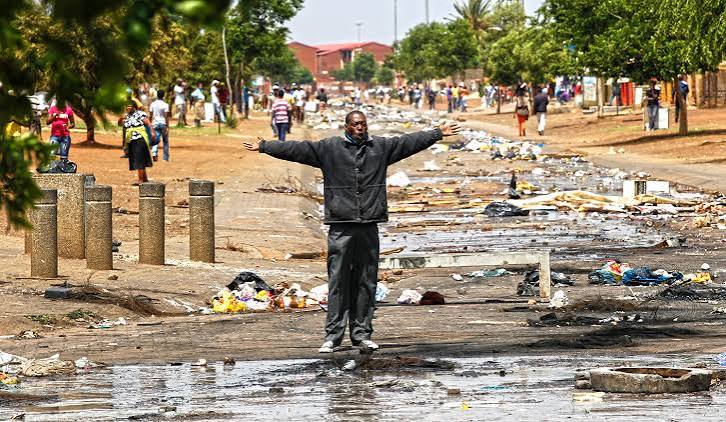
This is why the decline in ANC support cannot be read only as a contest between parties. It is a deeper crisis of political trust. In the 2021 municipal elections, turnout fell to an historic low. By 2024, the electorate denied any party an outright national mandate. Meanwhile, protest, institutional distrust and withdrawal from formal politics have become alternative languages of citizenship. When citizens cease to believe that the ballot changes the conduct of power, electoral democracy loses not only participation but authority.
When constitutional government becomes prerogative
This distinction matters because the rule of law rarely collapses in a single dramatic event. It decays through exceptions that become habits: party decisions that override public mandates, interventions that discipline political rivals rather than repair institutions, and constitutional mechanisms deployed to settle factional disputes. The vocabulary remains legal; the animating logic becomes prerogative.
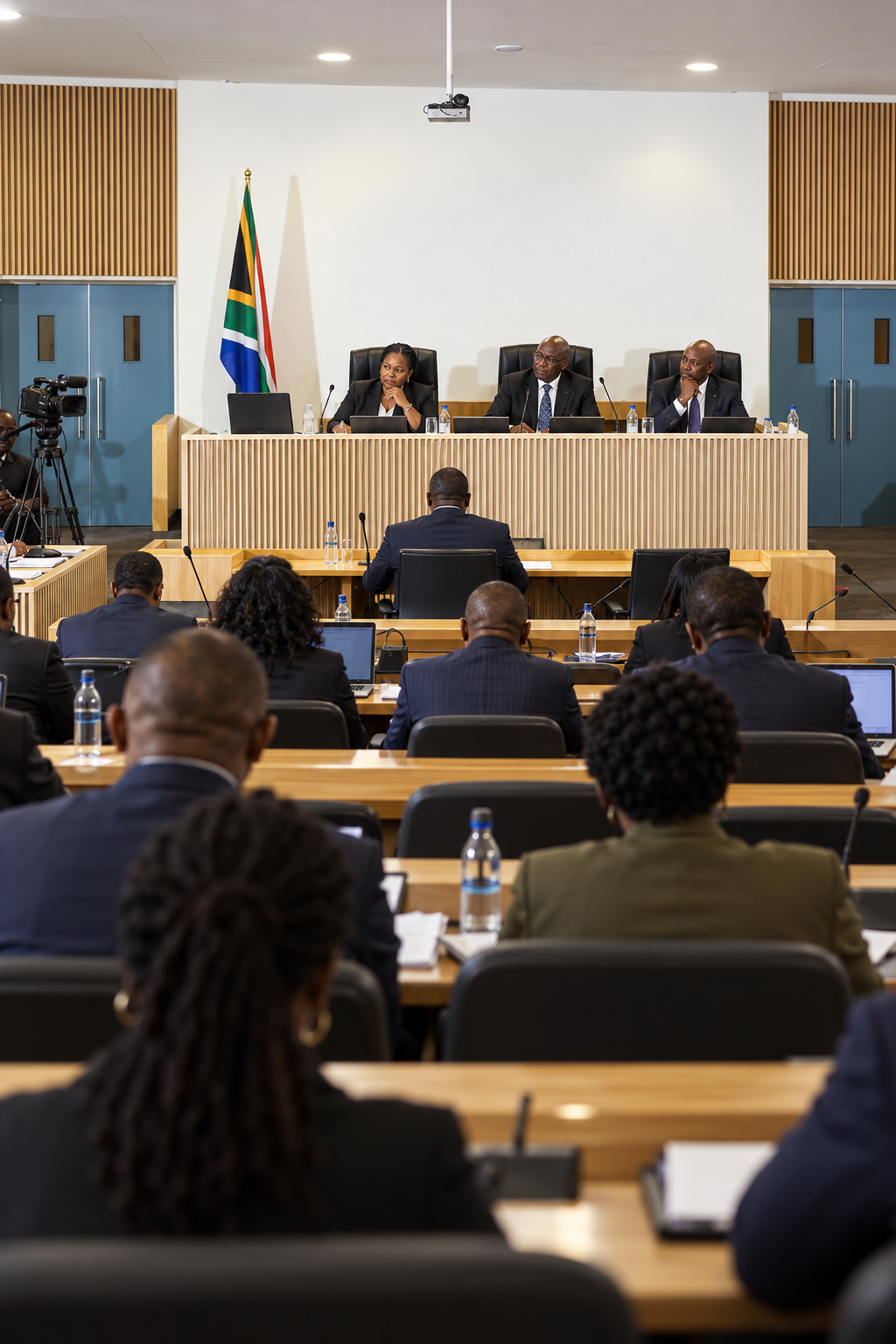
The Nkandla judgment supplied a defining example. The executive and the National Assembly initially treated the Public Protector’s remedial action as something that could be politically reinterpreted rather than obeyed or lawfully challenged. In 2016, the Constitutional Court held that the President and Parliament had failed in their constitutional duties. The episode exposed the prerogative instinct in its modern form: not an open rejection of the Constitution, but an attempt to domesticate an independent institution until the Court restored the hierarchy of law.
The 2021 contempt proceedings against former president Jacob Zuma made the point even more starkly. After he defied an order compelling his appearance before the State Capture Commission, the Constitutional Court found him guilty of contempt and imposed direct imprisonment. Whatever one’s view of the sanction, the constitutional message was unmistakable: liberation credentials, former office and continuing political influence do not create a zone of immunity from judicial authority. The rule of law becomes real precisely when it binds the once powerful.
Local government: Intervention without reconstruction
The constitutional architecture is not ambiguous. Section 154 envisages support and capacity-building; section 139 permits intervention when a municipality cannot fulfil its obligations. Yet the country has too often normalised the intervention and marginalised the support. A 2025 parliamentary analysis found that 39 municipalities were under section 139 intervention between 2020/21 and 2022/23 and warned that the prevailing approach was reactive, politically unstable and weak in producing durable institutional improvement. The point is not that intervention is never warranted. It is that intervention without reconstruction becomes administration by recurrence.
Makana illustrates the cost of waiting for collapse. After repeated provincial interventions and an unimplemented financial recovery plan, residents and civic organisations turned to the courts. In 2020, the High Court found that the municipality had breached its constitutional obligations to provide services and promote a safe and healthy environment, and ordered the provincial executive to dissolve the council. When citizens must litigate to compel one sphere of government to rescue another, cooperative government has ceased to be anticipatory and become an emergency response.
Madibeng tells a related story. Its 2023 mandatory intervention required a financial recovery plan to restore basic-service and financial obligations. It belongs to a wider pattern in which municipalities remain under intervention for years, or cycle back into intervention, because the takeover addresses the immediate crisis without rebuilding the political and administrative capabilities that produced it. The intervention then becomes a substitute for government rather than a bridge back to government.
The audit record gives the argument scale. In 2022/23, only 34 of South Africa’s 257 municipalities achieved clean audits; 86 per cent received material findings on compliance with legislation. The contrast is instructive. Municipalities that sustain clean audits generally institutionalise planning, public participation, complaint management and financial controls. The lesson is not that an audit outcome is identical to service delivery, but that durable systems make both accountability and delivery more likely than periodic political rescue.
When party authority shadows constitutional authority
Here the ANC’s internal life becomes a matter of public consequence. For as long as it governed most spheres and municipalities, in-party hierarchy often shadowed the constitutional hierarchy. Decisions taken within the movement could determine who exercised executive authority in the state, how long they remained there and whether an administration was treated as governable. In that setting, democratic centralism could quietly mutate into commandism: the belief that the party’s organisational sovereignty stood above the electorate’s constitutional sovereignty.
South Africa’s democratic playbook must remain the Constitution. That sounds obvious, but constitutionalism is tested precisely when obedience is inconvenient. It requires parties to accept electoral loss, institutions to resist factional capture, and incumbents to recognise that lawful authority is borrowed from citizens rather than owned by organisations. A party committed only to the Constitution while it governs is not constitutional; it is merely comfortable.
Beyond incumbency: Building rules for the day after power
This is the meaning of a beyond-incumbency attitude. It is the capacity of a governing movement to build rules it would still defend after losing office; to strengthen courts that may rule against it; to professionalise a public service that will serve a future government with equal fidelity; and to accept that the institutions protecting democracy do not belong to today’s majority.
That achievement can be understood through a democratic triad. The first leg is popular sovereignty: citizens must be able to choose and replace leaders through regular, free and fair elections. The second is liberty: speech, association, assembly, a free press and equal protection must secure the citizen against arbitrary power. The third is the rule of law: an independent judiciary and democracy-supporting institutions must ensure that public power remains answerable to something larger than the preferences of those who wield it.
The ANC’s historical importance therefore deepens rather than reduces its obligations. A liberation movement cannot demand reverence for the Constitution as its legacy while treating constitutional restraint as an obstacle to its current interests. If it is indeed deeply embedded in South Africa’s democratic life, then its conduct must cultivate constitutional habits even when those habits limit its power.
The party and the state: When organisational habits become public institutions
South Africa underestimated the extent to which the character of the governing party would become the character of government. The early democratic settlement benefited from extraordinary political leadership, institutional continuity and widespread goodwill. That stability shifted scholarly and public attention away from the governing party as an institution in its own right. Yet the State Capture Commission revealed how leadership peril within a party can acquire institutional gravitas across the state. Commandist traditions, patronage networks and factional warfare do not remain confined to conference halls; they migrate into appointments, procurement, law enforcement and administrative authority.
Coalitions and the portability of prerogative politics
This does not mean the ANC alone is capable of abusing public power. Coalition politics has already shown that opposition parties can reproduce the same prerogative habits: unstable bargains, revolving leadership, opportunistic motions of no confidence and the discounting of voters once seats have been allocated. The constitutional problem is therefore broader than one party. But the ANC remains central because its long incumbency established many of the informal norms that competitors now inherit.
Johannesburg has become the emblem of this danger. Since 2016, its mayoral office has repeatedly changed hands through fragile coalition arrangements, while residents have faced worsening failures in electricity, water and urban maintenance. A 2024 study of Johannesburg, Tshwane and Ekurhuleni found that unstable coalitions weakened accountability, disrupted budget processes, destabilised senior management and impaired essential services. These are not abstract costs of political fragmentation; they are constitutional costs transferred to households.
The contrast between metropolitan municipalities is equally revealing. In the 2022/23 audit cycle, Cape Town was the only metro to sustain a clean audit over the administrative term, while Ekurhuleni regressed after vacancies and procurement controls weakened, Buffalo City regressed amid leadership instability, and Mangaung again received a qualified opinion in the context of instability in both council and administration. This does not prove that one party possesses a monopoly on good government. It demonstrates that institutional continuity, professional administration and functioning controls matter more than political slogans.
Nor should constitutional mechanisms become weapons in that market. Sections 100 and 139 are instruments of cooperative government, not partisan guardianship. Their legitimacy depends on objective thresholds, procedural fairness, transparent recovery plans and measurable institutional restoration. The proper test of an intervention is not whether it rearranges political authority, but whether it returns a capable, lawful and accountable government to the people.
Conclusion: Constitutionalism beyond political possession
The great test of South Africa’s constitutional democracy is whether it can survive the weakening, defeat or transformation of the movement that helped found it. Mature democracies honour their founders not by making them permanent, but by making their constitutional achievements durable. The ANC’s noblest future may therefore lie not in governing forever, but in ensuring that no future government—ANC or otherwise—can govern outside the discipline of the Constitution. It is a matter of a democracy growing strong enough to survive its founders.
The question, then, is not whether we can imagine South Africa without the ANC in government. The electorate has already begun that work. The harder question is whether we can imagine an ANC whose democratic contribution is measured not by the duration of its rule, but by the constitutional culture it leaves behind. If the answer is yes, the movement may yet recover its role as a leader of society rather than merely a contestant for office. If the answer is no, South Africa must build that constitutional leadership elsewhere.
The democratic task ahead is therefore larger than rebuilding one organisation’s electoral fortunes. It is to establish a political ethic in which popular sovereignty, liberty and the rule of law remain indivisible; in which party authority never outranks constitutional authority; and in which intervention repairs institutions rather than redistributes power. The ANC must embrace that ethic because of the republic it helped to found. Its competitors must embrace it because they may inherit the state it leaves behind. And citizens must insist upon it because constitutional democracy cannot be outsourced to parties, courts or commissions alone.
A constitutional democracy worthy of its sacrifices must be strong enough to outlive every governing party—including the one that helped bring it into being.




Leave A Comment