

The anti-migrant protests exposed a deeper crisis of leadership: elected representatives who appear only after fear has already filled the streets.
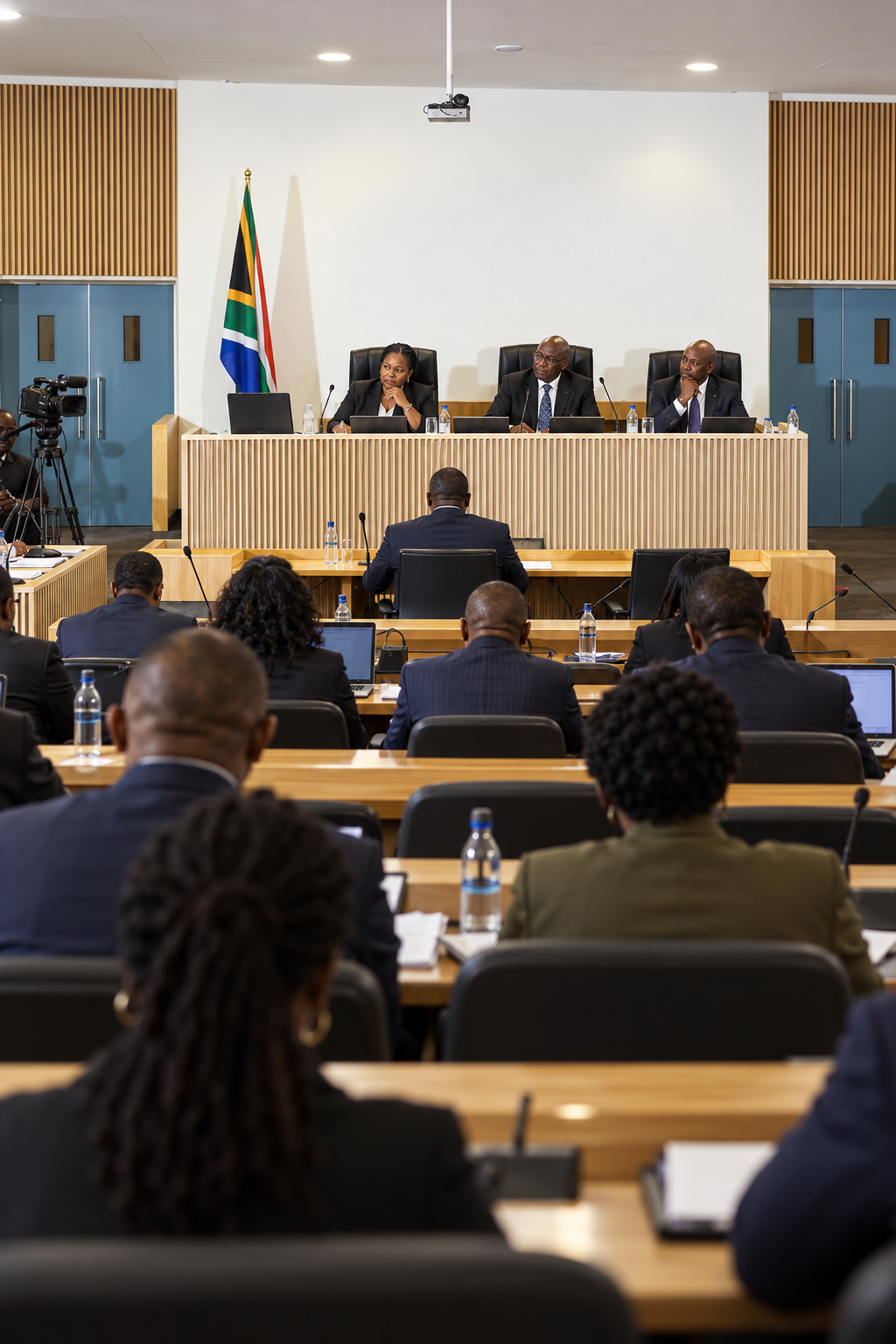
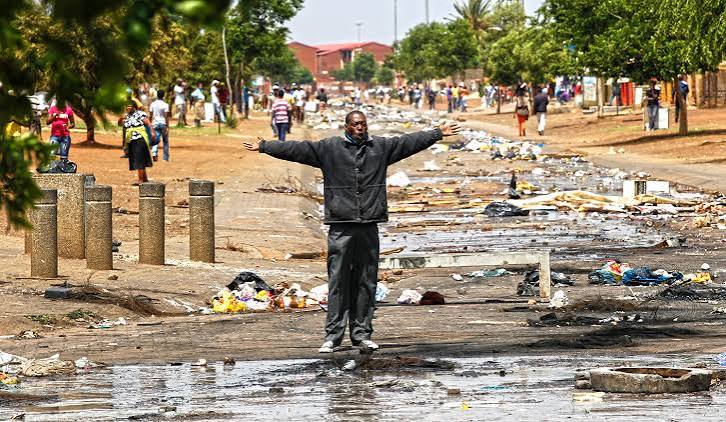
The events of 30 June 2026 should trouble every South African who still believes that democratic leadership means more than occupying office. Across parts of the country, anti-migrant protests, shop closures, fear, displacement and sporadic violence revealed not only the depth of public anxiety about undocumented migration, crime, unemployment and failing services, but also the dangerous vacuum that opens when leaders are absent from the people they claim to represent.
If South African politics were assessed as a business continuity risk, many elected representatives would now be facing a vote of no confidence. The central risk is not only that communities are angry. It is that, when anger reaches a boiling point, too many public representatives appear surprised by what their constituencies have been saying for years.
For politicians, business continuity should mean ensuring that the grievances of their constituencies are heard early, processed honestly and addressed within the law. It should mean translating community fear into constitutional action rather than allowing it to be captured by civil society’s impatience, intimidation, or spectacle. One of the first lessons of leadership in a crisis is simple: leaders must be found among those they lead.
That presence is not performative. It is not a photo opportunity after the flames have been extinguished. It is the slow, disciplined work of knowing what people fear, why they are angry, who is being scapegoated, where the law is failing, and what institutional response is required before a crisis becomes a national wound.
A crisis of the magnitude witnessed around June 30 is never a single event. It is an accumulation of unresolved pressures: porous border administration, weak enforcement, poverty, unemployment, criminality, collapsing municipal systems and a public mood that increasingly believes official channels do not work. In such circumstances, leaders are not expected to flatter every public sentiment. They are expected to understand it, test it against constitutional values, and guide society towards lawful remedies.
This is where the distinction between leadership and agitation matters. Agitation can name the grievance. Leadership must build the bridge from grievance to solution. It must protect the right to protest while refusing threats, ultimatums and violence. It must insist that undocumented migration is a serious governance issue without allowing foreign nationals, including those lawfully in the country, to become targets of collective punishment.
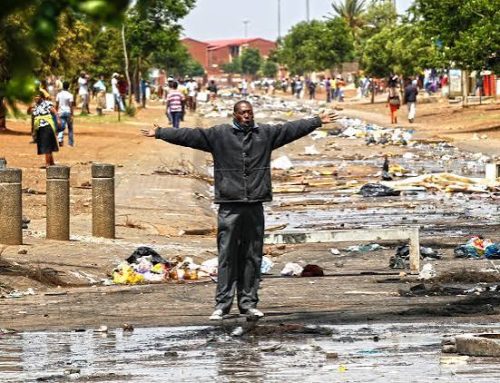
The trauma of June 30 will not end when marches disperse. Some people have left the country in fear. Others remain to rebuild lives, businesses and neighbourhood economies disrupted by closures, looting and intimidation. Retail outlets have shut. Supply chains have been interrupted. Workers, landlords, customers and small enterprises now face the practical consequences of a social rupture that was allowed to grow in full public view.
The harder questions now begin. What happens to deserted shops and informal trading spaces? How are vacancies and disrupted services managed? What becomes of property lost, damaged or abandoned? How do municipalities restore local economic order without rewarding lawlessness or deepening resentment? These are not questions for slogans. They require public administration, policing, diplomacy, community mediation and political courage.
Crises occur with unfortunate frequency, but recovery is never automatic. The real test of leadership lies in what happens after the immediate danger has passed. Do leaders retreat into statements and committees, or do they remain visible, listening and directing a credible programme of recovery? Leadership is an endurance sport. Those who cannot stay with people beyond the news cycle should not be surprised when people stop believing in formal politics.
The crisis leadership scholar Bill Tibbo reminds us that crises produce intense and lasting emotion. Fear, uncertainty, grief, shock, confusion and a sense of loss do not disappear because officials declare calm. Recovery takes time, moves in stages and is rarely linear. Most importantly, people need meaning, purpose and action. A society emerging from fear cannot be governed by silence. It must be helped to make sense of what has happened and to act within a lawful, humane and practical framework.
There were many assessments of whether the June 30 mobilisation succeeded. There were fewer serious answers about how South Africa should now move forward. That silence is dangerous. It allows the energy of the streets to return later in a more destructive form. If government does not produce a credible post-crisis programme, others will produce one outside the Constitution.
To her credit, the leader of the March and March movement, Jacinta Ngobese-Zuma, appeared to understand that the post-event moment carries responsibilities of its own. Communication after a crisis matters because it can either cool the temperature or inflame it further. But the burden cannot rest on movement leaders alone. The state must reclaim the constitutional centre: enforce immigration law, protect all people from violence, prosecute criminality, and communicate clearly enough to restore public confidence.
South Africa must resist the false choice between denying citizens’ legitimate frustrations and endorsing xenophobic violence. It is possible to say, at the same time, that the immigration system needs urgent repair, that criminal networks must be confronted, that public services are under severe pressure, and that no person may be threatened, dispossessed or attacked because of nationality. A constitutional democracy is judged precisely by whether it can hold all these truths together when emotions are high.
A new political personality is emerging in South Africa: impatient with excuses, suspicious of institutions, and willing to act outside formal channels when it believes government has failed. Anyone who wants to lead this emerging personality must abandon dogma, nostalgia and ideological comfort. They must return to the opening promise of the Constitution: “We, the people.” That phrase is not a slogan. It is a discipline. It requires leaders to be present before crisis, honest during crisis, and accountable after crisis. June 30 should not become another passing eruption in our politics. It should become the moment when South Africa remembers that leadership is not proven by who speaks loudest after the damage is done, but by who stands with the people early enough to prevent fear from becoming fury.





Thank you Prof
I have thoroughly dissected your opinion piece. It is intellectually elegant but it suffers from the same core problem as the other piece you penned: it sanitises the June 30 mobilisation by treating it mainly as a “leadership vacuum” while refusing to confront the substance of why people mobilised in the first place. It wants to sound balanced, but it still leans heavily on the language of “anti-migrant protests,” “fear,” “displacement,” and “xenophobic violence,” while soft-pedalling the state’s failure to enforce immigration law.
I have noticed that you have now shifted from accusing Satafrikans of scapegoating migrants to lamenting a “crisis of leadership” but the same pattern remains: the state’s immigration failure is acknowledged in passing, while the real moral energy of the piece is reserved for warning South Africans about anger, fear, and so-called anti-migrant mobilisation.
I think the problem with that narrative is that it still treats ordinary Satafrikans (March and March) as the principal danger, while treating the state’s non-enforcement of immigration law as a secondary administrative inconvenience.
Let me be clear: June 30 did not happen because Satafrikans woke up one morning and randomly developed a taste for agitation. It happened because for years government has failed to control unlawful entry, unlawful stay, fraudulent documentation, unlawful employment practices, and illegal business activity. Communities have been raising these concerns for a long time. The march was not the cause of the crisis. It was a reaction to a crisis that the state had already allowed to fester.
So when you say leaders should “stand with the people,” one must ask: stand with the people in what exactly? In repeating abstract platitudes about constitutional values? Or in finally insisting that the Satafrikan state enforce its own immigration laws with seriousness, consistency and urgency?
Another important observation that I picked up is that your article keeps using the phrase “anti-migrant protests.” That is already a distortion. The issue was not migrants in general. The issue was illegal immigration and the state’s failure to enforce the law. By calling it “anti-migrant,” he smuggles in the idea that citizens were mobilising against foreign human beings as such, rather than against lawlessness, weak borders, corrupt documentation systems and non-enforcement. That distinction matters, because once you blur it, you can moralise the whole debate and avoid the real governance question.
Furthermore, you say in your article that leadership must convert grievance into lawful solutions. I hear you and I agree.. but lawful solutions begin with an obvious truth: a constitutional state must know who is in the country, under what legal status, on what visa, doing what economic activity, and in compliance with which laws. That is not extremism. That is basic statehood.
You also warns against “allowing foreign nationals, including those lawfully in the country, to become targets of collective punishment.” That is correct. But it is also a convenient way of avoiding the harder distinction that has been missing from his writing from the start:
– lawful immigrants are not the issue
– refugees and asylum seekers with legal protection are not the issue
– undocumented illegal immigrants, visa overstayers, fraudulent permit holders, and those operating outside the law are the issue
If that distinction were maintained honestly, much of the rhetorical fog around this debate would disappear. The deeper weakness of the article is that it still treats citizen mobilisation as something suspicious that must be contained by respectable leaders, rather than recognising that democratic pressure often arises precisely because elected leaders have abandoned their duties. Satafrikans do not need lectures about “business continuity risk” and “post-crisis communication” while government continues to fail at the most elementary tasks of immigration control and public protection.
The truth is that June 30 exposed two crises, not one:
First, a crisis of immigration enforcement and state incapacity.
Second, a crisis of political cowardice, where too many elites are more comfortable policing the language of angry citizens than confronting the illegality and dysfunction that made those citizens angry in the first place.
So yes, Satafrika needs leaders who stand with the people. But standing with the people means more than showing up after the fact with essays about social cohesion. It means having the courage to say plainly that:
– Our country’s immigration laws must be enforced.
– Illegal entry and unlawful stay cannot be normalised.
– Fraudulent permits, unlawful employment and illegal business operations must be dealt with decisively.
In conclusion, I feel the urge to emphasize this important point: the people have a right to demand lawful order without being smeared as “anti-migrant” or “populist” every time they do so. A leader who cannot speak this truth is clearly is not standing with the people. He is standing at a safe academic distance from their reality.
I respectfully submit ✊🏿