The civilised and democratic World experienced how arbitrary and prerogative decisions by politicians have plunged humanity into one of the most devastating wars, the Second World War. Using gaps in the legal provisions of the then constitutional order in Germany, Adolf Hitler went about unleashing one of the most tyrannical governments in the 19th century. Nazism, a form of fascism laced with racial purism, was to unleash one of the world’s efficiently recorded ethnic cleansing projects against German Jews: the NAZI genocide.
In the same time space, at the Southern tip of Africa, and while the Nuremberg Trials were going on, a racial policy of Apartheid was being formalised as state policy. This legalised racial discrimination through a parliamentary system that could make laws as and when it suited the political exigencies of the moment. Consequently, the grand apartheid decade that legalised spatial injustice, racial inequality, gerrymandered skills development, economic disparity and domination, and flagrant disregard of human rights ensued.
These templates were, in global terms, rejected by the whole of the civilised world. A global consensus to declare such practices crimes against humanity was codified into treaties enforceable by an International Court of Justice. The criminalisation of racial injustice, ethnic cleansing, and any other proxy activity by states and governments meant elected and appointed officials would be jointly and severally held accountable for executing unlawful policies of their principals.
This meant that officials, especially those with command power over security forces, including the army, would, among others, be expected to understand the implications of their decisions in relation to global normative protocols. The Rule of Law was thus elevated over the Rule by Law, which was profoundly arbitrary and prerogative.
The reach of this normative shift in holding senior officials of government, acutely those in the security establishment, accountable extends to how states deal with organised crime or criminality, including genocide and drug and human trafficking. The global Rule of Law architecture, whose apex adjudication institution is the International Court of Justice, sits as a firmament below which states would be subjected if they act in a way that qualifies to be classified as a crime against humanity.
Arguably, all crime is against humanity; it is the extremes it assumes that determine the appropriate adjudication forum or court. Drug and human trafficking have for a while been applying to be considered as extreme as genocide and apartheid.
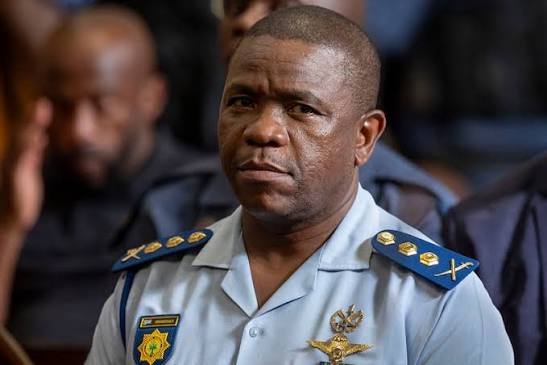
In South Africa, a constitutional provision exists to the effect that the public service must loyally execute the lawful policies of a sitting government. This means officials can do whatever it takes to reject a context where they would be part of a process of unlawfulness at the instance of political expediency. One General Nhlanhla Mkhwanazi stands out as a public servant who, in the wake of a complex takeover of the criminal justice system by organised criminal syndicates, refused to succumb to the unlawful political instructions of an Executive Authority. The impact of Mkhwanazi’s refusal to succumb and go public on the takeover of the criminal justice system has unravelled the state of capture the South African Police Service finds itself in.
As a principle, what Mkhwanazi did in South Africa is starting to have an international dimension. The resignation of the … in the United States of America over the Iran war is a green shoot to the extent that the war is in American Law illegal. Though least reported, there are reports of Marines and generals in the US Army questioning the correctness of going into war with Iran. The extent of the genocidal acts in the Gaza Strip and other occupied territories has also had an effect in several NATO members not meeting their treaty obligations in the wake of the Iranian war.
While Donald Trump hyped the war against Iran as a clash of civilisations, what has instead emerged is that it became a battle between normative and prerogative global governance. A duality now represented by forces behind the sustenance of a rules-based World Order or its undefined opposite. How General Nhlanhla Mkhwanazi responded is a trend with which humanity can survive the insatiable appetite for prerogative arbitrariness found in almost all politicians.





Leave A Comment