
Dr FM Lucky Mathebula[1]
South Africa is entering a dangerous moral and political moment. A legitimate debate about undocumented migration, border management and state capacity is being pulled into a darker terrain where language, surname, accent, dress and cultural origin are increasingly treated as evidence of foreignness. In this terrain, historically marginalised tribes and language communities become vulnerable not because they have broken the law, but because their identities straddle the artificial borders inherited from colonial cartography. This article argues that the gravest danger is not only the rise of xenophobic and tribal sentiment, but the silence of those with the authority, influence and moral standing to stop it before it hardens into a national habit.
When Migration Becomes Ethnic Suspicion
Living in a society repeatedly seized by dramatic moments of racism, tribalism, xenophobia, economic exclusion, religious chauvinism and other forms of human othering imposes a responsibility on the conscientious to act as who they are. In contemporary South Africa, this responsibility has acquired a new urgency. What began as an argument about migration, border management and state capacity has now mutated into a more dangerous social condition: the ethnic profiling of African people whose languages, names, cultures and origins are associated with neighbouring SADC countries. The targeting of historically marginalised tribes and language communities, including South African citizens being treated as foreigners in their own country, is no longer an anecdote. It is a lived-experience case study of what happens when society’s leaders remain silent as prejudice takes on organisational form.
The modern consequence of silence is not simply that wrong goes unchallenged. It is that wrong begins to borrow the language of public grievance, patriotism and community protection. South Africa’s present migration debate takes place against real anxieties: unemployment, crime, failing municipalities, porous borders, collapsing local services and a deep crisis of public trust. These anxieties are legitimate. But when they are left without principled leadership, they are easily redirected against the vulnerable. The migrant, the foreign trader, the asylum seeker, the Zimbabwean, the Mozambican, the Malawian and, increasingly, the South African from a historically marginalised tribe or language community become symbolic containers into which a failing state deposits the anger of its citizens.
Undocumented Status Is Not Ethnic Origin
A necessary disclaimer must be made. The crisis of being undocumented in South Africa is, properly understood, a crisis of undocumented persons, most of whom are foreign nationals whose legal status must be addressed through lawful, humane and administratively competent processes. It is not a crisis of people whose tribal, linguistic or cultural origins straddle sovereign borders. The demand that persons who are not South African citizens be properly documented is legitimate only insofar as it remains a question of law, administration, and state capacity. It becomes illegitimate the moment it is used to delegitimise ethnic origins, criminalise language, or treat historically marginalised tribes as suspect communities.
The Enabling Power of Elite Silence
This is why the silence of South African leaders of society is not neutral. It is constitutive. When business leaders, university executives, church leaders, traditional authorities, retired statespersons, professionals, public intellectuals and C-Suite leaders choose careful distance over moral clarity, they leave the national conversation to vigilantes, opportunists and populists. The boardroom that says nothing, the vice-chancellor who waits for the storm to pass, the chief executive who treats xenophobia as a matter outside the balance sheet, and the influential community leader who calculates the political cost of speaking are not merely spectators. Their silence becomes part of the enabling environment.
Why the C-Suite Cannot Look Away
The C-Suite, in particular, cannot pretend that this is a street-level disturbance unrelated to corporate life. Migration, social cohesion, and ethnic violence are governance, labour-market, investment, supply-chain, reputational, and constitutional risks. Companies operate in communities before they operate in markets. Their employees speak the languages now being profiled. Their customers live in townships where identity has become a test of belonging. Their suppliers depend on transport corridors and regional relationships across Southern Africa. Their legitimacy is drawn from the very constitutional democracy now being weakened by the normalisation of vigilantism.
Historically Marginalised Tribes as the Test Case
The persecution of historically marginalised tribes reveals the full danger of this drift. Many such communities carry regional textures: South African, Mozambican, Zimbabwean and broader Southern African histories overlap in language, kinship, trade, culture and movement. That is not a defect in belonging. It is one of the ordinary truths of African life before colonial borders hardened movement into suspicion. Yet in the present climate, certain languages, accents, surnames, cultural practices and forms of dress have become, in some places, triggers for accusation. The result is a chilling reversal: citizens born into the Republic are being compelled to prove they belong to their country of birth.
There is now a developing language and science around subtle acts of exclusion. It builds on the concepts of microaggressions and macroaggressions, but extends them to the quiet, repetitive and cumulative ways in which people are made to feel that they do not fully belong. In their advanced stages, these exclusions and aggressions numb victims to the point where the haemorrhage begins to feel like resilience. Historically marginalised tribes know this condition firsthand. Too often, people confuse the issue by asking whether the speaker intended harm, when the more serious question is what impact the act has on those who must absorb it repeatedly.
Obvious discrimination and structural exclusion are often easier to identify than these subtle acts of exclusion. Those who commit them may not always appear aggressive, and may even imagine themselves to be curious, humorous or complimentary. Yet the impact is not small. A question such as “What ethnicity are you?” may be framed as innocent curiosity, but in the present climate it can imply that one is not normal, that one must explain oneself, or even that one must produce proof of belonging in the country of one’s birth. Similarly, when someone tells a Mutsonga, “I do not even see you as iShangane,” the intention may be to flatter, but the effect is to erase identity. Such acts do not merely wound; they render people invisible while pretending to include them.
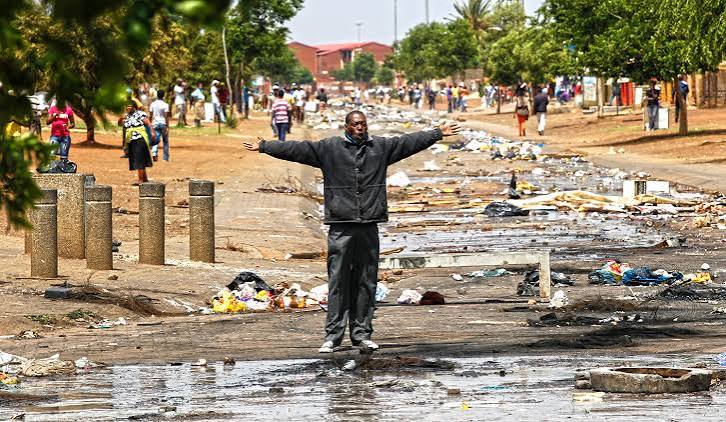
The reported killing of a young man from a historically marginalised language community in Mossel Bay amid anti-foreigner unrest has become a painful marker of this national degeneration. Whatever the final findings of law enforcement may be in any individual case, the public meaning of such incidents is already clear. When xenophobia is permitted to roam, it does not stop at the border. It becomes tribalism. It becomes language policing. It becomes ethnic suspicion. It becomes the right of a crowd to decide who is authentically South African. It begins with the foreigner and soon finds the minority citizen.
Influence Carries Obligation
This is the point at which leaders from historically marginalised tribes and language communities with significant influence must confront an uncomfortable question. What is the consequence of their own silence? It is not enough for leaders who occupy Cabinet offices, corporate suites, university councils, boards, professional bodies, churches, cultural formations and public platforms to lament the humiliation of their communities privately. Influence carries obligation. To be strategically placed in society while one’s language community is mocked, profiled or attacked is to stand before history with a moral summons. Silence may protect access, proximity and reputation in the short term, but it abandons the vulnerable to the mob in the long term.
The point is not to reverse-ethnicise the public square. It is not to demand that leaders from historically marginalised tribes speak only because their own communities are affected. Rather, their lived experience should awaken all South Africans to the logic of persecution. Today it is the person suspected of being Mozambican. Tomorrow it is the South African whose language sounds Mozambican. Next it is the Venda, the Ndebele, the Shangaan, the Somali shopkeeper, the Malawian worker, the Zimbabwean teacher, the Congolese asylum seeker, the Nigerian student or any other African whose presence becomes politically convenient to resent. Once belonging is determined by the crowd, no minority is safe.
The Cost of Silence
South Africa’s liberation heritage was not built on the worship of borders. It was built on the hospitality of neighbours, the sacrifices of frontline states, the moral vocabulary of human dignity, and the constitutional promise that everyone within the Republic’s jurisdiction is entitled to lawful protection. A country that forgets this history risks becoming the very thing it once asked the world to help it defeat: a society that classifies human worth by origin, language and administrative status. The consequence of silence, therefore, is not only the suffering of migrants or the humiliation of historically marginalised tribes. It is the corrosion of South Africa’s constitutional soul. Leaders of society, and especially those with influence in the C-Suite and within historically marginalised communities, must now speak with moral clarity, organise visible solidarity, reject ethnic profiling, demand lawful migration governance, and insist that no grievance, however real, may be converted into permission to persecute. We cannot again allow our country to become the consequence of our silence.
A Call to Conscience and Action
The call to action is therefore clear. Leaders from historically marginalised tribes and language communities must convene, speak and act—not as sectional lobbies, but as constitutional citizens defending the dignity of all who are vulnerable to ethnic suspicion. Corporate South Africa must move beyond carefully worded diversity statements and publicly condemn xenophobia, tribalism and vigilantism wherever they appear. Universities, churches, professional bodies, traditional authorities and civil society organisations must create platforms of solidarity, legal support, public education and community dialogue. Government must enforce migration law lawfully and humanely, while protecting every person from mob justice. The choice before us is stark: either leaders of conscience step forward now, or silence will continue to manufacture victims in the language of belonging.
[1] Mathebula writes as a Mutsonga





Leave A Comment