
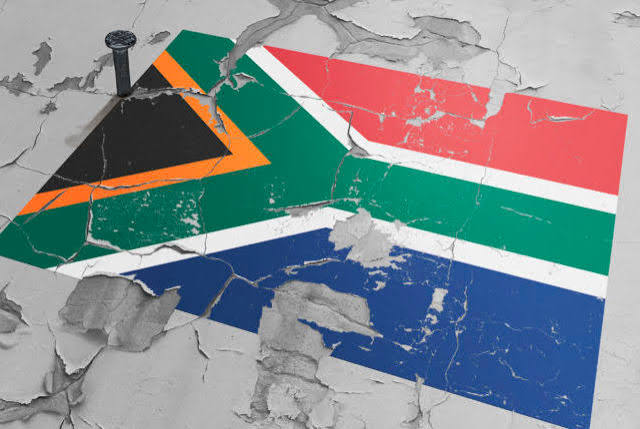
Political orders do not first fall in parliament; they recede wherever ordinary people cease to encounter the state as a bearer of dignity.
Political orders rarely unravel in a single dramatic moment. More often, they lose coherence gradually: inherited loyalties weaken, institutions cease to command confidence, internal organisational norms decay and electoral setbacks accumulate until what once appeared exceptional becomes structural. In South Africa, the African National Congress’s retreat from electoral dominance followed this slower historical pattern. The movement’s decline cannot be reduced to one leader, one scandal or one election; it arose from the widening distance between liberation legitimacy and the material, ethical and administrative demands of democratic government.
This essay locates the decisive public expression of that process in the 2016 local government elections. The loss of major metropolitan governments did not begin the ANC’s crisis, but it gave institutional form to tendencies that had been gathering beneath the surface of post-apartheid politics. From there, the argument follows the interaction between electoral retreat, organisational factionalism, the political economy of public office and the contested project of renewal. The 2024 national outcome enters this account not as its thematic centre, but as the national confirmation of a disintegration first rendered unmistakable in the local state; the approaching 2026 municipal contest, in turn, supplies a final horizon against which the historical argument may be tested.
The 2016 Metropolitan Rupture
The 2016 local government elections marked more than an adverse electoral cycle for the African National Congress (ANC). They exposed a structural change in the relationship between liberation legitimacy, democratic authority and the everyday performance of the post-apartheid state. The ANC remained the largest political formation nationally, but its loss of governing control in Johannesburg, Tshwane and Nelson Mandela Bay announced that historical identification with the liberation movement could no longer, by itself, secure urban consent. The municipal sphere became the first major arena in which the erosion of political hegemony acquired an institutional form.
This rupture was especially significant because the metropolitan municipalities concentrate population, economic activity, administrative capacity and symbolic power. Tshwane is the seat of executive government; Johannesburg is the country’s principal economic centre; Nelson Mandela Bay carries a dense liberation history; and Ekurhuleni sits at the heart of an industrial economy. When governing authority in these spaces became dependent on coalitions and minority arrangements, South Africa entered an era in which political power would increasingly be negotiated rather than presumed. Coalition government was therefore not merely an arithmetic consequence of fragmented voting. It was an early institutional expression of a society withdrawing its unconditional mandate from a once-dominant party.
The sources of this withdrawal had accumulated over time. They included persistent unemployment and inequality, declining economic dynamism, uneven service delivery, deteriorating municipal infrastructure and a growing public perception that political office had become detached from public purpose. Voter abstention and anti-incumbent voting were not identical phenomena, but together they signalled a weakening of the moral compact that had linked the ANC to broad sections of society. Citizens were not simply passing judgement on municipal administrations; they were testing whether the governing party still possessed the ethical authority and organisational capacity to speak as the leader of society.
Viewed historically, 2016 did not originate the ANC’s decline. It condensed tendencies visible since the high-water mark of national electoral dominance in 2004: the gradual thinning of turnout, the growth of opposition in urban centres, the emergence of new parties from within the liberation tradition, and the widening distance between constitutional promise and lived experience. What changed in 2016 was that these tendencies acquired governing consequences. The ANC could lose not only votes, but budgets, mayoral offices, patronage networks and the institutional platforms through which political authority is reproduced.
The Political Economy of Organisational Decline
The crisis was also internal. Candidate-selection battles preceding the municipal elections revealed the extent to which access to public office had become a route to income, contracts and local influence. Branches, once imagined as sites of political education and community organisation, were increasingly drawn into contests over lists, positions and resources. The language of comradeship gave way to the possessive idiom of “my leader” and “our slate”. In this environment, conferences risked becoming markets of delegated votes rather than forums of deliberation, while public service was displaced by a transactional conception of political leadership.
This was not simply a matter of individual moral failure. It reflected a political economy in which party organisation, electoral competition and access to the state had become entangled. The monetisation of conferences, the buying of branch influence and the diversion of public resources into factional projects weakened both the movement and the institutions it governed. Assertions that criminal networks have shaped party formation or policy direction require evidence and should not be made casually. Yet the broader danger is real: where party finance is opaque, municipal procurement is vulnerable and internal accountability is weak, illicit interests can seek influence through formally democratic channels.
Nasrec and the Limits of Renewal
The 2017 Nasrec conference brought this crisis into the centre of national power. Its narrow outcome did not resolve the contest over the character of the movement; it relocated that contest into the state. Integrity mechanisms, leadership criteria and the promise of organisational renewal confronted networks whose political survival depended upon the very disorder reform was intended to end. Because the President and national executive command public authority, the struggle for the ANC’s “soul” could not remain an internal affair. It implicated prosecutorial institutions, state-owned companies, public administration and the constitutional requirement that power be exercised for the public good rather than factional advantage.
The reform project that followed was consequently fraught. Any attempt to restore institutional legality after state capture was bound to expose the compromises, inconsistencies and vulnerabilities of those undertaking it. Renewal could not be credible if it depended on selective accountability; nor could society suspend constitutional standards because reformers faced formidable opponents. The central democratic question was therefore not whether particular leaders possessed spotless biographies, but whether institutions could be rebuilt so that accountability ceased to depend on personalities and became an ordinary property of the state.
From Electoral Reprieve to National Realignment
The national election of 2019 offered the ANC a reprieve rather than a reversal of decline. The party retained a national majority, but on a reduced share of the vote. The 2021 local government elections then carried the logic of 2016 further: the ANC fell below 50 per cent nationally in a municipal contest, turnout declined sharply, and coalition government spread across councils. At the same time, repeated findings of the Auditor-General showed that instability, weak controls, financial mismanagement and deficient performance reporting continued to obstruct service delivery. Local government thus remained the constitutional sphere in which the distance between democratic promise and administrative reality was most immediately experienced.
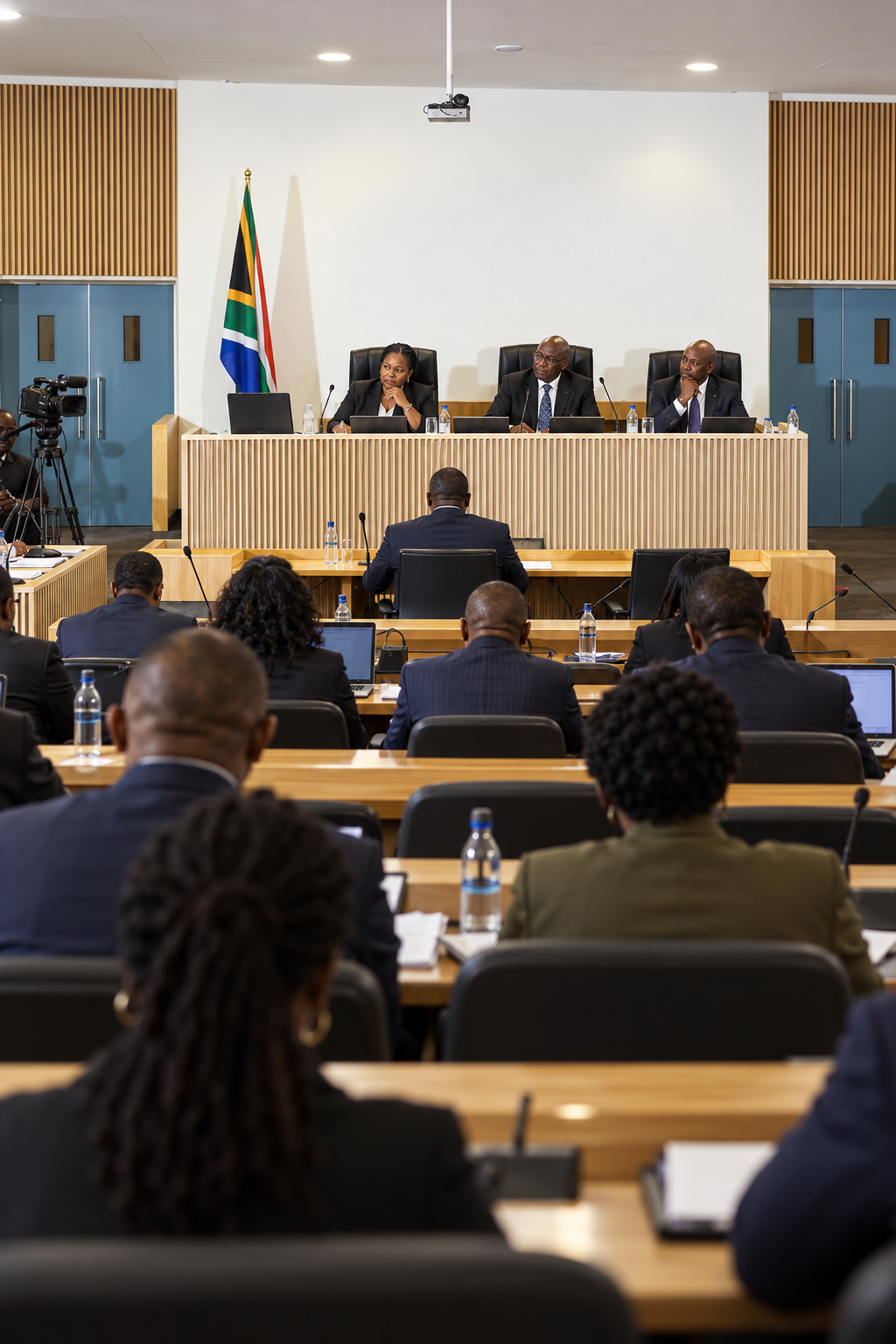
Against this longer history, the 2024 national election appears less as an unexpected rupture than as the maturation of processes first made unmistakable in the municipalities. The ANC remained the largest party, but its national vote fell to about 40 per cent, and it lost the parliamentary majority it had held since 1994. A national coalition arrangement became necessary, extending to the centre of the state a mode of negotiated government already familiar in many municipalities. Yet 2024 should not be mistaken for the story’s theme. It is an outcome within a deeper transformation: the passage from liberation-movement dominance to a competitive, fragmented and coalition-prone democracy.
The Disintegration of Inherited Certainties
The significance of 2016 therefore lies in its character as a cradle of political disintegration—not the collapse of democracy, but the disintegration of inherited certainties. It revealed that liberation credentials are finite political capital; that electoral legitimacy must be renewed through competent and ethical government; and that a party cannot indefinitely claim to lead society while the institutions under its stewardship reproduce insecurity, inequality and indignity. Whether the ensuing pluralism will deepen democratic accountability or merely distribute dysfunction across a wider field of parties depends on the capacity of political organisations and public institutions to recover a conception of power as public trust. The historical warning remains: when the local state ceases to make citizenship tangible, national authority eventually loses its aura of permanence.
The 2026 Horizon: A Parting Warning
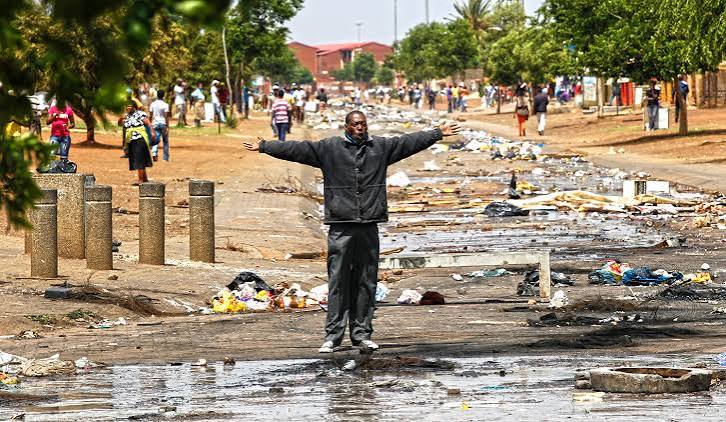
A final warning may already be visible on the horizon. With the 2026 local government election still ahead, current national polling places the ANC at approximately 34 per cent. That figure is not an election result and must be treated with the caution due to any survey; yet, if broadly borne out at the polls, it would confirm the continuity of the disintegration traced here—from the metropolitan rupture of 2016, through the loss of a national majority in 2024, to an even narrower base of municipal consent. The movement would then confront not a temporary electoral correction but a historical reclassification: from dominant party to largest participant in a permanently plural political order. The parting lesson is stark. What began in the local state may return to the local state in its most unforgiving form—for it is there, in the daily encounter with water, roads, refuse, housing and human dignity, that political authority is either renewed or finally withdrawn.





Leave A Comment