
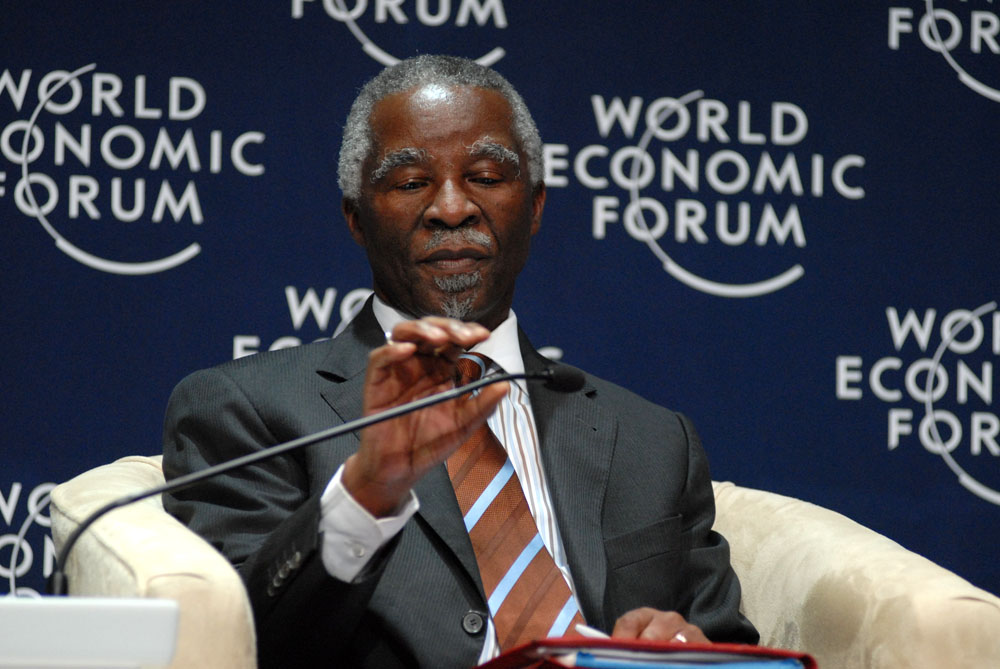
The undocumented migrant question is not only about borders. It is about state failure, political memory, constitutional democracy, and the forces that profit when South Africans are encouraged to blame the vulnerable rather than confront the powerful.
Introduction. South Africa’s debate on undocumented migrants has reached a dangerous stage. What began as a legitimate concern about border management, documentation, labour-market abuse and pressure on public services is increasingly being turned into a crude politics of blame. In this charged atmosphere, the migrant is made to stand in for every failure of the post-apartheid state: unemployment, crime, municipal collapse, weak policing, corruption and the erosion of public trust. The result is a public discourse that is loud, angry and often deliberately misdirected. It is precisely here that Mbeki’s intervention becomes important, not because it offers an easy answer, but because it insists on the harder question: who benefits when a complex national crisis is reduced to the figure of the undocumented African migrant?
The wrong diagnosis. When Thabo Mbeki enters a public controversy, he rarely does so from the temperature of the moment. He reaches, sometimes frustratingly for those demanding instant outrage, for history, structure and motive. His habit is to ask not only what is happening, but who needs society to believe that this is what is happening. That is why his intervention in the current anti-migrant agitation deserves more than casual dismissal. Whether one agrees with every detail of his framing or not, the Mbeki method forces a harder question: who stands to benefit when South Africa’s deep crisis of unemployment, poverty, crime and state incapacity is reduced to the presence of undocumented African migrants?
The immediate answer may appear obvious. Anti-migrant formations, vigilante entrepreneurs and political actors seeking relevance benefit from a combustible issue that converts despair into mobilisation. But the deeper answer is more unsettling. Those who benefit most are not necessarily the loudest voices at the front of the march. They are the custodians of failure who escape scrutiny when public anger is redirected away from policy collapse, corruption, poor planning, weak border administration, labour-market informality and the long decline of state capability. Recognising systemic failures can inspire hope for responsible governance and collective action.
Mbeki’s essential point is not that migration is irrelevant, nor that undocumentedness should be romanticised. A sovereign state has an obligation to know who enters, who stays, who works, who trades, and under what conditions. No serious country can administer migration through slogans, denial or sentimentalism. The problem begins when a genuine administrative challenge is inflated into a civilisational threat, and when undocumented migrants are made to carry the burden of explaining everything that has gone wrong in the republic.
Mbeki and the politics of framing. In this respect, Mbeki draws on the political grammar of the liberation movement. His approach to the issue of undocumented migrants is anchored in a lived understanding of how soft power sustained the ANC-led liberation struggle. One of the greatest advantages the ANC, and what it represented as a liberation movement, held over colonialism, apartheid and their adjuncts — including xenophobia, racism and other crimes against humanity — was its ability to characterise the “what is at issue” question. It persuaded the world that apartheid was not a domestic inconvenience but a crime against humanity. It mobilised allies without always commanding them. It built fronts of solidarity because it understood that the framing of an issue can determine who acts, who hesitates, and who is isolated.
That is the lost craft Mbeki appears to be defending. The South African struggle was never purely South African. It was sheltered in Lusaka, Maputo, Harare, Gaborone, Dar es Salaam, Lagos and elsewhere. African states paid diplomatic, economic and security costs for the liberation of this country. Many ordinary Africans understood apartheid as their own wound. To now tell Africans that they are strangers to the post-apartheid project, without remembering that continental solidarity helped midwife this democracy, is historically careless. It is politically dangerous and should evoke pride in our shared history and unity.
The counterrevolutionary possibility. There is, however, a further, more disquieting dimension to Mbeki’s reading. He sees in the present undocumented migrant crisis not only administrative failure, populist opportunism and social anger, but also the possible continuity of an older strategic war against the national democratic project. In his account, the apartheid-era doctrine of total onslaught was never simply a military slogan. It fused anti-communism, anti-ANC strategy, hostility to the national democratic revolution and the systematic use of division as a weapon. The democratic breakthrough of 1994 and the adoption of the 1996 Constitution were, in this reading, historic battle victories, not the final defeat of the war against the forces that opposed transformation.
This is why Mbeki’s analysis is uncomfortable. He threads contemporary instability, including the July 2021 unrest and later organised disruptions, into a longer pattern that recalls the violence once misnamed as merely “black-on-black”. His point is not to deny the grievances that people carry. It is to warn that legitimate grievances can be captured, funded, redirected and given a purpose greater than that understood by many of their own supporters. The danger is that formations marching under the banner of migration control may, in effect, assist a wider programme: isolating South Africa from African unity, weakening the democratic state, stripping the ANC of its continental moral inheritance and neutralising those with the institutional memory to keep the national democratic revolution intelligible.
The Constitution as sword and shield. The constitutional question deepens this point. The post-apartheid state was born of a negotiated settlement between forces that wished, in different ways, to preserve the old order and those that fought for a South Africa that belongs to all who live in it. The 1996 Constitution defined the new democratic order, and many of its deepest commitments drew from the ANC’s own historic documents, from the 1923 African Bill of Rights through to the positions advanced in the Constituent Assembly between 1994 and 1996. That Constitution can therefore be used either as a sword to advance democratisation or as a shield against it. The battle is not only over law. It is over the meaning and direction of the democratic order itself.
That is why the demand for proper documentation of immigrants should not be casually pigeonholed as counterrevolutionary. Many of those demands are legitimate, and emerging facts may yet reconfigure how the country understands the issue. But the legitimacy of grievance does not settle the question of political use. If the post-apartheid democratic project is about healing the divisions of the past and building a society based on democratic values, social and economic justice and fundamental human rights, then any organised effort that weakens the state, fractures African solidarity, impugns South Africa’s national interests and turns lawful frustration into chaos must be characterised with greater seriousness. At its most extreme, such conduct is not mere inconvenience. It becomes hostility to the democratic order itself.
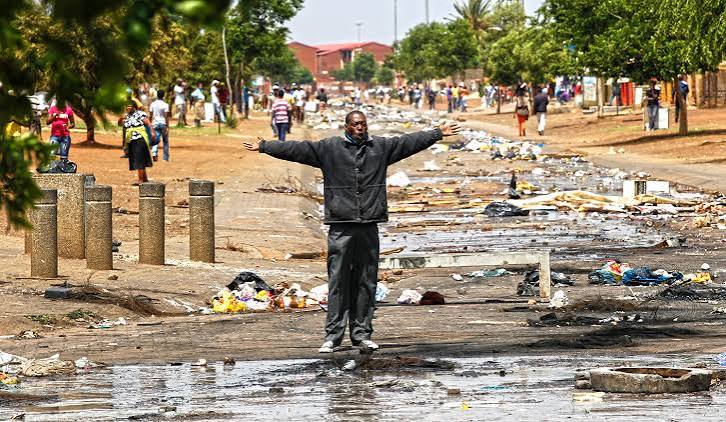
The politics of blame. Yet history alone cannot settle the matter. South Africans are not inventing their pain. They live daily with unemployment, crime, collapsing municipal services, failing local economies, overcrowded clinics and schools, and the indignity of a state that too often appears absent where it must govern and present where it must extract. In such conditions, the politics of blame becomes seductive. The undocumented migrant is visible, proximate and vulnerable. The true architecture of decline is more abstract: failed industrial policy, broken policing, corruption, weak municipal governance, porous systems, exploitative employers, and political leadership that too often substitutes theatre for delivery.
Who benefits. This is where the question of beneficiaries becomes urgent. First, populist movements benefit. They convert economic anxiety into political capital by offering a simple enemy. Complexity is bad for mobilisation; the foreigner is useful because they can be named, found and humiliated. Second, criminal networks benefit. Chaos around migration creates opportunities for extortion, protection rackets, document fraud, illicit labour brokering and bribery. Wherever the state is weak, someone else becomes the administrator. Third, exploitative employers benefit. They profit from undocumented labour precisely because insecure workers are easier to underpay, overwork and discard. The migrant is then blamed for accepting conditions created by those who profit from informality.
Fourth, failing institutions benefit. Home Affairs, border management, labour inspection, policing and municipalities all escape the full weight of public accountability when the debate becomes a shouting match about foreigners rather than a forensic inquiry into administrative failure. Recent enforcement figures and migration-management reforms may demonstrate activity, but enforcement without institutional credibility will not restore public confidence. A state that cannot process documents efficiently, police corruption, regulate employers, secure borders lawfully and protect communities will always invite non-state actors to claim the authority it has failed to exercise.
Fifth, sections of the political class benefit. In the era of the Government of National Unity, migration offers an expedient arena for competitive toughness. Parties can posture as defenders of citizens while avoiding the harder work of building an economy that absorbs labour, reviving local government, professionalising the public service and dismantling corrupt patronage systems. The migrant question then becomes a stage on which political actors perform authority in the absence of actual transformation.
The governance test. President Cyril Ramaphosa’s difficulty is precisely here. He must respond to real public anxiety without legitimising vigilantism or xenophobia. He must affirm legality without surrendering to cruelty. He must strengthen migration administration while refusing the false proposition that undocumented migrants caused South Africa’s structural decline. That balance is difficult but unavoidable. If the government speaks only the language of crackdowns, it feeds the politics of scapegoating. If it speaks only in the language of compassion, it appears indifferent to citizens who experience disorder as daily reality. The responsible position is neither denial nor mob rule. It is capable, lawful, humane administration.
Mbeki’s approach therefore matters because it resists the impoverishment of political thought. It asks South Africans to remember that the wrong diagnosis produces the wrong cure. If unemployment is blamed on migrants, we will not confront deindustrialisation, skills deficits, low growth and investment failure. If crime is blamed on migrants, we will not confront policing collapse, prosecution weakness and criminal syndicates that include citizens and non-citizens alike. If pressure on services is blamed on migrants, we will not confront municipal dysfunction, planning failure and corruption in public procurement. A country that misidentifies its crisis will punish the weak while protecting the powerful.
The answer to who benefits from the migrant administration’s chaos is therefore clear, but not singular. This is a this-and-that-and-that analysis. Beneficiaries include populists who harvest anger, criminals who monetise disorder, employers who exploit vulnerable labour, bureaucrats who hide behind confusion, and political elites who prefer symbolic enemies to structural accountability. It may also include counterrevolutionary interests that understand the strategic value of separating South Africa from Africa, weakening the democratic state, weaponising constitutional language against democratisation and converting legitimate popular frustrations into instruments against the national democratic project. In that sense, beneficiaries of chaos that weakens the state and impugns South Africa’s national interests must be named not merely as opportunists, but as enemies of the democratic order. But the greatest beneficiary is failure itself. Failure survives when society fights laterally among the poor rather than vertically against the systems that produce poverty, insecurity and exclusion.
South Africa does need a migration order. It needs credible borders, efficient documentation, labour-market regulation, consequences for corrupt officials, sanctions for employers who break the law, and cooperation with neighbouring states. It also needs to protect citizens from lawlessness and protect migrants from mob injustice. These are not mutually exclusive duties. They are the minimum obligations of a serious democratic state.
The alibi must be rejected. The danger is that a wounded nation, desperate for explanation, may accept the easiest alibi. Mbeki’s intervention, at its most useful, is a warning against that temptation. The undocumented migrant may be the face presented to the crowd. Still, the real authors of South Africa’s decline are elsewhere: in failed policy choices, weakened institutions, corrupt networks, opportunistic politics, enemies of the democratic order, and an economy that has abandoned too many of its people. Until those authors are named with the same anger now directed at migrants, the crisis will continue to enrich its true beneficiaries — and the democratic revolution promised by the Constitution will remain permanently vulnerable to those who know how to turn grievance into counterrevolution.
The task, then, is not to choose between sovereignty and solidarity, or between citizens and migrants. That is the false choice on which demagogues thrive. The real choice is between a state that governs and a society that hunts; between a movement that remembers its historic mission and one that borrows the language of its adversaries; between a constitutional democracy that confronts the powerful causes of disorder and one that performs rage against its powerless symptoms. If the ANC and the democratic state fail to make that distinction, they will not merely mishandle the migrant question. They will surrender the moral architecture of the republic to those who benefit most when South Africa forgets what its freedom was for.
Dr FM Lucky Mathebula
Executive Chairperson: Thinc Foundation
+27 82 853 3914
lucky@justthinc.co.za
www.justthinc.co.za





Well articulated . The brewing tensions can easily be blamed on undocumented migratnts but reality , as you have eloquently articulated , is getting the balance on holding policy makers accountable while ensuring basic services including employment creation are the centre of what government should facilitate . The issue though is beyond our borders into other continents such as Europe and The Americas . It is therefore imperative we pay attention to how they are handling what seems to be a global issue and hopefully learn from them . My sense is No one will leave their own country if they are afforded the opportunities for a better livelihood so all parties should therefore dig inwards with a hope to preventing such tensions in future