
The Republic of South Africa’s judicial authority is vested in the
courts. The judiciary is not only a separate authority but an independent one
in character. It is accountable to the Constitution and the laws that emanate
from it. It facilitates the adjudication of disputes within a rule-of-law
context. The adjudication of cases, civil or otherwise, and after the National
Prosecution Authority (NPA) has determined to prosecute, lies exclusively in
the domain of the judiciary.
Neither
the Constitution nor any other law authorises the executive or administration
to determine the adjudication of any cases. The basis of the separation of
powers, as outlined in the Constitution, is to regulate the risks of
establishing a prerogative state that acts outside the normative dictates of
law. It is for this reason that one of the foundational principles in the
establishment of South Africa is the rule of law and the supremacy of the
Constitution.
The
law further gives the President the power to establish commissions of inquiry. While
having powers similar to those of the High Court, these commissions are not a
court as envisaged in the Constitution, wherein it vests the judicial authority
of the Republic in the courts. Commissions established by the President are an
executive authority act and thus vulnerable to the extent to which the
President is willing to act on their recommendations. Unlike court judgments,
which are sources of law, recommendations of commissions have a runway to the
extent that the President allows. This means that the President, as the head of
the executive branch, has the power to act on the commissions’ recommendations,
but is not bound by them.
A
case docket is a collection of information related to a specific legal case,
often a criminal case, filed by police and other legal entities. It contains
crucial details like witness statements, evidence, police reports, and
investigation progress, serving as a comprehensive record of the case from its
beginning through its journey into the justice system. The information in the
case docket can lead to the issuing of arrest warrants, thus indicating that
the matter has now entered the judicial authority domain. Access or denial
of justice begins with how a case docket is compiled for trial. It is the criminal
justice value chain’s investigation, prosecution, and adjudication driver.
Once
it is designated as a docket, it has an investigation officer who curates its
contents through the criminal justice system until adjudication is concluded by
any of the competent courts. Ordinarily, there is, therefore, no basis,
including by a proclamation of a Commission of Inquiry, to interfere with or
divert an investigation destined for the attention of the prosecution
authority.
However,
if the matter of public concern, as envisaged in the Commissions Act, Act 4, of
1947, is the criminal justice value chain, the logic of diverting a docket
within which the public concern is registered is, by the standards of the
Commissions Act, legitimate and legal. The Commissions Act defines ‘public
concern’ as any issue that affects the public at large or has significant
implications for the functioning of the criminal justice system. Notwithstanding
the potential risks of diverting dockets being construed within the narrative
of executive overreach, it is the test of public concern which will determine
the normative character of decisions taken thereto. To act otherwise would undermine
the purpose for which a commission of enquiry was established.
In
his rant about interference in the work of the Task Team on Political Killings,
Lieutenant General Mkhwanazi, the Provincial Commissioner of KZN, cites the
executive, judicial, police administration, and prosecution authorities as
having colluded to thwart the task team’s functioning. This makes any docket
related to his well-articulated public concern, which the President has now
curated its handling into a Commission, more at risk if it is processed
anywhere within the criminal justice value chain without a differently nuanced
oversight mechanism.
Therefore,
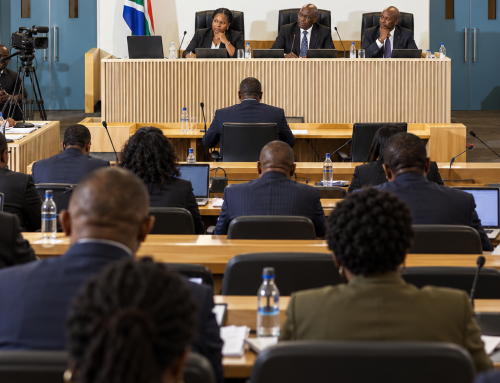
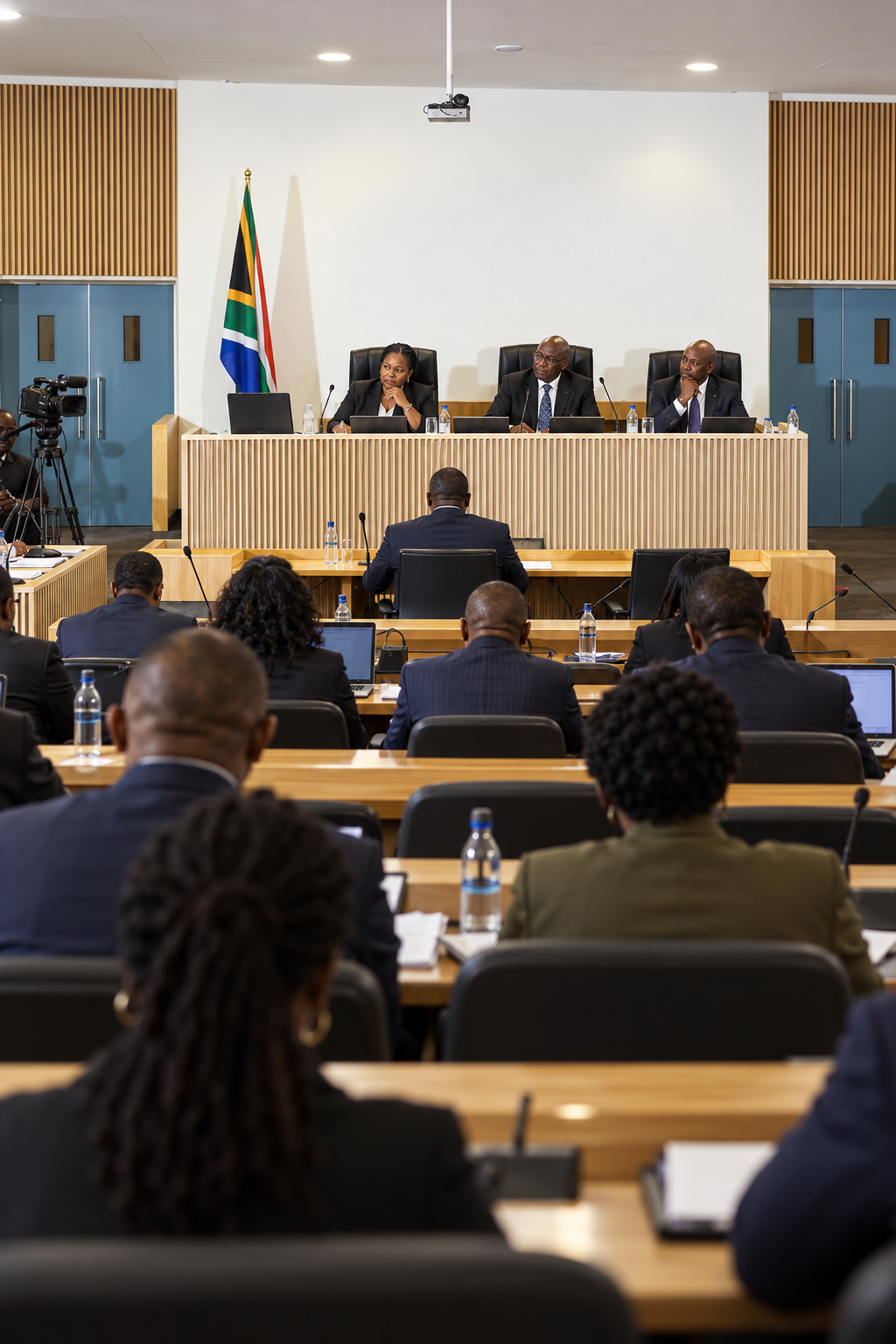
the decision by the Minister of Police and the Commissioner of Police to divert
the dockets of the Task Team on Political Killings to the Madlanga Commission
is legal and legitimate. The President, acting through the executive authority
he exercises with the Minister of Police and the Commissioner, has established
a normative process to unravel and foreground malfeasance, if any, to address
the crime syndicate public concern.
The
truth is that all adjudications depend on case law for their resolution. Case
law is necessary to establish various rights and to set out the rules governing
the delicate rule-of-law process. So, South Africa, relax, we are running a
constitutional democracy, not a kangaroo court. If at all, there is any risk in
the unfolding process, it is the time it may take and the political will of the
head of state to act in the interest of the democratic order.









Leave A Comment