
Moving the grid between state entities is not privatisation. The real test is whether accountability moves with it.
The argument over Eskom’s unbundling is being framed too narrowly. Eskom chair Mteto Nyati is right to insist that the financial and lender implications of transferring the transmission grid must be handled properly. But the debate should begin with an equally important fact: South Africa is not privatising the grid.
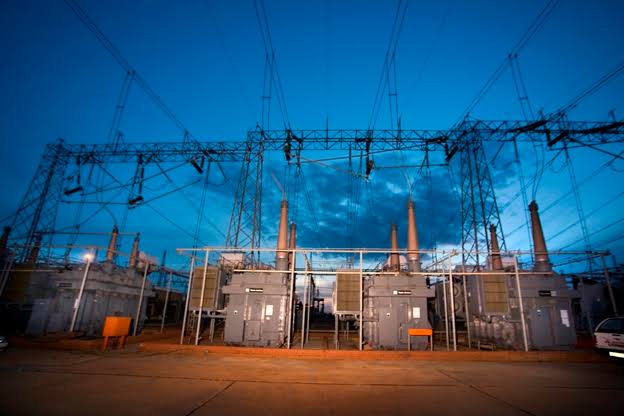
Eskom is state-owned, and the transmission network is a public asset. Moving it to a separate state-owned transmission entity reorganises ownership within the state; it does not surrender the wires to private interests. The purpose is to separate grid operation and the electricity market from Eskom’s generation interests, creating a more neutral platform for competition and investment.
This weakens the claim that the transfer necessarily strips Eskom of the asset base on which creditors depend. National Treasury already supports Eskom through guarantees and a large debt-relief programme. Creditors assess both Eskom’s balance sheet and the sovereign support behind it. Creditor consent, contractual covenants, valuations and accounting treatment still matter, but they are restructuring issues to be resolved—not proof that a transfer between state entities destroys public value.
The more enduring concern is constitutional. Eskom exercises public power and performs an essential statutory function. Its corporate form does not extinguish its public character. Section 239 of the Constitution looks beyond ownership labels to whether an institution exercises public power or performs a public function under legislation.
This is the value of organ-of-stateness: the public-law character that follows public power when delivery is delegated, corporatised or shared with private actors. It closes the escape hatch through which obligations might otherwise be diluted as assets and functions cross institutional boundaries.
Any entity exercising such power must remain subject to legality, administrative justice, non-arbitrariness, the public interest and constitutional supremacy. Organ-of-stateness therefore creates an accountability ecosystem around delegated authority and guards against its abuse.
For electricity reform, this means generation, transmission and distribution must remain answerable to the Constitution and the system’s public purpose. An independent state-owned operator does not cease to be an organ of state because the grid moves outside Eskom Holdings. Its governance, market rules and decisions must remain reviewable and aligned with security of supply, affordability and long-term development.
The constitutional test becomes harder when reform assigns delivery roles to private firms. South Africa needs private investment, technical capacity and new generation, but participation must not be confused with abdication. When a firm exercises delegated public authority, duties of legality, fairness, transparency and service to the public interest should follow.
Outsourcing does not necessarily strip a function of its public-law character. A private actor exercising public power or performing a statutory public function may be bound by constitutional and administrative-law duties, while the state retains responsibility for the mandate it delegated. Where legislation brings the actor within the public-finance regime, accounting-authority obligations may also follow.
The consequence depends on the source and nature of the power—not the actor’s corporate label. Not every activity performed by a contractor becomes public power. But the state cannot contract out of its constitutional duties, and delegated public authority remains subject to public-law control. Public power is never fully privatisable; this is a doctrinal position Ramaphosa is not about to abandon.
The principle reaches beyond electricity. In water, professional operators and ring-fenced revenue may improve performance, but separating municipal oversight from delivery must not obscure who carries the constitutional duty to serve communities. Whatever the vehicle, the public function must remain visible, enforceable and democratically supervised.
The Public Investment Corporation offers a parallel lesson: governance reform cannot replace clear fiduciary responsibility, board accountability and a defined developmental mandate. “Public” signals an obligation to steward workers’ funds with integrity and regard for the national interest.
South Africa needs a public-interest test for major restructuring. Government should disclose its purpose, treatment of debt and contingent liabilities, successor governance, effects on affordability and access, and safeguards against arbitrary or profit-led decisions. The grid transfer is not a concealed sale; the point is that public ownership alone does not guarantee public accountability.
Nyati is right to demand disciplined implementation, but the balance-sheet objection should not be overstated. South Africa is relocating the grid within the public sector, not losing it. Treasury’s support gives the state tools to structure liabilities appropriately. The stronger warning is that reform must not fragment responsibility, blur accountability or place any part of the electricity system beyond the disciplines attached to public power.
A separate transmission entity can improve neutrality, competition and investment without amounting to privatisation. But organ-of-stateness must travel with the grid—from Eskom to the transmission company, through every market rule and into every exercise of delegated authority. Reform succeeds only when efficiency and accountability move together.










Leave A Comment