

The real question before the Commission is whether criminal networks have moved beyond influencing the state to operating through its police, intelligence and prosecution machinery
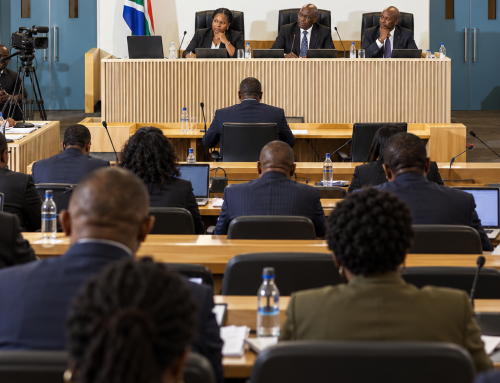
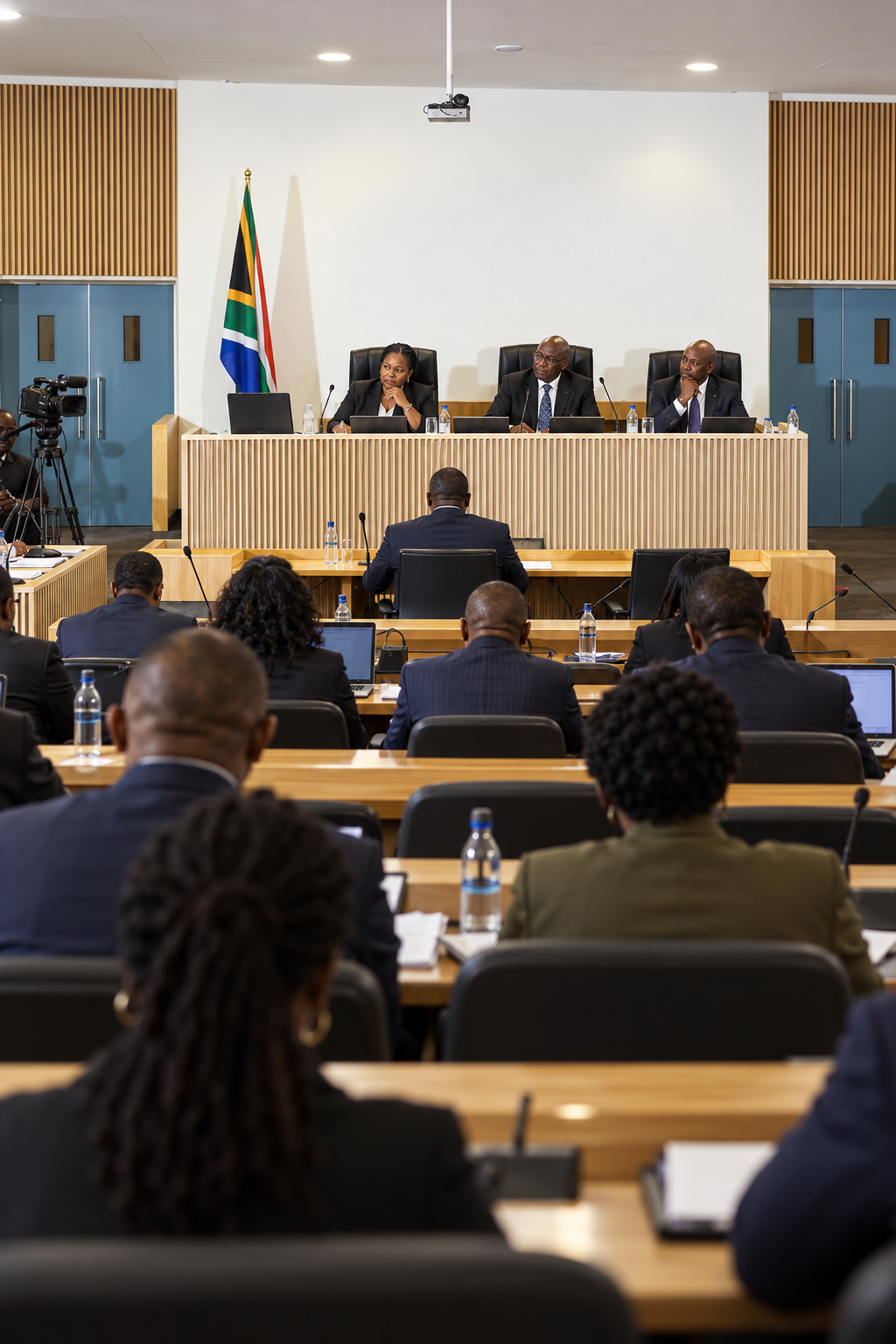
South Africans may be watching the Madlanga Commission as a parade of allegations, denials, names and institutional intrigue. But its deepest significance lies elsewhere. The Commission is testing whether organised criminal networks have moved from bribing or influencing state officials to operating through parts of the criminal justice system itself.
Corruption is the misuse of public office for private gain; it assumes state institutions remain broadly intact. What the Commission may be confronting is more advanced: political brokerage, coercion, intelligence, procurement and prosecution assembled into networks that protect illicit accumulation, obstruct accountability and discipline, including assassinating opponents.
Beyond the language of corruption
A corrupt official can be removed while the institution survives. A converged network is harder to dislodge because it reproduces itself across agencies, political cycles and personnel changes. It reorganises which investigations proceed, whose intelligence is believed, who receives protection and whose violence is ignored.
This is best described as criminal–state convergence. It marks a progression from episodic corruption to institutional capture and, beyond that, to criminal influence over the very bodies that define, investigate and punish criminality. The line between offender, protector, investigator and political sponsor then becomes unstable.
When illicit markets begin to govern
Every durable illicit market requires rules, enforcement and protection. When access to contracts, offices or police action depends less on law than on connections, a market forms around state discretion. Brokers allocate opportunities, insiders neutralise controls and enforcers impose compliance.
This is illicit governance. Mafia-type organisation is not defined only by shootings or spectacular violence. Its deeper power lies in governing transactions that the lawful state can no longer regulate impartially. It creates an alternative order in which access, protection and punishment are privately negotiated.
Coercion for sale
The modern state claims a monopoly over legitimate force. That monopoly fragments when trained operatives, blue-light privileges, intelligence capabilities, and weapons circulate between public institutions, private security, political factions, and criminal enterprises. Coercion becomes divisible, rentable and politically tradable.
Violence becomes both commodity and language. It settles disputes, disciplines office-bearers, creates ungovernability and changes procurement outcomes. Its strongest effect may be anticipatory: institutions alter their behaviour because actors know violence can be commissioned; the 30% construction mafia comes to mind. Those able to supply or withhold force can then sell protection.
The unfinished business of the transition
The institutionalisation of criminality must also be located in South Africa’s transition. The apartheid state cultivated covert agents, informers, vigilantes and assassins against its opponents. When the political settlement ended formal demand for deniable violence, it did not demobilise the people, skills and relationships behind it. The state’s contracting capacity receded; the coercive capability survived.
A market formed around portable expertise in surveillance, infiltration, weapons, intimidation and targeted killing. Operatives previously retained for political purposes could sell coercion to new patrons in political, commercial and criminal disputes. Assassination was detached from a single ideological project and commercialised as a service.
Meanwhile, a criminal justice system designed for political control was being remade as a constitutional public-safety institution. Where transformation meant displacing expertise rather than democratising and professionalising institutions, capacity weakened. Enforcement gaps allowed old networks to adapt and penetrate new centres of authority.
The emerging order could draw from both sides of the former conflict. Liberation-era underground structures offered clandestine discipline, political legitimacy and access to the new state. The apartheid security underworld offered intelligence craft, covert networks and experience in deniable operations. Operatives who avoided transparent integration retained capabilities that informal patrons and criminal markets could purchase.
The decisive development was hybridisation: the convergence of in-state and liberation-derived clandestine elements into networks able to infiltrate institutions from either direction. Insiders could open channels for criminal interests; outsiders could draw on former loyalties, political credentials or security expertise to enter, influence or neutralise institutions.
This is neither moral equivalence nor a claim of one continuous conspiracy. It identifies a structural continuity: coercive practices survived, crossed former political divides and became marketable assets. Criminal influence could thus reproduce itself inside the state rather than merely press upon it from outside. Thabo Mbeki decries counterrevolutionary forces.
The alternative state inside the constitutional state
Protection becomes a market when the state cannot guarantee impartial security or enforcement. Criminal groups then collect debts, settle disputes, secure political favours and regulate access to opportunity. The paradox is brutal: those capable of producing insecurity can also sell relief from it.
This alternative state does not necessarily replace constitutional institutions. It inhabits their gaps, recruits their agents and borrows their symbols. A police official, prosecutor, politician, contractor and enforcer may occupy different offices while participating in the same protection arrangement. Formal and informal authority become interdependent.
How impunity is managed
Criminal justice systems operate through discretion: what to investigate, whom to protect, which intelligence to pursue and when to prosecute. Capture need not abolish an institution. It can control its choke points. A case is delayed rather than closed; a task team restructured rather than openly suppressed; intelligence redirected rather than destroyed; a compromised appointment defended as routine administration.
The result is managed impunity: not the absence of law, but its selective activation. The system remains formidable against the weak, negotiable for insiders and obstructed where protected interests are implicated. This produces a dual state, constitutional in form, discretionary and networked in operation.
What the Commission must help us decide
A commission is neither a criminal court nor a substitute for reform. Its value is diagnostic: it converts dispersed allegations into a public account of how power travels across organisations. Madlanga must investigate alleged criminal infiltration, political interference and corruption, then recommend prosecution, discipline and institutional reform.
The evidence should be read at three levels. Forensically, can particular allegations be substantiated? Institutionally, how were safeguards bypassed or converted into instruments of protection? At regime level, have political competition and illicit accumulation become sufficiently intertwined to reproduce criminal influence regardless of who holds office?
Capture is not yet a mafia state
We should resist two temptations: reducing everything to a few corrupt individuals, and prematurely declaring South Africa a mafia state. A captured state is one in which organised interests gain sustained influence over appointments, rules and decisions while the institutional shell remains intact. Criminal–state convergence goes further: criminal networks acquire operational influence over the agencies responsible for confronting them.
A mafia-state diagnosis requires something more: that protection, extraction and selective coercion have become the governing logic of the political order itself. The Commission’s task is to help determine where the evidence places us on this continuum—and whether the constitutional state still has the autonomy to reverse the movement.
The test is what happens after the testimony
The pattern is systemic. Illicit markets generate informal rules; fragmented coercion supplies sanctions; protection markets turn insecurity into authority; captured discretion embeds that authority inside institutions; and managed impunity enables reproduction. The recombination of clandestine capabilities intensifies each stage.
That is why hearings alone are not enough. The democratic value of the Commission will depend on whether its findings produce credible investigations, disciplinary action, prosecutions and institutional redesign. Leadership changes and ethics codes will not dismantle a system sustained by compromised appointments, information asymmetries, reciprocal vulnerability and privately governed coercion.
The reform question is larger than who should resign. Can the criminal justice system investigate its own compromised nodes without reproducing the dependencies under examination? Can the state rebuild professional capability while dismantling inherited protection networks? Can oversight be strengthened without turning operational law enforcement into another arena of partisan control?
Madlanga should ultimately be judged not only by the wrongdoing it confirms, but by whether it makes the system legible. South Africa’s danger is no longer simply that criminals may have friends in the state. It is that parts of the state may have become the organisational form through which criminal power is exercised. If that distinction is missed, we will remove a few names, preserve the machinery and call it accountability.









Leave A Comment