
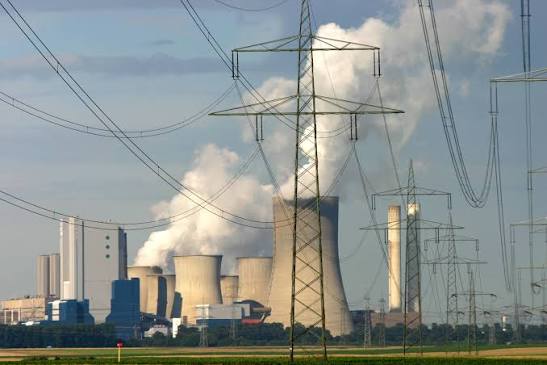
The argument or discourse over Eskom’s structure is not merely about efficiency, competition or balance sheets. It is about whether an African state can retain the knowledge, institutional memory and strategic capacity required to govern the commanding heights of its economy in the public interest.
Introduction
The restructuring of Eskom and other state-owned enterprises is usually presented as a technical response to debt, inefficiency and operational failure. Yet beneath the institutional diagrams lies a more consequential struggle: whether the democratic state will retain the capacity to understand, coordinate and direct the economic systems on which national life depends. This treatise argues that the decisive commanding height is not infrastructure alone, but the knowledge required to govern it. Its central concern is therefore the relationship between unbundling, societal epistemic capital and the construction of an African official mind of the state.
The raging debate over the unbundling of Eskom and the restructuring of other state-owned enterprises is being conducted in a vocabulary too small for the stakes. We are told to choose between monopoly and competition, state ownership and private participation, an integrated utility and separate companies. These are important questions, but they are not the deepest ones. The prior question is whether South Africa possesses an official mind capable of deciding what must remain under strategic public command, what may be opened to markets, and how dispersed institutions can still serve a coherent developmental purpose.
Beyond the Service-State
That question is obscured by what may be called the servitisation of the commanding heights: the conversion of strategic public institutions into narrowly defined service platforms judged mainly by transactions, tariffs, contracts and financial ratios. Electricity becomes kilowatt-hours sold; rail becomes slots allocated; ports become terminals concessioned; water becomes a billable flow; and telecommunications becomes bandwidth. In this frame, citizens appear chiefly as customers and the state as contract manager. The broader functions of these institutions—as instruments of industrialisation, spatial integration, technological learning, social solidarity and national sovereignty—recede from view.
Unbundling is not inherently privatisation, and institutional separation can clarify mandates, expose costs and improve accountability. Eskom’s restructuring has already produced a legally separated transmission company, while current policy envisages a more competitive electricity market. Yet legal boxes do not think. If generation, transmission, distribution, regulation, municipal supply and private investment are separated without a superior public capacity to integrate knowledge and direct outcomes, fragmentation will not produce a capable system. It will produce multiple balance sheets, multiple consultants, multiple regulators and no centre of strategic reason.
Knowledge as a Strategic Asset
This is where the idea of societal epistemic capital becomes decisive. It is the stock of knowledge, judgement, memory, relationships and problem-solving capability that a society has accumulated and can mobilise for collective purposes. Like economic capital, it is built over time, can generate future value and may be depleted. But it is not confined to formal qualifications or written reports. It includes codified knowledge in laws, plans, designs, datasets and operating procedures; tacit knowledge held by experienced engineers, artisans, managers and community organisers; historical memory of what has succeeded or failed; and the networks of trust through which institutions exchange information and coordinate action.
The word societal is essential. No ministry, board or expert commission possesses enough knowledge to govern a complex economy alone. Useful intelligence is distributed across universities, research councils, SOEs, municipalities, private firms, unions, think tanks, professional bodies and communities. Workers know how systems actually fail; municipalities know where infrastructure and revenue models break down; communities know the lived consequences of service decisions; universities and research institutions can test claims and extend the frontier of knowledge. Societal epistemic capital is created when these different forms of knowing are connected, contested and translated into public decisions.
Five Capacities of an Intelligent State
An Intelligent (Capable) State has at least five dimensions. First is cognitive capacity: the scientific, technical, economic and administrative expertise needed to understand a system. Second is institutional memory: the ability to retain lessons across leadership changes and political cycles. Third is coordinating capacity: the routines and relationships that allow dispersed institutions to act coherently. Fourth is anticipatory capacity: the ability to model risks, identify technological shifts and prepare for future demand. Fifth is normative intelligence: the public values by which knowledge is judged and priorities are set. A society may possess excellent technicians yet remain strategically weak if it cannot coordinate them, remember past decisions or subject expertise to a clear conception of the public good.
Knowledge Is Never Neutral
Epistemic capital is therefore neither politically neutral nor automatically democratic. Every knowledge system elevates certain questions, evidence and voices while marginalising others. Colonial and apartheid administrations generated formidable technical knowledge, but organised it around extraction, racial domination and unequal spatial development. The democratic task is not to discard expertise; it is to reconstitute its purpose, broaden its sources and place it under constitutional and developmental discipline. An African epistemic project must combine indigenous and local knowledge with universal science, rather than treating one as folklore and the other as authority.
How the State Forgets
This capital can be destroyed. Cadre or Commissioned Human Capital churn that removes experienced personnel, procurement systems that outsource core thinking, weak archives, politicised appointments, neglected research budgets and the retirement or emigration of specialists all drain the public stock of knowledge. South African research has warned that many SOEs lack systematic practices for retaining tacit knowledge when experienced employees leave. The result is a costly cycle in which the state forgets, commissions outsiders to rediscover what it once knew, and remains dependent on actors whose incentives may not coincide with long-term public purpose.
What This Means for Eskom
Restructuring Eskom would require more than transferring assets and licences between companies. It would mean mapping critical knowledge before functions are separated; retaining and mentoring scarce technical personnel; creating interoperable public data systems; linking grid, industrial, municipal and skills planning; preserving engineering standards and lessons from past projects; and establishing forums in which workers, researchers, regulators, communities and producers can challenge assumptions. The test of reform is not only whether each entity becomes financially legible, but whether the electricity system as a whole becomes more intelligent, adaptive and publicly accountable.
Building the Official Mind
An African official mind of the state must be built from this capital. It is not a single ideology, nor a licence for bureaucratic arrogance. It is the durable public intelligence through which the state remembers what it has tried, understands the historical structure of the economy, anticipates long-term risks and coordinates institutions beyond electoral and corporate reporting cycles. It must be African because it begins from the continent’s material conditions, histories and developmental aspirations; official because it carries public authority; and a mind because it can learn, contest evidence and revise decisions.
South Africa should be read here not as an African exception, but as a concentrated abstraction of the continent’s wider reality: a society in which sophisticated infrastructure and financial systems coexist with mass exclusion; mineral wealth with weak beneficiation; technical excellence with institutional erosion; and formal sovereignty with persistent dependence on external capital, technology and categories of thought. Its contradictions are African contradictions in an intensified form.
For that reason, South Africa carries an ideational leadership responsibility, not to prescribe to the continent or revive a sub-imperial posture, but to help generate concepts, institutions, and demonstrable practices through which African states can think and act from their own conditions. Its leadership should be exercised through persuasion, intellectual production, shared infrastructure, regional value chains and reciprocal learning, so that national renewal becomes a contribution to the integrated, self-determining and prosperous Africa envisaged in Agenda 2063.
Without such a mind, imported institutional templates become substitutes for thought. “International best practice” is applied without asking whose history produced it, which interests it serves or whether it can secure universal access in a society marked by poverty, inequality and spatial apartheid. The market is then treated not as one instrument among others, but as an intelligence superior to the state. Yet markets reveal purchasing power, not national purpose; they allocate according to price signals, not automatically according to social need or developmental sequence.
Eskom Is More Than a Utility
Eskom must therefore be understood not only as a utility but as a repository of technical capability, industrial leverage and national memory. Its decisions shape mining, manufacturing, municipal viability, household welfare, decarbonisation and the geography of investment. The same is true, in different forms, of Transnet, water boards, development finance institutions and other SOEs. To restructure them without preserving their accumulated knowledge and coordinating role is to mistake the organisational chart for the institution.
The immediate energy debate demonstrates the danger. Operational performance may improve while grid constraints, municipal debt, declining sales and an unsustainable tariff structure remain. A separated transmission system can widen access and enable new investment, but somebody must still decide where the grid expands first, which industries anchor demand, how poorer municipalities are protected, which technologies are localised and how workers and communities are carried through the transition. Those are not merely commercial choices. They are constitutional and developmental choices.
Reform Without Strategic Amnesia
The answer is not to defend every inherited SOE arrangement. State ownership without competence, ethical leadership or accountability can become a shelter for patronage and extraction. Nor should efficiency be dismissed as a neoliberal obsession: waste in a public enterprise is paid for by citizens and weakens developmental ambition. But reform must strengthen public purpose rather than quietly abolish it. The National State Enterprises Bill’s proposed centralised shareholder model will succeed only if it creates strategic coherence, professional stewardship and disciplined learning—not merely another corporate layer above fragmented entities.
South Africa should require every major SOE restructuring to pass four tests. Does it preserve strategic public control over essential infrastructure? Does it retain and renew technical and institutional knowledge? Does it expand productive capacity, localisation and universal access? And does it create mechanisms through which workers, professionals, communities, universities and business can contribute evidence without capturing the state? These tests move the debate beyond the tired binary of the inefficient state versus the efficient market.
Knowledge Is the Real Commanding Height
The central struggle is therefore not simply over who owns the wires, locomotives or pipelines. It is over who defines the problem, who holds the data, who designs the market, who remembers past failures and who can imagine a future beyond the preferences of financiers and consultants. Ownership matters, but ownership without knowledge is nominal sovereignty. Conversely, public intelligence can discipline mixed forms of ownership and ensure that markets operate within a democratically determined developmental strategy.
South Africa must unbundle dysfunction, opacity and patronage—but it must not unbundle the state’s mind. The commanding heights cannot be reduced to a collection of services available to those able to pay. They are the institutional platforms through which a nation secures life, directs development and enlarges its freedom. The task is not to preserve yesterday’s SOEs unchanged. It is to build a new public architecture in which operational autonomy is matched by strategic coherence, and in which Africa’s knowledge becomes a source of governing power rather than an afterthought in somebody else’s model. Organ of Stateness is about curating public accountability as you yield to the demands of operational efficiency.
Conclusion: Do Not Unbundle the Capacity to Govern
The debate over Eskom and the wider SOE landscape must therefore be rescued from the narrow language of corporate restructuring. Institutional form matters, but it is subordinate to a larger constitutional and developmental purpose: the ability of the democratic state to secure essential systems, shape structural transformation and act with informed foresight. Unbundling that improves accountability and performance may be necessary; unbundling that disperses knowledge, weakens coordination and transfers strategic judgement beyond public reach would amount to the privatisation of the state’s intelligence.
South Africa’s task is consequently twofold: to reform failing institutions and simultaneously enlarge the societal epistemic capital from which competent public action is drawn. This demands the systematic retention of technical knowledge, stronger public research and planning capacity, interoperable data, institutional memory, ethical professional leadership and durable channels through which workers, communities, universities, business and the state can reason together without surrendering democratic authority. The official mind must be open to evidence and contestation, but firm in its responsibility to define the public purpose.
The ultimate question is not whether the state or the market should do everything. It is whether Africa will possess the organised intelligence to decide what each must do, in whose interest and towards which future. South Africa may unbundle its enterprises; it must never unbundle its capacity to govern.







Great paper.
Our social challenges are missing in the design of our future SIEs.
We learn from countries that don’t have the same social challenges like yours.
This is detrimental to our communities.