
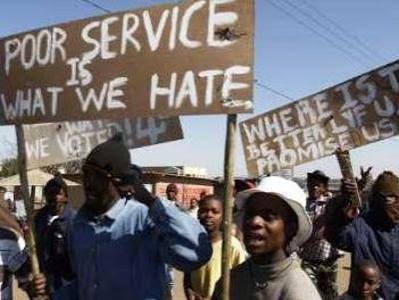
In the age of coalitions, negotiated power and institutional distrust, oversight can no longer remain a polite constitutional ritual. South Africa now needs a sixth estate: a vigilant civic infrastructure that turns exposure into consequence and reminds public office that it is borrowed, not owned.
South Africa is entering a new constitutional moment. It is not yet a constitutional crisis, but it is certainly a crisis of complacency. The old architecture of accountability—Parliament, courts, Chapter 9 institutions, the press, and civil society—still exists. Yet the political conditions that once gave that architecture its familiar rhythm have changed dramatically. The age of dominant-party government has given way to an era of negotiated power, coalition bargaining, minority leverage and permanent political transaction. In that terrain, oversight can no longer be treated as the polite afterthought of representative democracy. It is becoming a political estate in its own right.
The sixth estate has arrived.
The first three estates belonged to an older European imagination of power: clergy, nobility and commoners. The fourth estate became the press, the institutional watchdog whose claim to public importance rested on speaking truth to power. The fifth estate emerged with the democratisation of voice: bloggers, citizen journalists, whistle-blowers, social media activists and independent digital networks that punctured the monopoly of traditional media. South Africa now requires a sixth estate: the organised, vigilant and increasingly indispensable estate of oversight.
This sixth estate is not a single institution. It is an ecosystem. It includes parliamentary committees that refuse to become ceremonial extensions of party headquarters; Chapter 9 institutions that investigate without fear, favour or prejudice; courts that insist that public power must justify itself; investigative journalists who continue to disturb the comfort of the powerful; civil society organisations that litigate, expose and mobilise; professional associations that defend standards; whistle-blowers who risk livelihood and life; and voters who are learning that the ballot is not a five-year blank cheque but the opening act of democratic surveillance.
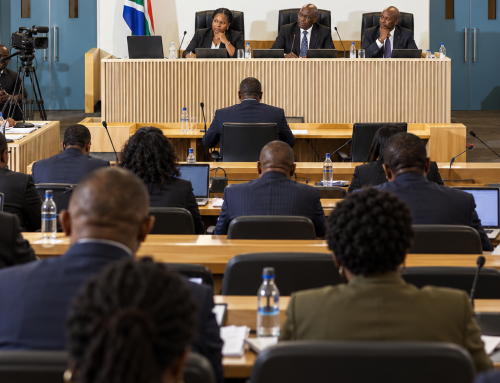
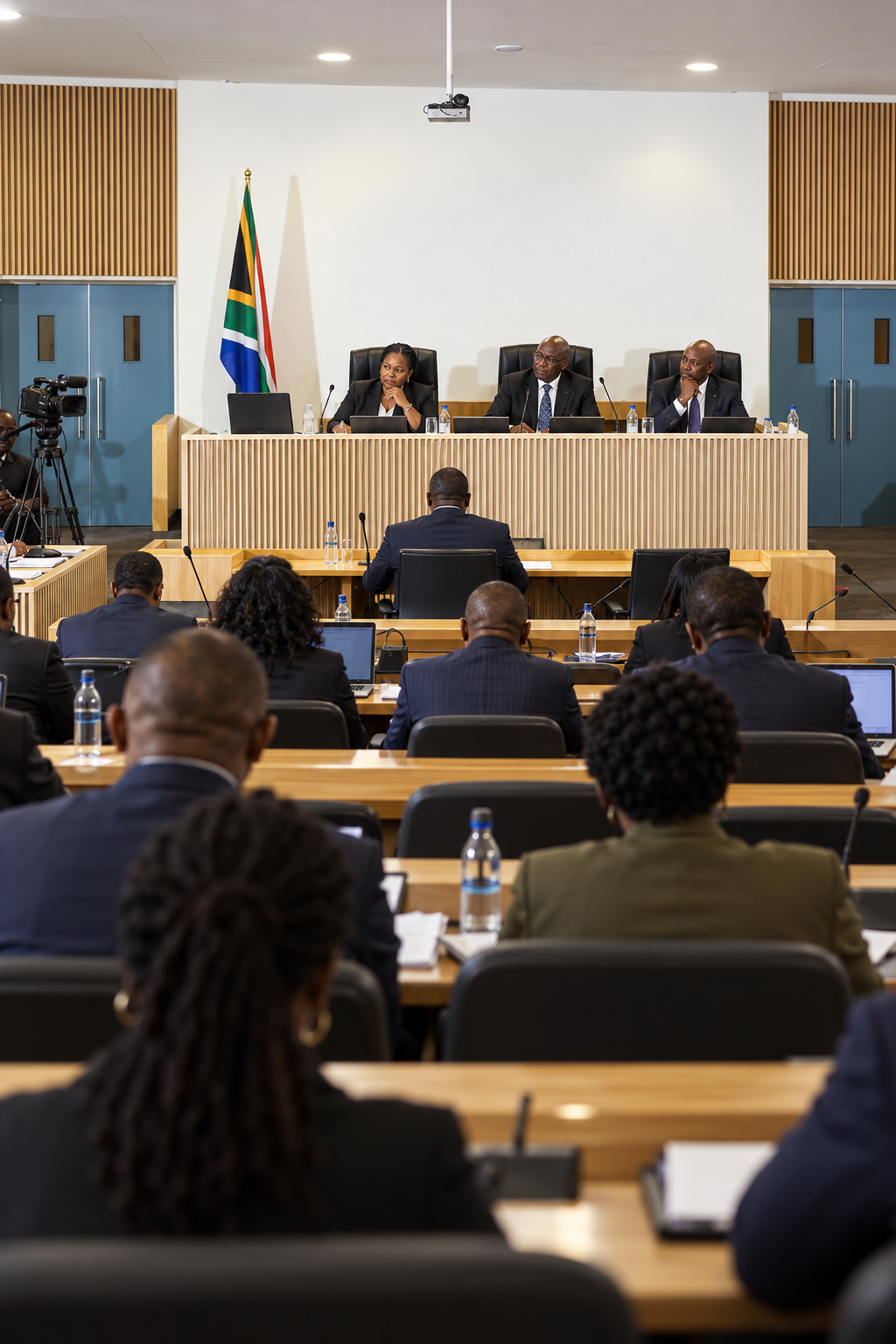
The Madlanga Commission of Inquiry, triggered by Lieutenant-General Nhlanhla Mkhwanazi’s public allegations about criminal infiltration, political interference and corruption in the criminal justice system, illustrates this sixth-estate logic with almost brutal clarity. Here was a senior police officer stepping outside the comfort of institutional silence and forcing the country to confront the possibility that parts of the criminal justice system may themselves have become terrain for organised criminal power. Whether every allegation is ultimately proven is for lawful processes to determine. But the democratic significance of the episode is already clear: whistleblowing can become the detonator of oversight when internal accountability channels are distrusted, compromised or too slow to act. The commission, parliamentary scrutiny, media investigation and public attention together show how the sixth estate works when it is at its most consequential: it drags hidden power into the open, compels institutions to answer, and insists that the guardians of law must themselves be governed by law.
Why South Africa needs a sixth estate
The argument is simple but uncomfortable: South Africa’s formal oversight institutions were designed for constitutional democracy, but they have too often been forced to operate within a political culture that prioritises loyalty over scrutiny. For three decades, legislative oversight has existed in law. Still, it has frequently been subdued in practice by party discipline, cadre obligations, executive dominance, and the informal etiquette of liberation-movement authority. The Constitution provides the instruments; politics decides whether they will be sharpened or blunted.
Parliament’s own account of oversight describes it as the means by which government is kept answerable to the people, including through monitoring implementation, budgets, legality, and departmental management. The Constitution also establishes Chapter 9 institutions to strengthen constitutional democracy, requiring them to act independently, impartially and without fear, favour or prejudice. These are not ornamental clauses. They are a warning against the privatisation of public power by those temporarily entrusted with it.
Yet South Africa’s accountability machinery has repeatedly shown that institutions can be constitutionally strong and politically lonely. The Public Protector, the Auditor-General, the South African Human Rights Commission, the Electoral Commission and other bodies can investigate, report, warn and recommend. But without a broader culture of oversight that translates findings into consequences, reports become rituals, hearings become theatre, and accountability becomes a vocabulary rather than a discipline.
Coalition politics has changed the accountability equation.
The 2024 elections ended the mythology of automatic majority rule. The African National Congress remained the largest party, but it no longer governed with the unchallenged parliamentary dominance that shaped post-1994 politics. The formation of a Government of National Unity marked not merely a change in cabinet arithmetic but a deeper shift in the sociology of power. Once parties become co-governors, supply-and-confidence partners, legislative allies or transactional supporters, the old distinction between government and opposition becomes unstable.
This is precisely where the sixth estate emerges. When former opposition parties enter the executive, their watchdog function is compromised by the seductions of office. When smaller parties hold balance-of-power leverage, their public voice can outstrip their electoral footprint. When coalition agreements are negotiated behind closed doors, citizens are asked to trust bargains they did not witness. And when parliamentary majorities are assembled through negotiation rather than mandate, oversight must become more muscular, not more polite.
Coalitions can deepen democracy by forcing compromise, moderating arrogance and making power more plural. But they can also create cartel politics: arrangements in which parties disagree loudly in public while protecting one another quietly in committees, procurement systems, municipalities and boards. In such a world, the citizen must ask a blunt question: who watches the watchers when the watchers have joined the feast?
The sixth estate is not anti-politics; it is anti-impunity
There is a lazy argument that vigorous oversight weakens government. It does not. Oversight weakens only those who confuse authority with entitlement. A capable state should not fear being questioned; it should fear becoming unexplainable. The real enemy of delivery is not scrutiny but impunity. Roads collapse, water systems fail, municipalities decay, departments underspend, procurement mutates into patronage. Public entities become extraction machines not because citizens ask too many questions, but because too few questions carry consequences.
The sixth estate must therefore be understood as the social organisation of consequence. It is the insistence that every exercise of public power must leave a trail; every budget must meet a community; every promise must face evidence; every tender must withstand sunlight; every office-bearer must remember that constitutional authority is borrowed, not owned. Its posture is necessarily uncomfortable because comfort is the first language of captured democracy.
From watchdogs to a culture of democratic surveillance
The fourth estate exposed wrongdoing; the fifth estate distributed outrage; the sixth estate must institutionalise consequence. It must move South Africa from episodic scandal to continuous accountability. This requires a different civic grammar. Citizens must stop treating oversight as the work of journalists alone. Parliamentarians must stop treating oversight as betrayal of party. Chapter 9 institutions must be protected from budgetary punishment and political intimidation. Civil society must connect litigation to public education. Think tanks must translate evidence into usable democratic pressure. Professional bodies must defend competence as a public good. Universities must teach accountability as a lived constitutional practice, not merely a chapter in public law.
Most importantly, voters must become less sentimental about power. The liberation dividend is exhausted when it becomes a shield against scrutiny. Coalition novelty is dangerous when it becomes a theatre for elite accommodation. Administrative language is suspicious when it hides failure behind process. The sixth estate is born when citizens refuse to be spectators in a democracy they finance with taxes, patience and hope.
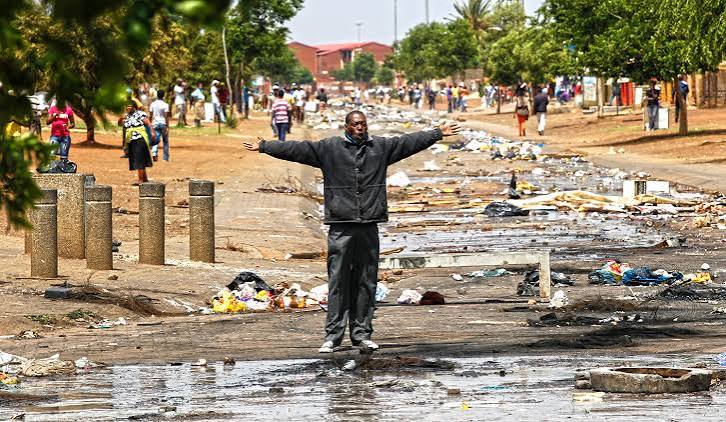
The same lens explains the growing mobilisation around undocumented migration and the public campaigns that have taken to the streets in its name. At their best, such campaigns are not wars against migrants as human beings; they are indictments of a state that has failed to govern borders, documentation, labour inspection, policing and local services with competence and fairness. They ask why employers are allowed to exploit undocumented labour, why corrupt networks profit from administrative weakness, why communities carry the costs of policy failure, and why the law appears either absent or selectively applied. But this is also where the sixth estate faces its sternest moral test. Oversight from below must not mutate into vigilantism from the street. A democratic society may demand firm and lawful migration governance without surrendering to xenophobia, humiliation or collective punishment. The sixth estate is legitimate only when it disciplines power; it loses legitimacy when it turns vulnerable people into substitutes for failed institutions.
A new democratic settlement
South Africa does not need an anti-state politics of permanent suspicion. It needs a pro-democratic politics of permanent answerability. The sixth estate should not seek to govern; it should ensure that those who govern cannot hide. Its moral authority will depend on evidence, independence, discipline and courage. If it descends into factional propaganda, it will become another noise machine. If it matures into a consequential civic infrastructure, it may become one of the most important democratic innovations of the post-majority era.
The rise of the sixth estate is therefore not a constitutional amendment waiting to happen. It is a political awakening already underway. It is visible in communities that demand water rather than slogans, in courts that refuse executive evasions, in auditors who name dysfunction, in journalists who follow the money, in civic organisations that litigate where legislatures hesitate, and in citizens who increasingly understand that democracy is not secured by the vote alone.
South Africa’s next struggle for the liberation promise will not be fought only at the ballot box or inside coalition negotiating rooms. It will be fought wherever public power tries to escape public consequence. The question is no longer simply who governs South Africa. The harder question is whether those who govern still fear the citizen. If the sixth estate rises with discipline, courage and constitutional purpose, it can make one democratic fact unavoidable: in a republic, no office is sacred, no mandate is permanent, and no public power is beyond the reach of the people.





Leave A Comment